1. Vocational Curriculum: The 1,244-Hour Crucible for Certified Train Operators
Locomotive drivers at PT KAI (Persero) are state-certified Railway Rolling Stock Crew (Awak Sarana Perkeretaapian / ASP) bearing substantial legal and public safety mandates. According to KAI's 2025 Sustainability Report (Pages 356–361), candidate drivers undergo multi-year professional journeys rather than brief training courses.
The national driver certification curriculum comprises two comprehensive training phases totaling 1,244 hours:
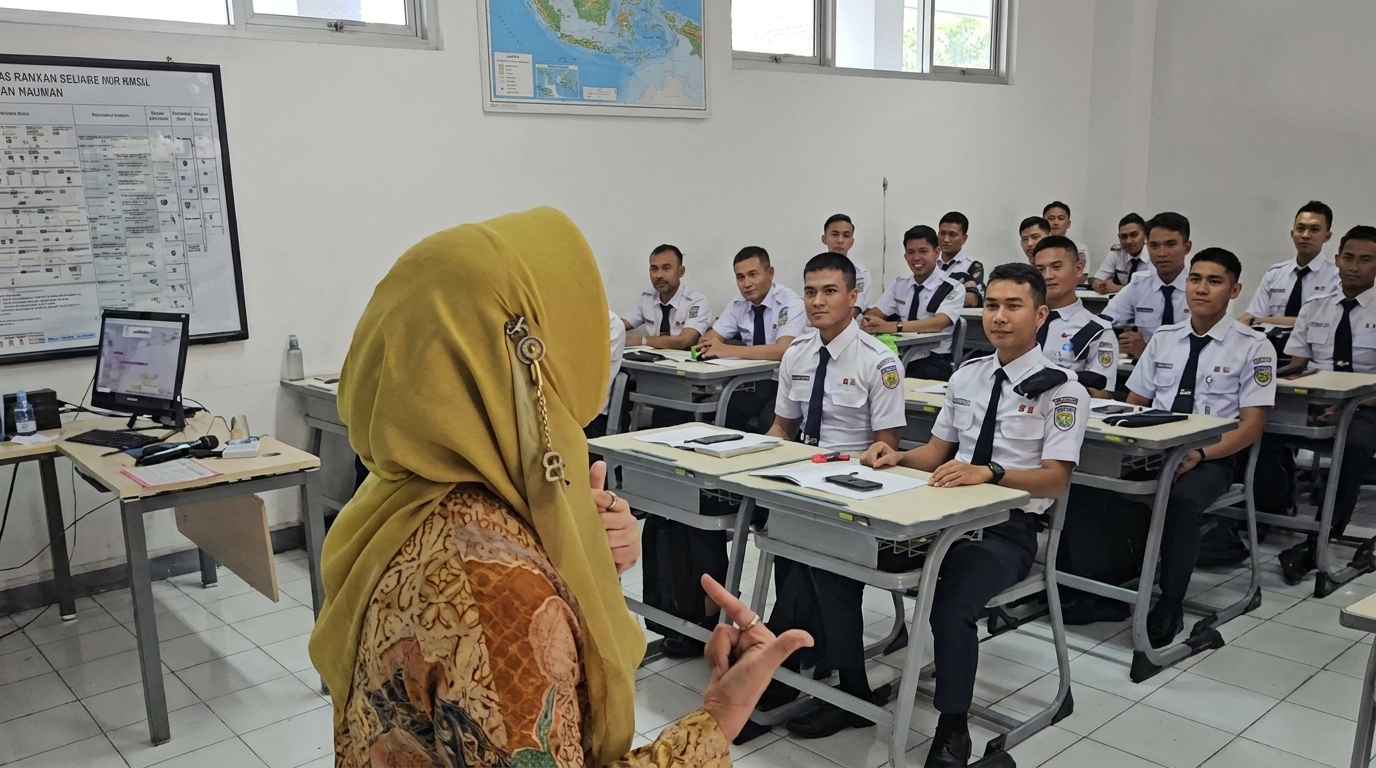
- 444 Hours of Classroom Theory & Full-Mission Simulators (Phase 1): Delivered at certified Railway Vocational Training Centers (such as BPTT Darman Prasetyo in Yogyakarta). Candidates master diesel-electric propulsion mechanics (GE CC 201, CC 203, CC 206), Westinghouse pneumatic air braking systems, electrical schematics, signaling codes and track indicators (Reglemen 3), emergency response, and computerized full-cab simulator disaster drills.
- 800 Hours of Supervised Operational Duty (Phase 2): Comprises 300 hours of shunting maneuvers within yards and depots to hone micro-precision coupler operations, followed by 500 hours of main-line intercity runs under the direct mentorship of Senior Instructor Drivers.
Operational Duty Verification Cycle & Fail-Safe Deadman Pedal Mechanics
Pre-departure biometric medical evaluations at Posrikkes leading into automated fail-safe emergency pneumatic braking triggers upon crew incapacitation.
2. Posrikkes Gatekeeping: Unforgiving Pre-Departure Biometric Health Audits
In railway operations, there is no accommodation for minor ailments. Exactly 45 minutes prior to their scheduled service, drivers and assistant drivers report to the Medical Screening Post (Posrikkes) at the locomotive depot. Certified occupational health officers execute rigorous diagnostics:
- Breathalyzer Alcohol Testing: Rail safety mandates zero tolerance (0.00%). Any trace of alcohol prompts immediate disqualification and severe disciplinary actions.
- Blood Pressure & Pulse Dynamics: Systolic readings must sit within 100–140 mmHg and diastolic within 70–90 mmHg, with regular heart rhythms (60–100 bpm). Minor hypertensive spikes caused by stress or sleep deprivation immediately result in "Unfit for Duty" (TLD) status.
- Temperature & Clinical Diagnostics: Core body temperatures exceeding 37.3°C or symptoms of acute respiratory infection or dizziness automatically disqualify candidates from cab service.
- Randomized Toxicological Screening: Conducted in unannounced cycles with the National Narcotics Board (BNN) to ensure cabin personnel are free from illicit substances.
3. Technical Mechanics: The Deadman Pedal & SIFA Fail-Safe Architecture
The most vital failsafe device in modern locomotive cabs is the Deadman System, internationally standardized as Sicherheitsfahrschaltung (SIFA). It answers transport's most catastrophic question: what occurs if a driver experiences sudden medical incapacitation, cardiac arrest, or falls unconscious at cruising speed?
| Time Elapsed | Driver Physical Action | Locomotive Subsystem State | Safety Consequence |
|---|---|---|---|
| Seconds 0 to 55 | Foot depresses the vigilance pedal during normal running | Internal logic counts down the 60-second cycle timer | Train continues accelerating or cruising as throttled. |
| Seconds 55 to 60 | Driver briefly releases pedal (1–2 seconds) and re-engages | Timer resets to zero (initiating fresh vigilance loop) | Verifies active physical alertness of the operating driver. |
| Seconds 61 to 65 | Driver passive (fails to release or continuously wedges pedal) | Red visual beacon flashes + piercing high-decibel buzzer sounds | Provides urgent audio-visual warning to driver and assistant. |
| Second 66+ | Zero physical input detected | Locomotive traction severed + Emergency brake valve exhausts full train pipe | Brake pipe pressure drops to 0 psi. Train halts automatically under fail-safe! |
4. Shisa Kanko (Point and Call): Zero-Defect Safety Culture in the Cab
Beyond mechanical deadman systems, KAI embraces the rigorous Shisa Kanko (Point and Call) methodology pioneered by Japanese Railways. Throughout the journey, the driver and assistant driver point index fingers and verbally call out every operating parameter:
- Track Signals: "Signal 5, Clear Green!" — dual verbal confirmation of interlocking aspects entering stations.
- Speed Limits: "Track Limit 90 Kilometers per Hour, Confirmed!" — strict adherence to civil engineering speed caps.
- Level Crossing Approaches: "Crossing Ahead! Sound Code 35 Horn!" — alerting motorists and pedestrians well in advance.
Frequently Asked Questions (FAQ)
Can a driver weigh down the deadman pedal with a brick to avoid foot fatigue?
No. Modern locomotives operate on intermittent deadman logic. If the pedal remains continuously depressed without cyclic release for more than 60 seconds, the system interprets this as an incapacitated driver collapsed over the controls and triggers full emergency braking.
What is the legal limit for a locomotive driver's daily working hours?
Under Ministry of Transportation Regulation PM No. 4/2017, train drivers are capped at a maximum of 8 hours per shift and no more than 4 to 5 continuous driving hours before being relieved at designated crew-change stations.
What protocol is initiated if a driver fails Posrikkes medical screening?
The driver is certified "Unfit for Duty" (TLD). Dispatch controllers immediately deploy a standby driver stationed at the crew rest facility (Griya Karya) to take over the assignment with zero service delay.