Planned Train Service Renaming and Fleet Consolidation in Gapeka 2026: Operational Implications & Headway Dynamics
In preparation for the nationwide implementation of the 2026 Train Working Diagram (Grafik Perjalanan Kereta Api / Gapeka 2026) scheduled to take effect on December 1, 2026, state-owned railway operator PT Kereta Api Indonesia (Persero) alongside the Directorate General of Railways (DJKA) of the Ministry of Transportation drafted an ambitious brand simplification and service consolidation scheme across Java. Based on booking records captured during the midnight opening of Access by KAI ticket sales on Sunday, November 1, 2026 at 00:01 WIB and technical publications released through November 1, 2026, 20 existing intercity passenger train services were restructured into 15 unified service identities.
This initiative built upon previous fleet harmonization measures executed earlier in 2026, notably the rebranding of the northern corridor flagship KA Argo Bromo Anggrek into KA Anggrek on May 9, 2026, and the consolidation of three executive services on the Semarang Tawang–Gambir corridor (KA Argo Muria, KA Argo Sindoro, and KA Argo Merbabu) into a unified KA Muria identity on October 1, 2026.
Three Core Structural Mechanisms in the Gapeka 2026 Renaming Plan
- Multi-Service Corridor Mergers: 13 legacy services merged into 9 existing master brands (Sembrani & Argo Anjasmoro into Anggrek; Gumarang & Kertajaya into Dharmawangsa; Argo Wilis into Turangga; Argo Semeru into Bima; Tawang Jaya & Tawang Jaya Premium into Menoreh; Bogowonto & Gajahwong into Progo; Matarmaja into Majapahit; Malioboro Ekspres into Kertanegara; Jaka Tingkir into Mataram).
- Commercial Suffix Pruning ("Ekspres" & "Malam"): Truncation of commercial affixes across 6 services for mobile app visual efficiency (Blambangan Ekspres into Blambangan; Gaya Baru Malam Selatan into Gaya Baru Selatan; Ijen Ekspres into Ijen; Dharmawangsa Ekspres into Dharmawangsa; Ambarawa Ekspres into Ambarawa; and Arjuno Ekspres into Arjuno).
- Full Identity Replacement (Single Rebrand): Complete renaming of KA Jayakarta (Surabaya Gubeng–Pasar Senen) into mythological puppet figure KA Nakula.
Although engineered to simplify route recognition for the general public amid nationwide frequency expansions, the direct implementation of this policy on ticketing reservation screens triggered three acute operational frictions in the field:
- Tight Headway Scheduling Under Identical Naming: Consolidating multiple departures under a single commercial name created closely spaced departures with identical branding, exemplified by 70–75 minute headways on KA Muria and an extreme 30-minute departure interval on KA Dharmawangsa from Surabaya Pasarturi.
- Rolling Stock and Cabin Comfort Disparities: Brand unification preceded physical carriage standardization. Consequently, a single commercial label encompassed wildly divergent trainset generations, seating ergonomics, and fare bands.
- Disruption of Time-Brand Associations and Brand Equity Erosion: Long-standing train names that had served as temporal anchors for evening departures for decades (such as KA Bima and KA Turangga) generated customer confusion when applied to morning runs replacing Argo Semeru and Argo Wilis.
Chronology and Strategic Architecture (May – November 1, 2026)
The service consolidation strategy represents an evolutionary restructuring of PT KAI passenger portfolio rather than an isolated year-end decision:
1. Phase I: Flagship Simplification to KA Anggrek (May 9, 2026)
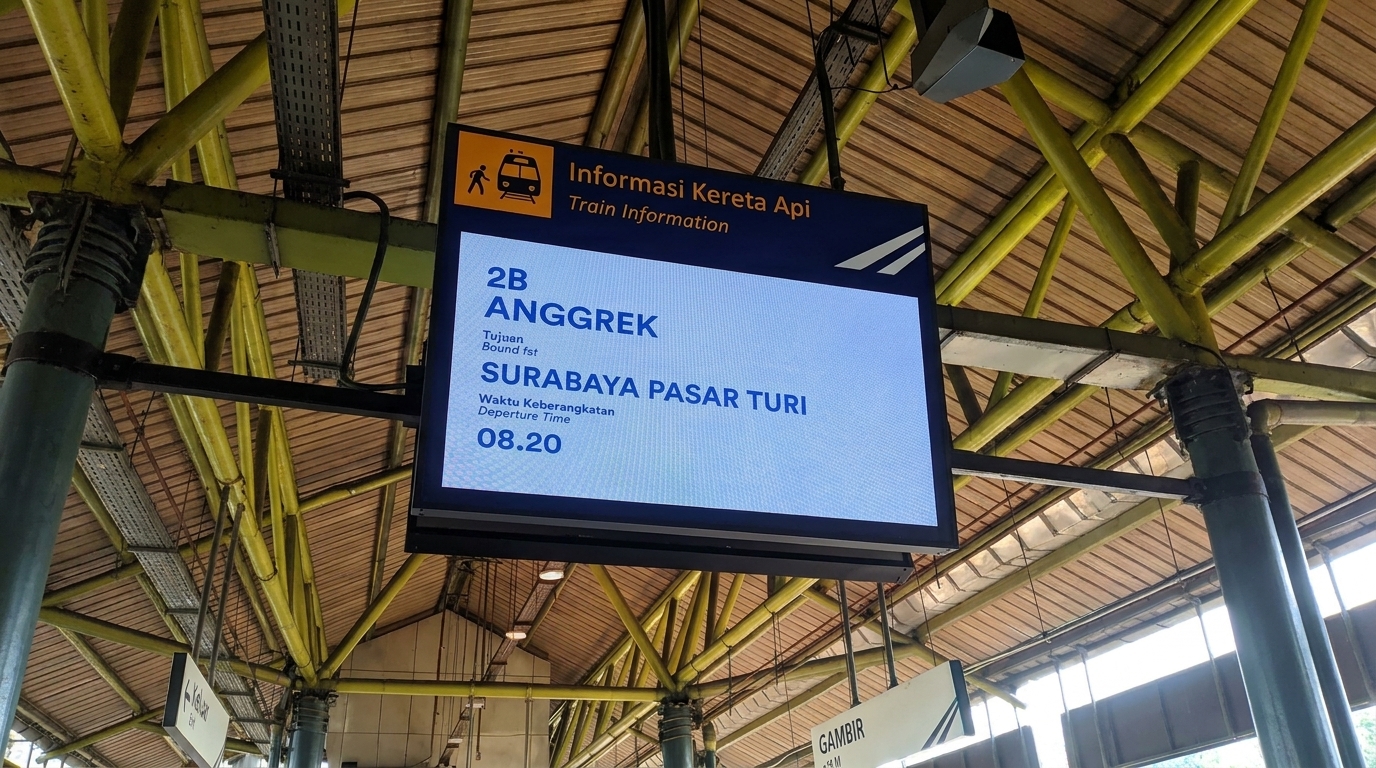
The initial step took place when KAI shortened the name of its premier northern line train, KA Argo Bromo Anggrek (Surabaya Pasarturi–Gambir), to KA Anggrek. Official statements explained that pruning "Argo Bromo" aimed to solidify three decades of brand equity while maintaining identical operational timetables, rolling stock formations, and passenger entitlements.
Transportation observers noted that this announcement in early May 2026 also occurred shortly after Argo Bromo Anggrek trainsets were involved in two consecutive accidents at East Bekasi Station (April 27, 2026, 16 fatalities) and Grobogan (May 1, 2026, 5 fatalities), although KAI officially maintained that the renaming was strictly a corporate branding initiative. Dropping the "Argo" prefix on this flagship service established a critical precedent for subsequent naming revisions.
2. Phase II: Semarang Executive Pilot Consolidation to KA Muria (October 1, 2026)
Four months later, KAI tested its multi-train merger concept on the Semarang Tawang–Gambir route. Effective October 1, 2026, three executive services—KA Argo Muria, KA Argo Sindoro, and KA Argo Merbabu—were unified into KA Muria.
Vice President Corporate Communication Anne Purba and Daop 4 Semarang Public Relations Manager Luqman Arif explained that the consolidation delivered a concise, consistent brand identity. Travelers no longer needed to memorize three separate mountain names for the same corridor. The service scheduled 12 daily trips (6 round trips) utilizing 9-car executive trainsets with 450 seats per consist to streamline online booking.
3. Phase III: Nationwide Expansion Under Gapeka 2026 (November 1, 2026)
KAI replicated the Muria model across Java. Following official announcements by DJKA Railway Engineering Center (BTP) Surabaya on October 31, ticket bookings for December 1 departures went live on November 1 at 00:01 WIB via Access by KAI under a 30-day advance booking window (H-30). All 20 targeted services appeared under their newly consolidated branding, prompting immediate reactions from rail enthusiast communities and travelers.
Comprehensive Inventory of Consolidated Train Services
Based on Access by KAI ticketing records as of November 1, 2026, the Gapeka 2026 restructuring consolidated 20 legacy train names into 15 master identities, alongside the 3 Argo services previously merged into KA Muria:
| No | Corridor (Round Trip) | Retained Master Brand | Merged Services | Class & Rolling Stock Dynamics |
|---|---|---|---|---|
| 1 | Semarang Tawang – Gambir (Pre-Gapeka) | KA Muria | Argo Muria, Argo Sindoro, Argo Merbabu | Executive (9 cars/consist, 450 seats; active since Oct 1, 2026). |
| 2 | Surabaya Pasarturi – Gambir | KA Anggrek | KA Sembrani, KA Argo Anjasmoro | Executive: Merges Stainless Steel New Gen + Compartment, SS Gen 1 + Luxury, and standard SS Gen 1. |
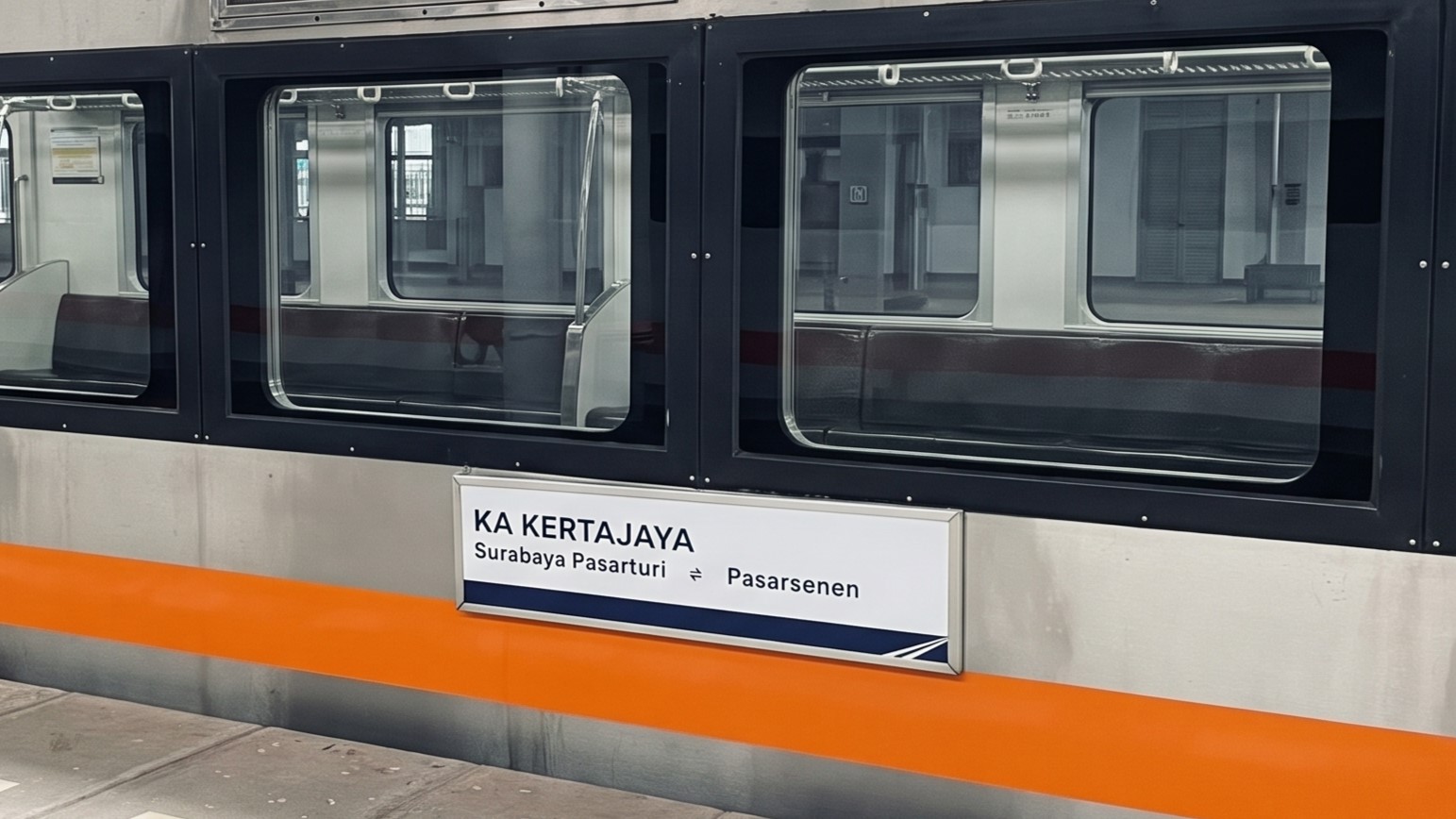
| 3 | Surabaya Pasarturi – Pasar Senen | KA Dharmawangsa | KA Gumarang, KA Kertajaya | Mixed Exec & Economy: Combines Modified Economy New Gen (72 seats) with SS Premium Economy (80 seats). |
| 4 | Surabaya Gubeng – Gambir | KA Bima | KA Argo Semeru | Executive: Unifies historic overnight service with daytime morning departure. |
| 5 | Surabaya Gubeng – Bandung | KA Turangga | KA Argo Wilis | Executive SS New Gen: Merges classic daytime southern scenic train with overnight express. |
| 6 | Semarang Tawang – Pasar Senen | KA Menoreh | Tawang Jaya, Tawang Jaya Premium | Mixed: Shifts former Tawang Jaya terminus from Semarang Poncol (SMC) to Semarang Tawang (SMT). |
| 7 | Lempuyangan – Pasar Senen | KA Progo | KA Bogowonto, KA Gajahwong | Executive (IDR 490k–590k) & Commercial Economy (IDR 330k–390k). |
| 8 | Solo Balapan – Pasar Senen | KA Mataram | KA Jaka Tingkir | Executive (IDR 590k–640k) & Commercial Economy (IDR 410k–420k). |
| 9 | Malang – Pasar Senen | KA Majapahit | KA Matarmaja | Economy: Genuine INKA-built Stainless Steel New Gen paired with Modified New Gen consists. |
| 10 | Malang – Purwokerto | KA Kertanegara | KA Malioboro Ekspres | Executive & Economy linking East Java southern line to Banyumas. |
Individual Renaming and Commercial Suffix Adjustments (Non-Merger)
Beyond multi-train route mergers, seven passenger train services operating across Java underwent individual brand alterations without combining fleets, primarily focusing on eliminating 'Ekspres' and 'Malam' monikers:
| Gapeka 2025 Service | Draft Gapeka 2026 Brand | Corridor (Round Trip) | Adjustment Pattern & Service Notes |
|---|---|---|---|
| KA Jayakarta | KA Nakula | Surabaya Gubeng – Pasar Senen | Complete rebranding adopting wayang mythological figure Nakula; Economy fare at IDR 340,000. |
| KA Gaya Baru Malam Selatan | KA Gaya Baru Selatan | Surabaya Gubeng – Pasar Senen | Pruning 'Malam' (Night); Economy fare IDR 390,000, Executive IDR 440,000–490,000. |
| KA Blambangan Ekspres | KA Blambangan | Ketapang – Pasar Senen | Pruning 'Ekspres' on the longest direct trans-Java route linking Banyuwangi to Jakarta via Semarang. |
| KA Dharmawangsa Ekspres | KA Dharmawangsa | Surabaya Pasarturi – Pasar Senen | Pruning 'Ekspres' while simultaneously functioning as master brand absorbing Gumarang & Kertajaya. |
| KA Ijen Ekspres | KA Ijen | Ketapang – Malang | Pruning 'Ekspres'; maintained operational status as facultative service. |
| KA Arjuno Ekspres | KA Arjuno | Malang – Surabaya Gubeng | Pruning 'Ekspres' and converted into long-distance economy configuration. |
| KA Ambarawa Ekspres | KA Ambarawa | Surabaya Pasarturi – Semarang Poncol | Pruning 'Ekspres' with updated executive and economy trainset composition. |
Analysis of Tight Headways and Identical Naming Hazards
1. Case Study KA Muria: 12 Daily Departures and 70–75 Minute Morning Headways
The consolidation of KA Argo Muria, KA Argo Sindoro, and KA Argo Merbabu into KA Muria effective October 1, 2026 produced 12 daily services (6 departures from Semarang Tawang and 6 from Gambir) under one uniform brand. Official timetable analysis reveals compressed headways during morning peak hours at both terminals:
| Route Direction | Train Number | Departure | Arrival | Duration | Departure Headway |
|---|---|---|---|---|---|
| Semarang Tawang → Gambir | KA Muria (KA 23) | 05:50 WIB | 11:10 WIB | 5h 20m | — (First departure) |
| Semarang Tawang → Gambir | KA Muria (KA 17) | 07:00 WIB | 12:10 WIB | 5h 10m | 70 minutes after KA 23 |
| Semarang Tawang → Gambir | KA Muria (KA 27) | 14:00 WIB | 19:16 WIB | 5h 16m | 7 hours after KA 17 |
| Semarang Tawang → Gambir | KA Muria (KA 21A) | 16:55 WIB | 22:11 WIB | 5h 16m | 2h 55m after KA 27 |
| Semarang Tawang → Gambir | KA Muria (KA 25) | 19:00 WIB | 00:20 WIB | 5h 20m | 125 minutes after KA 21A |
| Semarang Tawang → Gambir | KA Muria (KA 19) | 22:40 WIB | 03:50 WIB | 5h 10m | 3h 40m after KA 25 |
| Gambir → Semarang Tawang | KA Muria (KA 26) | 06:00 WIB | 11:20 WIB | 5h 20m | — (First departure) |
| Gambir → Semarang Tawang | KA Muria (KA 20A) | 07:15 WIB | 12:29 WIB | 5h 14m | 75 minutes after KA 26 |
| Gambir → Semarang Tawang | KA Muria (KA 24) | 12:00 WIB | 17:20 WIB | 5h 20m | 4h 45m after KA 20A |
| Gambir → Semarang Tawang | KA Muria (KA 18) | 16:45 WIB | 21:55 WIB | 5h 10m | 4h 45m after KA 24 |
| Gambir → Semarang Tawang | KA Muria (KA 28) | 19:45 WIB | 01:01 WIB | 5h 16m | 3 hours after KA 18 |
| Gambir → Semarang Tawang | KA Muria (KA 22) | 22:40 WIB | 03:55 WIB | 5h 15m | 2h 55m after KA 28 |
The most acute operational hazard of brand consolidation is the compression of departure headways between identically named trains at the same origin terminal:
1. Extreme Case: KA Dharmawangsa 30-Minute Headway at Surabaya Pasarturi
On the northern trunk line between Surabaya Pasarturi (SBI) and Pasar Senen (PSE), Gapeka 2026 scheduled two identically named "KA Dharmawangsa" departures just 30 minutes apart:
- KA Dharmawangsa (Train 295, ex-Kertajaya): Depart Surabaya Pasarturi at 22:30 WIB → Arrive Pasar Senen 08:50 WIB. Exclusively operated with Stainless Steel Premium Economy (PRE) featuring 80 brown seats (fixed face-to-face seating at rows 10-11).
- KA Dharmawangsa (Train 179, Regular): Depart Surabaya Pasarturi at 23:00 WIB. Configured with Executive and Modified Economy New Generation (EKO) featuring 72 blue captain seats (rotatable in the direction of travel).
This 30-minute interval triggers substantial passenger boarding overlap at Surabaya Pasarturi platform. Passengers holding tickets for the 23:00 departure arriving early (22:00–22:15 WIB) faced a high probability of boarding the 22:30 train. Furthermore, this hazard propagated across intermediate stations along the entire Pantura corridor (Lamongan, Bojonegoro, Cepu, Semarang, Pekalongan, Tegal, Cirebon).
3. Case Study KA Anggrek: 10 Daily Trips & 45–60 Minute Peak Intervals
Consolidating KA Sembrani and KA Argo Anjasmoro into KA Anggrek yielded 10 daily services (5 each way) on the Surabaya Pasarturi–Gambir corridor:
| Route Direction | Train No. (Gapeka 2026) | Departure | Arrival | Duration | Origin Fleet & Classification | Departure Headway |
|---|---|---|---|---|---|---|
| SBI → Gambir | KA Anggrek (KA 55) | 07:20 WIB | 15:44 WIB | 8h 24m | Ex-Sembrani Morning (SS Gen 1) | — (Morning 1) |
| SBI → Gambir | KA Anggrek (KA 1) | 08:15 WIB | 16:12 WIB | 7h 57m | Original Anggrek Morning (SS New Gen) | 55 minutes after KA 55 |
| SBI → Gambir | KA Anggrek (KA 35) | 10:00 WIB | 18:40 WIB | 8h 40m | Ex-Argo Anjasmoro (SS Gen 1) | 105 minutes after KA 1 |
| SBI → Gambir | KA Anggrek (KA 3) | 20:30 WIB | 04:27 WIB | 7h 57m | Original Anggrek Night (SS New Gen) | — (Night 1) |
| SBI → Gambir | KA Anggrek (KA 57) | 21:30 WIB | 05:51 WIB | 8h 21m | Ex-Sembrani Night (SS Gen 1) | 60 minutes after KA 3 |
| Gambir → SBI | KA Anggrek (KA 2) | 08:00 WIB | 15:59 WIB | 7h 59m | Original Anggrek Morning (SS New Gen) | — (Morning 1) |
| Gambir → SBI | KA Anggrek (KA 56) | 08:45 WIB | 17:03 WIB | 8h 18m | Ex-Sembrani Morning (SS Gen 1) | 45 minutes after KA 2 |
| Gambir → SBI | KA Anggrek (KA 58) | 18:35 WIB | 03:06 WIB | 8h 31m | Ex-Sembrani Night (SS Gen 1) | — (Night 1) |
| Gambir → SBI | KA Anggrek (KA 4) | 19:55 WIB | 03:54 WIB | 7h 59m | Original Anggrek Night (SS New Gen) | 80 minutes after KA 58 |
| Gambir → SBI | KA Anggrek (KA 36) | 23:25 WIB | 08:22 WIB | 8h 57m | Ex-Argo Anjasmoro (SS Gen 1) | 3h 30m after KA 4 |
Systemic Implications: Fleet Asymmetry and Passenger Heuristics
Unifying commercial train identities created structural friction across three key operational dimensions:
1. Rolling Stock Disparity (Fleet Mismatch)
In Indonesia, train names serve as cognitive proxies for physical carriage quality. Under KA Anggrek, the brand historically guaranteed flagship Stainless Steel New Generation sets with Compartment Suites and sub-8-hour journey times. Under the merger, the same name encompassed Stainless Steel Generation 1 sets from Sembrani (8h 18m) and Argo Anjasmoro (up to 8h 57m) with broad fare variances between IDR 650,000 and IDR 720,000.
2. Time-Brand Cognitive Disorientation
Brands like KA Bima and KA Turangga have been synonymous with overnight travel for decades. Rebranding morning services (Argo Semeru and Argo Wilis) into "Morning Bima" and "Morning Turangga" disrupted passenger heuristics, raising the risk of travelers arriving at terminals at incorrect times.
3. Disruption to Weekly Commuters (PJKA)
Timetable adjustments impacted weekly intercity commuters (Pulang Jumat Kembali Ahad / PJKA). KA Majapahit from Pasar Senen to Malang had its departure moved forward by 3 hours 25 minutes from 17:40 WIB to 14:15 WIB during core office hours. Meanwhile, subsidized commuter train KA Bengawan (Purwosari–Pasar Senen) had its arrival at Pasar Senen delayed from 07:34 WIB to 08:20–08:30 WIB, compromising morning office arrival times for cross-province workers in Jakarta.
Official References and Documentation
- PT Kereta Api Indonesia (Persero). (October 31, 2026). Official Press Release: December 1 Departure Ticket Sales Opened at 00:01 WIB. Jakarta: KAI.
- Balai Teknik Perkeretaapian (BTP) Kelas I Surabaya, DJKA Ministry of Transportation. (October 31, 2026). Gapeka 2026 East Java Operational Parameters Briefing.
- Kompas.com. (November 1, 2026). Gapeka 2026 Takes Effect December 2026, Tickets Now Available.
- Kereta Api Kita. (November 1, 2026). Gapeka 2026 Renamed Train Services & Timetable Analysis.
- Liputan6.com. (November 2–3, 2026). Two KA Dharmawangsa Services Scheduled 30 Minutes Apart Trigger Passenger Concerns.
- Radar Banyuwangi. (October 31 – November 1, 2026). List of Consolidated Trains in Gapeka 2026 and Station Renaming Overview.
- KAI Customer Care (@KAI121). (November 1, 2026). Official Thread: Rationale for Train Naming Simplification in Gapeka 2026. Social Media X.