Policy Rollback Analysis: Why PT KAI Canceled the Gapeka 2026 Train Consolidation and Renaming Plan
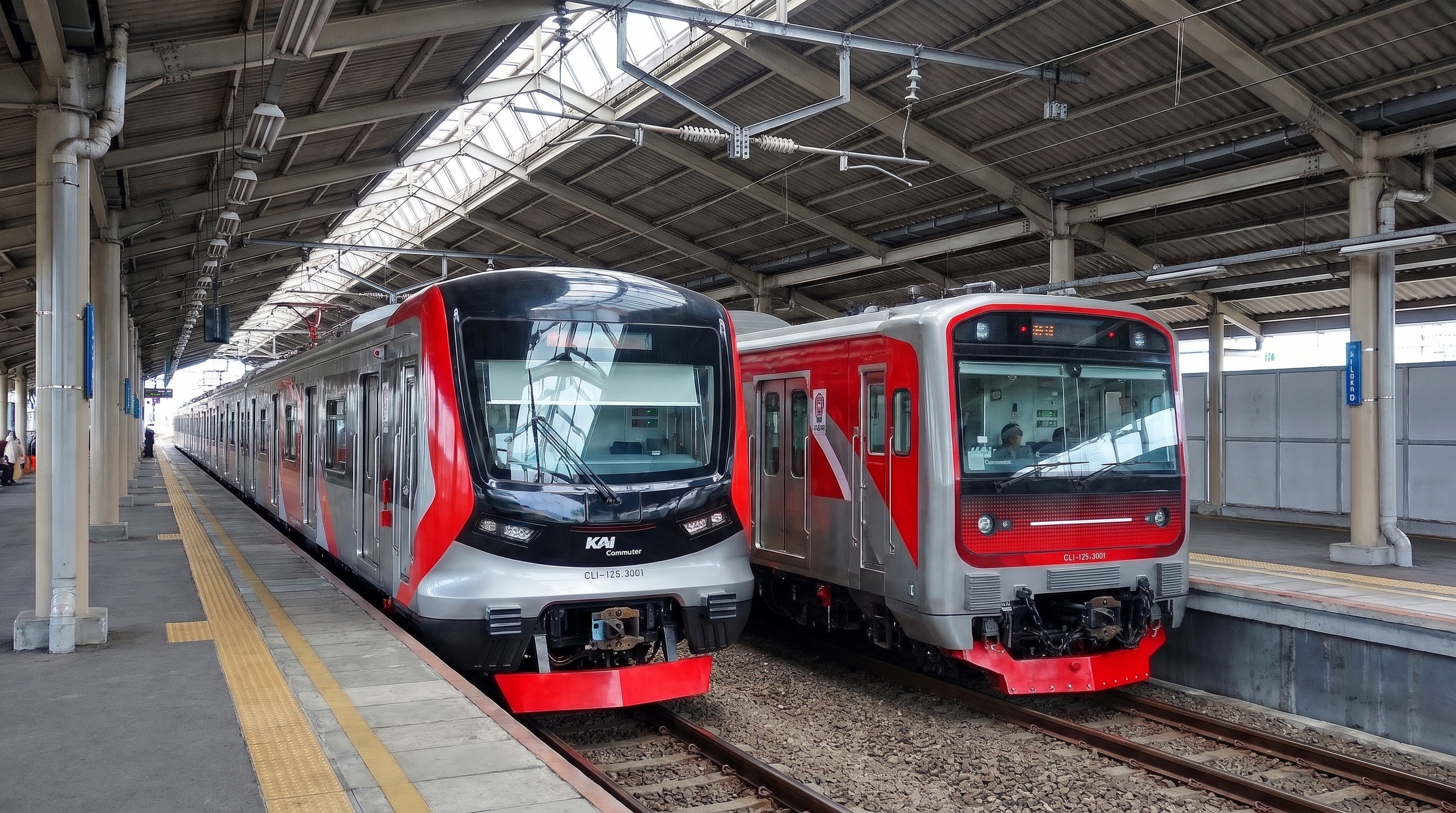
The decision by state-owned railway operator PT Kereta Api Indonesia (Persero) or KAI to cancel its plan to simplify, rebrand, and merge 20 long-distance and local passenger train services under the 2026 Train Working Diagram (Gapeka 2026) serves as a paramount case study in modern public transit management. The policy rollback illuminates the inherent clash between internal operational efficiency models, consumer brand equity, rolling stock standardization timelines, and platform cognitive safety.
The revised service nomenclature, which went live on the Access by KAI booking app during the midnight opening of December 1 departure sales on November 1–2, 2026, was swiftly rescinded on Monday evening, November 2, 2026. By Tuesday morning, November 3, 2026, all familiar legacy train names were fully restored in the ticketing database. This rapid policy reversal within under 48 hours was precipitated by a wave of public criticism, vocal advocacy from railway enthusiast communities, and serious operational risk evaluations conducted across regional divisions.
Executive Findings of the Policy Rollback
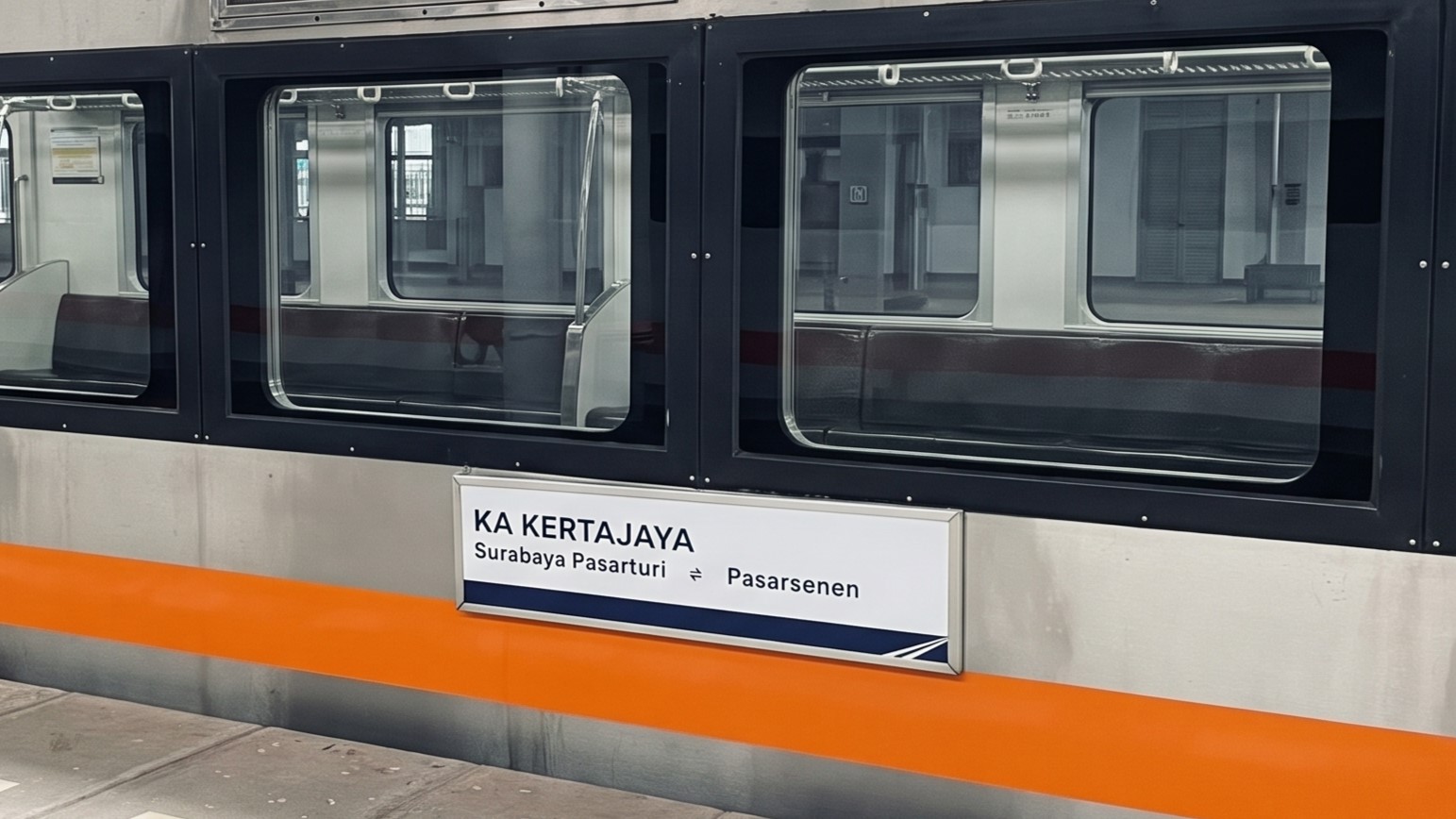
- Full Restoration of 20 Services: Historic train names (including KA Sembrani, KA Argo Anjasmoro, KA Gumarang, KA Kertajaya, KA Argo Wilis, KA Argo Semeru, KA Matarmaja, KA Malioboro Ekspres, KA Bogowonto, KA Gajahwong, KA Tawang Jaya, KA Jaka Tingkir, KA Jayakarta, and KA Gaya Baru Malam Selatan) are 100% restored.
- Gapeka 2026 Timetables Remain Fully Intact: The policy reversal is strictly confined to commercial nomenclature. The operational restructuring—39 additional passenger trips, 74 accelerated services, +8,466 daily seats (+5.03%), and 84 new station stop additions—takes effect nationwide on December 1, 2026.
- Emerging Commuter Pushback: Public attention has shifted toward schedule shifts impacting weekly commuters (PJKA), notably KA Majapahit departure being advanced to 14:15 WIB and KA Bengawan morning arrival in Jakarta delayed to 08:20–08:30 WIB.
The 48-Hour Crisis Dynamics and Initial Management Rationale
Under Indonesian Railway Ministerial Regulation PM 110/2017, the Train Working Diagram (Gapeka) governs national rail operations, plotting route times, peak track speeds, crossing slots, and overtakes. Established by the Directorate General of Railways (DJKA) based on operator inputs, the new Gapeka 2026 replaces Gapeka 2025 starting December 1, 2026.
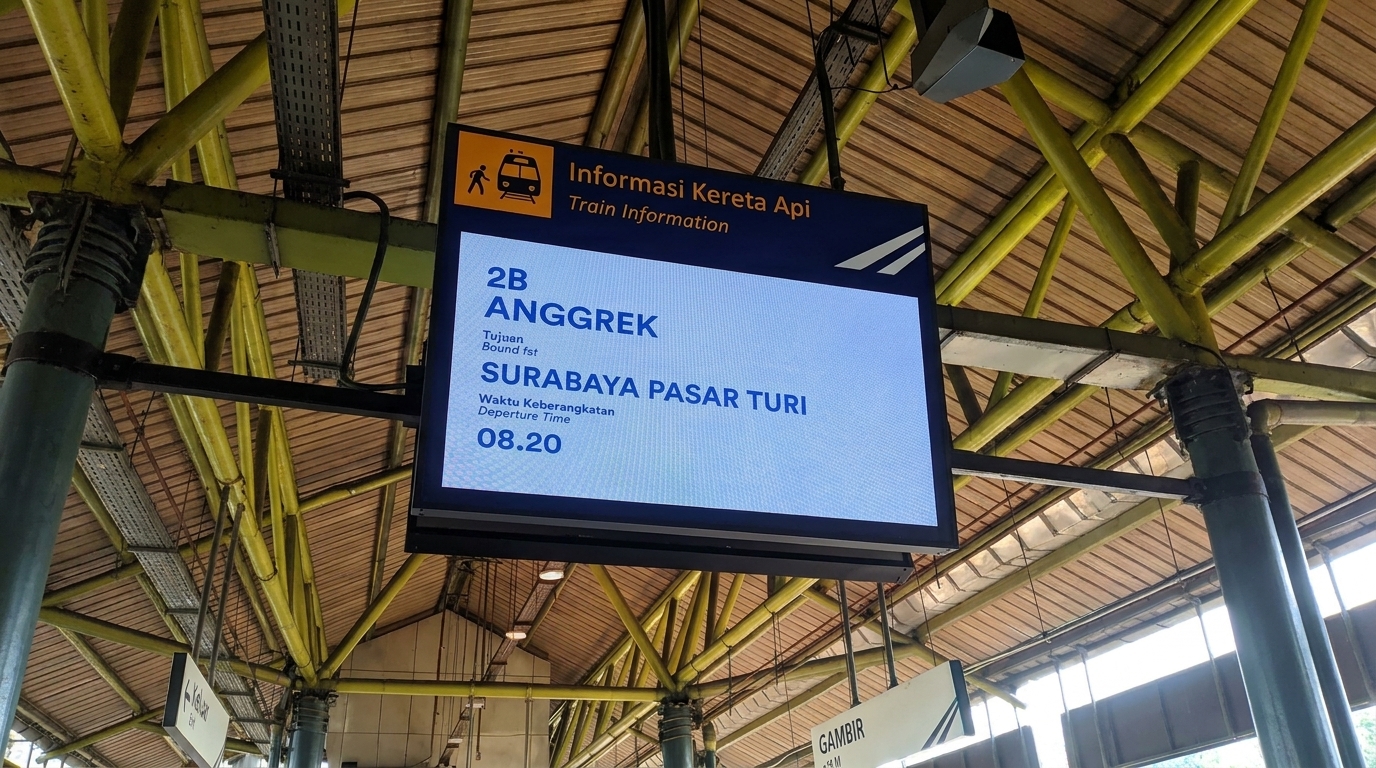
When ticket sales opened on November 1, prospective travelers discovered that established train names had vanished or been subsumed under master labels. Following widespread customer complaints across digital platforms, KAI executive leadership instructed the IT and Ticketing divisions to restore all original train names on Monday night, November 2. In an official press conference in Jakarta on Tuesday afternoon, November 3, Vice President Corporate Communication Anne Purba confirmed the cancellation, emphasizing KAI commitment to listening to passenger feedback and respecting the emotional and historical bonds passengers maintain with established train services.
"KAI listens attentively to all feedback from the public, rail enthusiast communities, and our loyal passengers. Train names carry profound historical significance and emotional value. Therefore, KAI has decided to retain all train names originally slated for consolidation in Gapeka 2026."
— Anne Purba, VP Corporate Communication PT Kereta Api Indonesia (Persero)
Four Critical Failure Factors of the Consolidation Scheme
Analytical dissection reveals that the cancellation was not merely a public relations retreat, but a vital mitigation against acute operational and commercial hazards:
1. Rolling Stock Asymmetry and Interior Disparities
The primary design flaw in the Gapeka 2026 renaming plan was implementing brand unification prior to the physical standardization of passenger trainsets. In Indonesia, train names serve as primary indicators of carriage tiering and seating comfort:
- KA Anggrek Cluster: The unified "KA Anggrek" brand brought together three distinct physical specifications: the original Anggrek sets featuring brand-new Stainless Steel New Generation (SS NG) coaches and Compartment Suites; ex-Argo Anjasmoro consists using standard Stainless Steel Generation 1 (SS Gen 1); and ex-Sembrani sets using SS Gen 1 paired with Luxury class. Passengers paying executive fares up to IDR 720,000 faced the risk of receiving older cabins depending on the chosen departure time.
- KA Dharmawangsa Cluster: Subsumed KA 295 (ex-Kertajaya, operating with 80-seat brown Premium Economy coaches with fixed face-to-face configurations) and regular KA 179 (operating with 72-seat blue Modified New Generation captain seats facing forward). Casual travelers could not distinguish between seat types without deciphering four-digit train numbers.
- KA Majapahit Cluster: Majapahit had established a brand expectation for factory-built INKA Stainless Steel New Generation trainsets; merging KA Matarmaja (utilizing modified legacy stock) diluted this brand promise.
2. Operational Wrong-Boarding Hazards & The Muria Precedent
Unifying train names created acute operational safety hazards at terminal and intermediate stations. The most severe hazard occurred on the Surabaya Pasarturi–Pasar Senen route, where two identically named KA Dharmawangsa services were scheduled to depart just 30 minutes apart (Train 295 at 22:30 WIB and Train 179 at 23:00 WIB). Both consists would occupy adjacent platform tracks during overlapping boarding windows, creating severe risks of passengers boarding the wrong train—a hazard that would ripple across all intermediate stations on the Pantura line.
This concern was validated by the real-world precedent of the KA Muria merger implemented on October 1, 2026. In Daop 4 Semarang, multiple reports emerged of passengers boarding the wrong train due to uniform naming across consecutive departures.
3. Clash of Mental Models: Brand Heuristics vs. Origin-Destination Paradigm
Management pushed an origin-destination search paradigm, expecting passengers to search by city pair and treat train names as secondary labels. However, for Indonesian rail travelers, specific train names function as integrated cognitive heuristics encapsulating four variables simultaneously: route corridor, departure time (morning vs. evening), carriage class, and fare tier. Rebranding KA Argo Semeru into "Morning Bima" caused cognitive confusion for a brand that has represented overnight travel for over half a century.
4. Dilution of Historical Brand Equity
Names like Gaya Baru Malam Selatan, Argo Wilis, Sembrani, Gumarang, and Kertajaya represent decades of cultural heritage in Indonesian public transportation. Pruning or eliminating these historic identities contradicted KAI simultaneous public relations campaigns celebrating railway history, such as the Rail Heritage Forum 2026 at Lawang Sewu Museum and the 10th anniversary celebration of KA Ranggajati in Cirebon.
Corporate Governance and Fleet Readiness Toward 2027
KAI prompt response highlights responsive customer experience governance. From January through October 2026, KAI Group transported 442,529,105 passengers, marking a 6.86% year-on-year increase (+28,412,158 journeys) over 2025:
| KAI Group Entity / Service Segment | Jan–Oct 2025 Volume | Jan–Oct 2026 Volume | YoY Growth |
|---|---|---|---|
| Total Consolidated KAI Group | 414,116,947 passengers | 442,529,105 passengers | +6.86% |
| KAI Commuter (Urban Transit) | 329,667,551 passengers | 350,124,196 passengers | +6.21% |
| Intercity & Regional Passenger Trains | 45,814,275 passengers | 49,932,766 passengers | +8.99% |
| LRT Jabodebek | 23,549,818 passengers | 27,693,123 passengers | +17.59% |
| Whoosh High-Speed Rail (KCIC/PSBI) | 5,053,740 passengers | 5,123,375 passengers | +1.38% |
| Makassar–Parepare Line (South Sulawesi) | 256,942 passengers | 290,380 passengers | +13.01% |
| KAI Wisata (Heritage & Charters) | 191,745 passengers | 258,381 passengers | +34.75% |
Under KAI Long-Term Corporate Plan (RJPP 2026–2030), intercity, regional, and LRT ridership is projected to expand by 67% to 141.3 million passengers by 2030. In 2026, KAI corporate Customer Satisfaction Index (CSI) scored 4.53, though station-level CSI declined to 4.46, with ticketing clarity and platform boarding areas identified as primary customer priorities.
From an equipment perspective, KAI is executing an ongoing capital procurement contract for 612 new passenger coaches from PT INKA (Persero) and 39 New Generation trainsets through 2027. With only 40 trainsets delivered as of November 2026, rolling stock disparity will persist until fleet-wide delivery is finalized in 2027, making brand mergers premature.
Structural Operations of Gapeka 2026 Proceed Fully on December 1
While train renamings have been halted, the structural operational overhaul under Gapeka 2026 will be implemented in full starting December 1, 2026:
| Operational Parameter | Gapeka 2025 | Gapeka 2026 (Effective Dec 1) | Growth / Variance |
|---|---|---|---|
| Total Daily Seat Capacity (Java & Sumatra) | 168,316 seats/day | 176,782 seats/day | +8,466 seats/day (+5.03%) |
| Intercity Seat Capacity (Java) | 132,680 seats/day | 137,846 seats/day | +5,166 seats/day (+3.89%) |
| Passenger Seat Capacity (Sumatra) | 35,636 seats/day | 38,936 seats/day | +3,300 seats/day (+9.26%) |
| Scheduled Passenger Train Trips | 1,813 trips/day | 1,852 trips/day | +39 trips/day (+2.15%) |
| Gambir Station Intercity Departures | 39 trips/day | 45 trips/day | +6 trips/day (+15.38%) |
| Daop 4 Semarang Total Passenger Trips | 100 trips/day | 108 trips/day | +8 trips/day (+8.00%) |
Travel Time Acceleration on 74 Intercity Services
Track upgrades and elevated maximum operating speeds (up to 120 km/h between Tanggul and Jember) allow KAI to trim running times across 74 services:
- KA Kahuripan (Blitar–Kiaracondong): Accelerated by 92 minutes (from 14h 05m down to 12h 33m).
- KA Pasundan (Surabaya Gubeng–Kiaracondong): Accelerated by 53 minutes.
- KA Airlangga (Surabaya Pasarturi–Pasar Senen): Accelerated by 52 minutes westbound and 51 minutes eastbound.
- KA Batavia (Solo Balapan–Gambir): Accelerated by 51 minutes.
- KA Sangkuriang (Ketapang–Bandung): Accelerated by 46 minutes westbound.
- KA Pandalungan (Gambir–Jember): Accelerated by 45 minutes.
- KA Jayabaya (Pasar Senen–Malang): Accelerated by 40 minutes.
- KA Matarmaja (Malang–Pasar Senen): Accelerated by 35 minutes.
- KA Malabar Sore, KA Mutiara Timur, KA Singasari, and KA Brantas: Trimmed by 9 to 22 minutes.
Satellite Station Expansion Across Greater Jakarta
To reduce crowding at Gambir and Pasar Senen, KAI added boarding stops across 84 services in eastern satellite hubs:
- Cikarang Station: Gains 6 intercity services (reaching 58 daily trains), accommodating KA Manahan (61), KA Pangandaran (128), KA Parahyangan (133 & 134), KA Singasari (149), and KA Tawangjaya Premium (213).
- Bekasi Station: Gains 3 intercity services (reaching 139 daily trains), adding KA Manahan (59), KA Bangunkarta (176), and KA Tegal Bahari (226).
- Jatinegara Station: Adds stops for KA Cakrabuana (123) and KA Gumarang (178).
- Route Extensions & Regional Stops: KA Pangandaran extended to Sidareja Station (Cilacap, 37 km from Pangandaran Beach) supported by a 176-meter platform upgrade; KA Kedungsepur extended to Weleri–Ngrombo; Rajapolah Station served by KA Serayu (Trains 318 & 322) and KA Sangkuriang; Comal Station served by KA Jayabaya and Kaligung.
Emerging Friction: Disruption for Weekly Commuters (PJKA)
While nomenclature concerns have subsided, public attention has shifted toward the commuter challenges of cross-province workers:
- KA Majapahit (Pasar Senen–Malang): Departure shifted 3 hours 25 minutes earlier from 17:40 WIB to 14:15 WIB during core Friday working hours, complicating departures for workers in Jakarta.
- KA Bengawan (Purwosari–Pasar Senen): The primary subsidized train for migrant workers (IDR 74,000) sees its Pasar Senen arrival pushed back from 07:34 WIB to 08:20–08:30 WIB, risking late arrival for office hours on Monday mornings.
Strategic Recommendations and Passenger Advisory
Strategic Imperatives for PT KAI Management
- Hardware-First Branding: Service consolidation must only be initiated after fleet standardization delivers identical passenger coach configurations on the affected corridor.
- Explicit Trainset Tagging on Digital Apps: Display interior seat models clearly (e.g., Stainless Steel New Gen, Modified New Gen, Gen 1) on Access by KAI booking screens.
- Centralized Communication Synchronization: Ensure regional Daop communications instantly reflect central corporate policy updates.
- Commuter Timetable Mitigation: Provide afternoon alternatives for the Pasar Senen–Malang route and early-morning arrival options for Central Java–Jakarta commuters.
Actionable Passenger Advisory
- Re-verify E-Tickets: Tickets booked on November 1–2, 2026 have automatically updated to original train names in Access by KAI without any change to passenger travel rights.
- Check Updated Timetables: The return to original train names does not imply 2025 timetables remain in place. Pay close attention to departure shifts on KA Majapahit, KA Bengawan, KA Kahuripan, and KA Tawang Jaya Premium.
- Utilize Satellite Stations: Travelers in Bekasi, Cikarang, Karawang, and Cikampek can board intercity trains directly at their nearest hub beginning December 1, 2026.
Official References
- PT Kereta Api Indonesia (Persero). (November 3, 2026). Official Press Release: KAI Group Serves 442.53 Million Passengers; Public Feedback Guides Service Enhancements. Jakarta: KAI.
- PT Kereta Api Indonesia (Persero). (November 3, 2026). Gapeka 2026: KAI Adds 8,466 Daily Seats, Expanding Nationwide Travel Choices.
- CNN Indonesia. (November 3, 2026). KAI Cancels Train Service Renaming Plan Following Public Criticism.
- Kompas.com. (November 4, 2026). KAI Halts Renaming of Multiple Passenger Trains in Gapeka 2026.
- Liputan6.com. (November 4–5, 2026). KAI Reverses Train Renaming in Gapeka 2026 as Weekly Commuters Voice Concerns Over Schedule Shifts.
- Republika. (November 3–4, 2026). Heeding Commuter Voices: KAI Cancels Train Renaming and Outlines 2030 Passenger Projections.
- ANTARA News. (November 3–6, 2026). Intercity Rail Activity in Bekasi Surges 9.76 Percent as KAI Expands Jakarta Satellite Transit Hubs.
- RRI Jember & Cirebon. (November 3–6, 2026). Gapeka 2026: Regional Station Stops and 10th Anniversary of KA Ranggajati.