1. Addressing the Social Dilemma: Why a Dedicated Agrarian Carriage Matters
For decades, the Merak–Rangkasbitung rural corridor in Banten Province witnessed an ongoing social dilemma. On one hand, this rail artery provides essential transit for small-scale agrarian producers from Cikeusal, Walantaka, Catang, and Serang transporting their daily harvest to wholesale trading hubs in Rangkasbitung. Conversely, bulky baskets, damp tubers, and seafood hampers frequently clogged passenger gangways, creating friction with white-collar office commuters and students over aisle space and aroma.
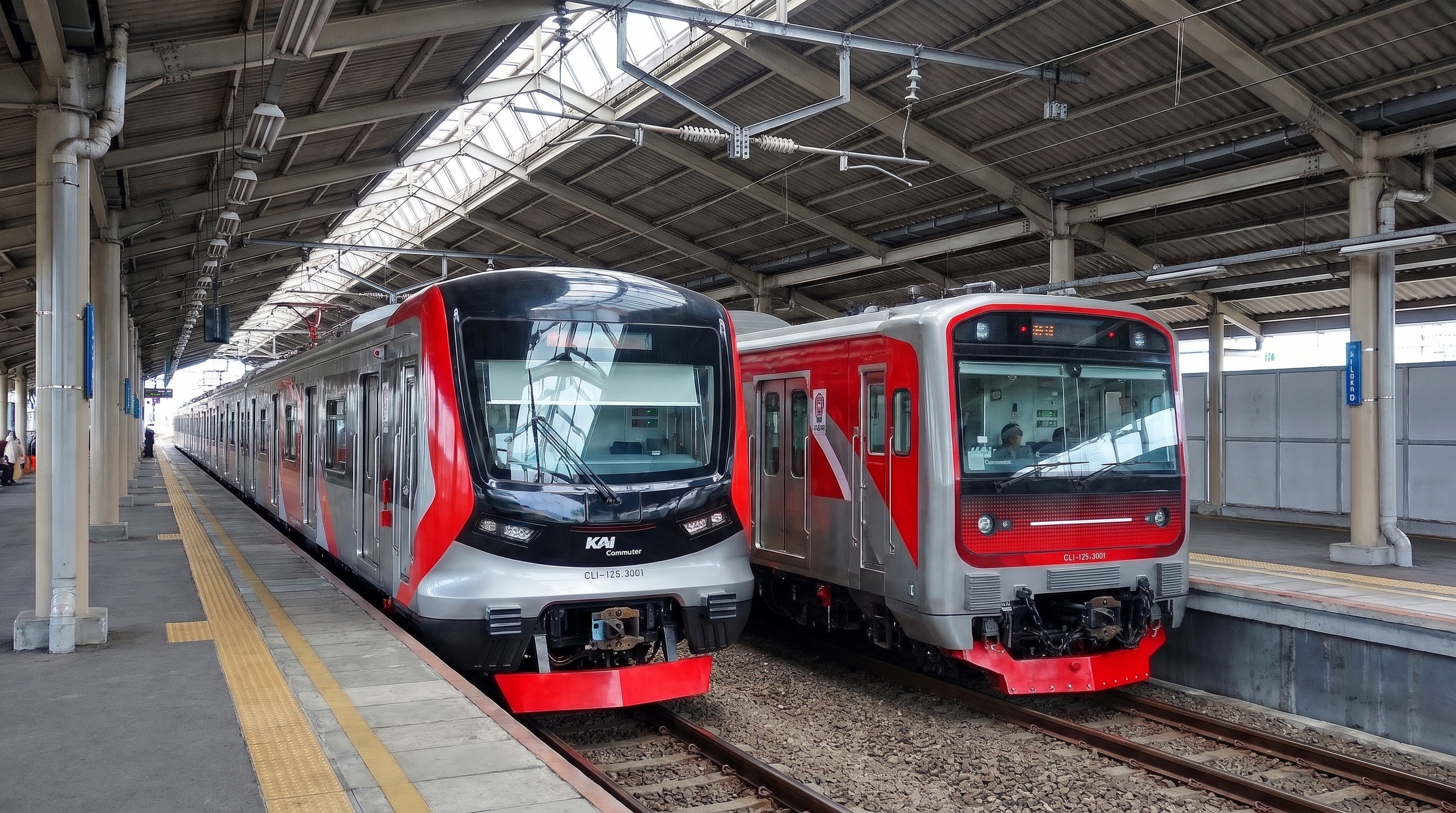
Rather than evicting grassroots traders under cosmetic modernization drives, PT KAI and KAI Commuter forged an inclusive middle path. As documented in the 2025 Sustainability Report (Pages 353–356), the operator custom-engineered dedicated carriages integrated into the Commuter Line Merak fleet, balancing bulk produce transit with rigorous public hygiene standards.
Ergonomic Cabin Architecture: The Farmers and Traders Rail Carriage
Optimized interior configuration: 73 longitudinal seats, non-slip aluminum treadplate cargo zones, and scupper drainage channels.
2. Technical Refurbishment: Anti-Slip, Waterproof, and Scupper Drainage Engineering
Converting standard passenger coaches into robust produce carriers demanded mechanical adaptations executed by KAI's Manggarai Rolling Stock Workshops:
- Embossed Aluminum Treadplate Flooring: Standard vinyl was replaced by heavy-gauge textured aluminum plates, preventing slips when farmers navigate damp floors with heavy wicker hampers while trains are in motion.
- Subfloor Drainage Scuppers: Hampers carrying fresh catch and iced fish naturally shed moisture. Carriages feature six dedicated scuppers that vent fluids directly onto the track formation without contacting electrical undercarriage harnesses. Staff can pressure-wash the entire cabin in under 15 minutes post-shift.
- Longitudinal Perimeter Seating: Seating transitioned from traditional 2-2 face-to-face configurations to wall-mounted longitudinal benches. This opens over 30 square meters of floor space for agricultural cargo while maintaining clear inspection aisles for conductors.
- High-Volume Extraction Ventilation: Industrial exhaust fans accelerate cabin air exchange, preventing organic odors from accumulating or seeping into adjacent standard passenger coaches.
3. PSO Tariff Architecture & Grassroots Socio-Economic Impact
Priced at a flat fare of Rp3,000 courtesy of the Ministry of Transportation's Public Service Obligation (PSO) subsidy, vendors slash transit overhead by up to 70% compared to private open-bed pickup truck rentals costing Rp35,000 to Rp50,000 daily.
| Intermediate Stations | Economic Profile & Primary Commodities | Dedicated Station Logistics | PSO Flat Fare |
|---|---|---|---|
| Merak – Krenceng | Sunda Strait coastal fisheries, salt-cured fish, and fresh shellfish | Dedicated low-gradient trolley ramps and low-platform cargo access | Rp3,000 |
| Cilegon – Serang | Local horticultural greens, bananas, foliage wrapping, and processed foodstuffs | Vendor holding lounges with calibrated industrial scales | Rp3,000 |
| Walantaka – Cikeusal – Catang | Agrarian heartlands: coconuts, bird's eye chilies, cassava, and organic rice | Direct platform-to-parking freight egress for market handcarts | Rp3,000 |
| Rangkasbitung (Terminal) | Rangkasbitung Central Market & transfer hub for KRL Commuter Line to Jakarta (Tanah Abang) | Multimodal express logistics transfer points operated by KAI Logistik | Rp3,000 |
4. A Living Beacon of Inclusivity: Public Transit as a Fundamental Citizen Right
The Farmers and Traders Train stands as proof that railway modernization must never leave grassroots communities behind. Trains are not solely for executive class passengers with rolling luggage; they remain the lifeblood of rural agriculturalists whose daily journeys keep regional food markets thriving.
Frequently Asked Questions (FAQ)
Can regular passengers travel inside the farmers and traders coach?
Yes, though non-trading passengers are encouraged to occupy standard commuter coaches on the same consist for personal comfort given the active market cargo handling within this car.
What is the allowable produce baggage weight per ticket without surcharge?
Each ticketed passenger is permitted agricultural baggage up to 100 cubic decimeters and 20 kg free of charge. Excess baggage is billed at modest excess luggage rates set by KAI Commuter.
Can tickets be booked via the Access by KAI app?
Yes, bookings open 7 days prior on Access by KAI. Tickets are also available on-demand at station ticket counters via Multi-Trip Cards (KMT) or QRIS mobile payments.