Complete History of KA Anggrek (Argo Bromo Anggrek) 1929–2026: Tech, Records & Safety
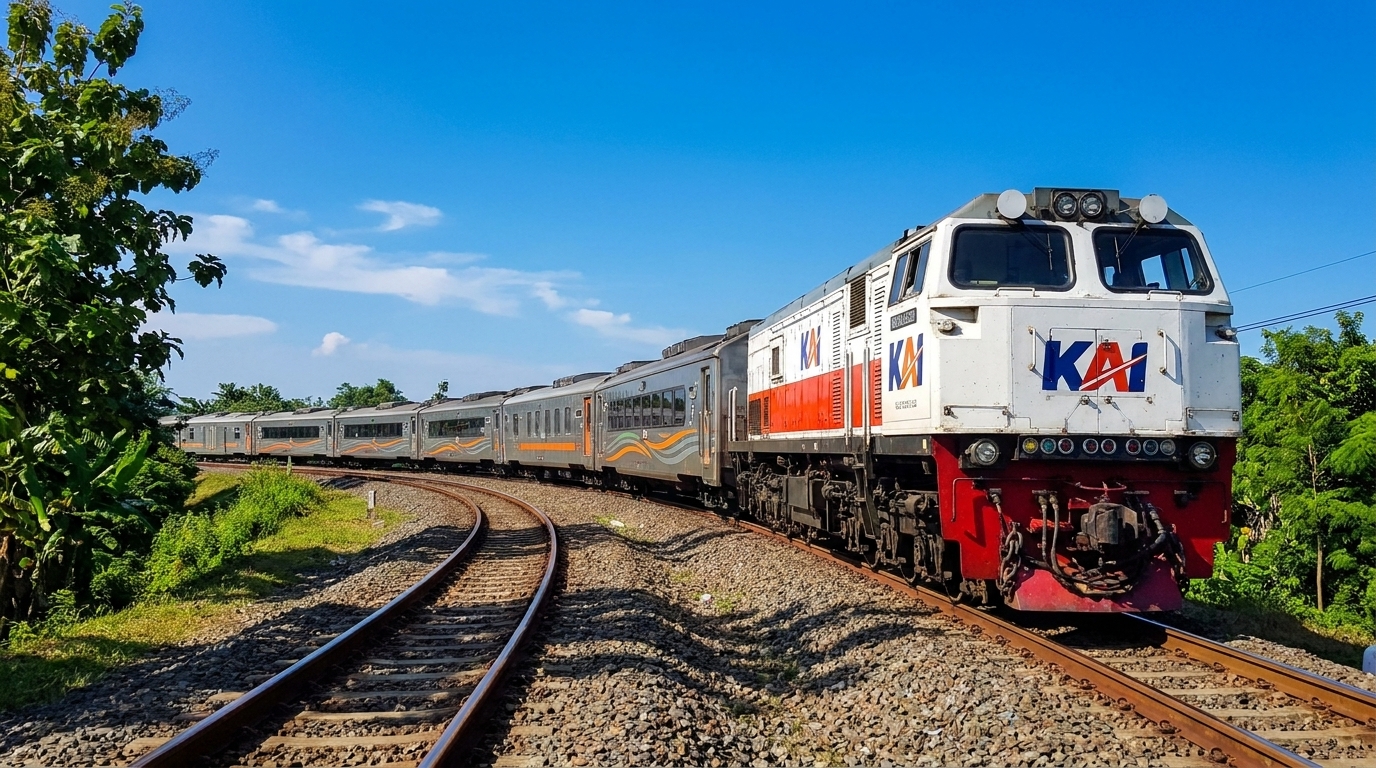
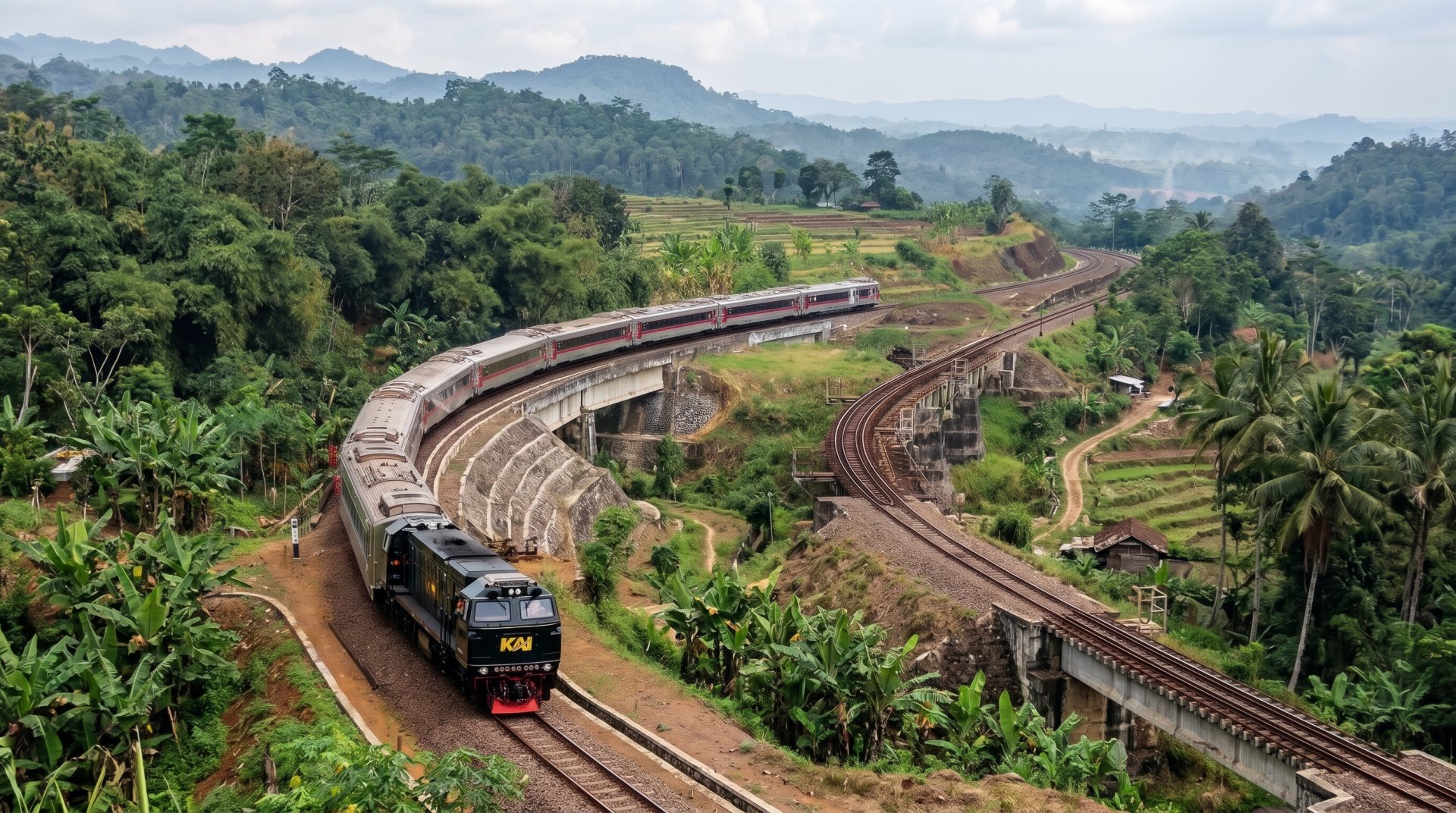
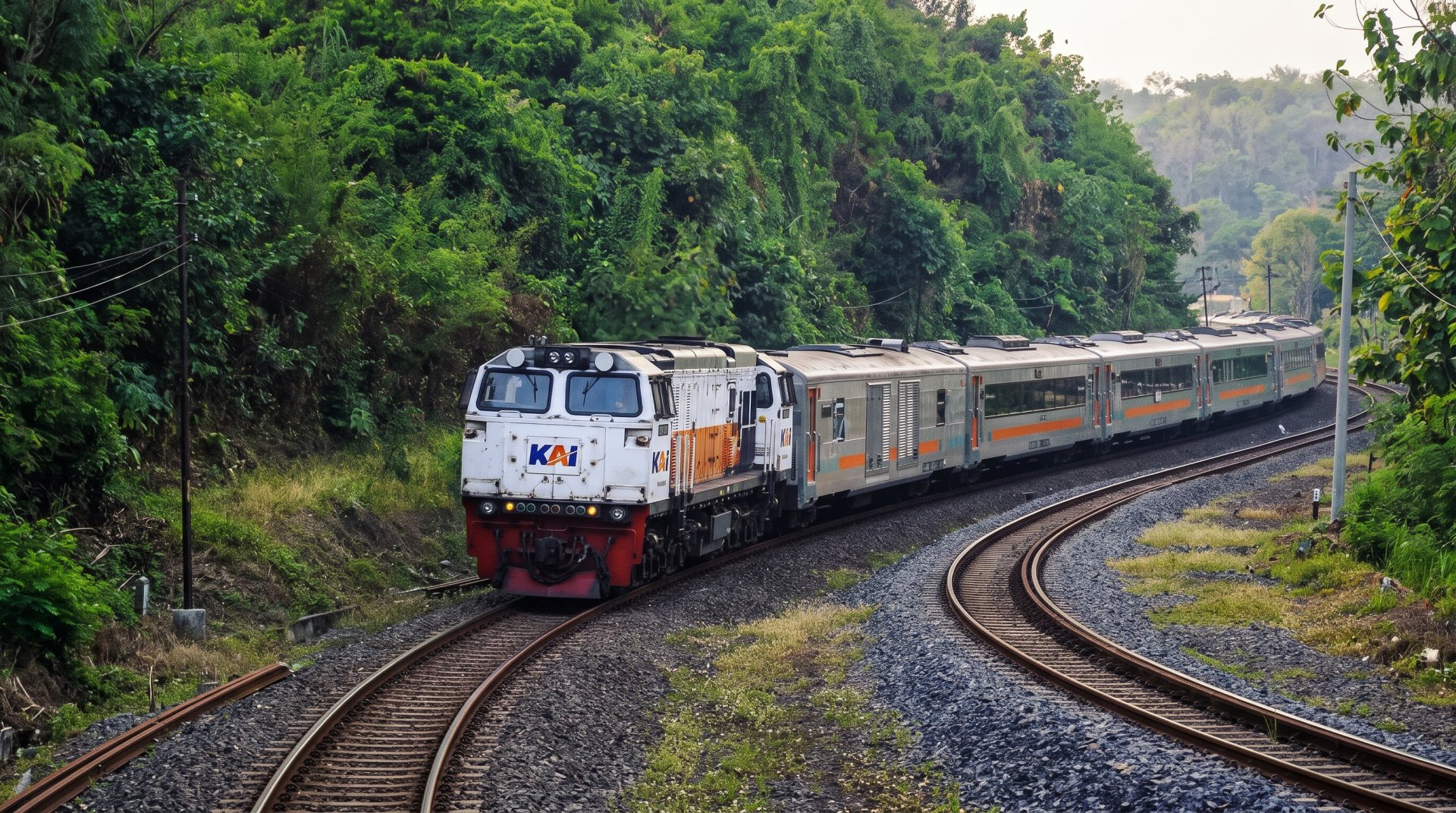
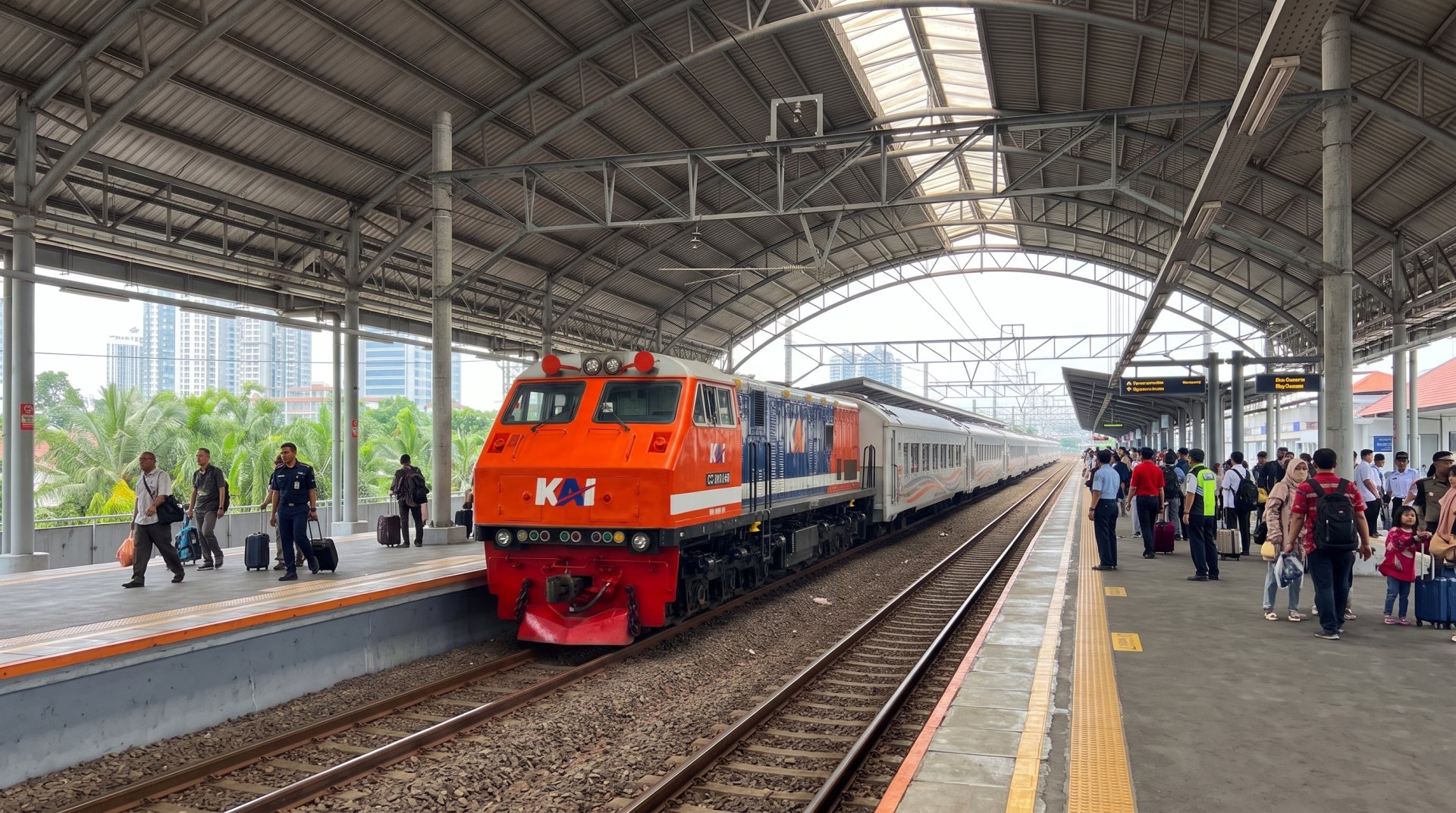
KA Anggrek—widely known for nearly three decades under its iconic name Argo Bromo Anggrek (1997–2026)—is Indonesia's flagship intercity passenger rail service operated by PT Kereta Api Indonesia (Persero) along Java's 720-kilometer Northern Coast (Pantura) corridor linking Gambir Station (Jakarta) and Surabaya Pasarturi Station.
Born from Research and Technology Minister B. J. Habibie's December 1992 vision via the KA Suryajaya prototype (1994), the pioneering JS-950 Argo Bromo (July 31, 1995), and the JS-852 Argo Bromo Anggrek (September 24, 1997), its 31-year trajectory encapsulates the evolution of NT-60, Alstom K9, and TB-1014 bogie engineering, a historic 7-hour-45-minute speed record (February 2025), Suite Class Compartment luxury sleepers (June 2025), and major safety crises—Petarukan (2010), Pegadenbaru (2025), and Bekasi Timur (2026)—preceding its official rebranding to KA Anggrek on May 9, 2026.
Kereta Api (KA) Anggrek—celebrated for nearly thirty years as Argo Bromo Anggrek (1997–2026)—is Indonesia's premier flagship intercity passenger train connecting Gambir Station (Jakarta) and Surabaya Pasarturi Station along Java's 720-kilometer Northern Coast (Pantura) railway corridor. Its origin traces back to December 1992, when Minister of Research and Technology B. J. Habibie proposed a high-speed conventional rail program to commemorate Indonesia's 50th Independence Anniversary in 1995. That vision materialized sequentially through the KA Suryajaya prototype (1994), the inaugural Argo-class JS-950 Argo Bromo (July 31, 1995), and Perumka's pinnacle of luxury, the JS-852 Argo Bromo Anggrek (September 24, 1997). Running over tracks originally laid by colonial operators Nederlandsch-Indische Spoorweg Maatschappij (NIS) and Semarang–Cheribon Stoomtram Maatschappij (SCS) at the turn of the 20th century, KA Anggrek holds the most prestigious train numbers in Indonesia's official railway timetable (GAPEKA): KA 1 through KA 4.
Across 31 years of operational history through mid-November 2026, the Argo Bromo–Anggrek lineage has served as the sharpest mirror of Indonesian railway engineering and institutional evolution. It has traversed multiple rolling stock generations—from the initial JS-950 coaches (1995) and the wide-bodied, Alstom-licensed K9 bolsterless coaches built by PT Industri Kereta Api (INKA) (1997) nicknamed "747 on rail", to corrosion-resistant Stainless Steel Generation 1 (2018/2019) and New Generation (2024) trainsets, and Suite Class Compartment sleeper coaches modified by Balai Yasa Manggarai (2025)—while slashing Jakarta–Surabaya travel times to an all-time record of 7 hours 45 minutes in February 2025.
Yet its reign as the "King of the Northern Line" has also been shadowed by grave safety milestones: repeated K9 bogie derailments, the Petarukan rear-end collision (October 2, 2010), the Pegadenbaru derailment (August 1, 2025), and the fatal collision with a Commuter Line EMU at Bekasi Timur Station on April 27, 2026, which claimed 16 lives. Following the Bekasi Timur tragedy, PT Kereta Api Indonesia (Persero) unexpectedly retired the historic "Argo Bromo" prefix and inaugurated the streamlined KA Anggrek name on May 9, 2026, before a controversial November 2026 proposal to merge KA Sembrani and KA Argo Anjasmoro under the KA Anggrek banner was withdrawn ahead of the GAPEKA 2026 timetable taking effect on December 1, 2026. For evidentiary transparency, specific historical details not explicitly documented in open public archives as of mid-November 2026—such as the exact discontinuation date of complimentary regular executive dining in the early 2000s, the final Pemalang District Court verdict for Petarukan 2010, intermediate station stop timings in GAPEKA 2026, and KNKT's final written report for the August 2025 Pegadenbaru derailment—are explicitly noted in their respective sections.
1. Prehistory of Java's Northern Corridor and the Jakarta–Surabaya Express Lineage (1864–1994)
Long before the "Argo" or "Anggrek" monikers existed, the rail corridor linking Java's two principal economic hubs—Batavia (Jakarta) and Surabaya—emerged from a fragmented mosaic of colonial concessions. Construction of the first railway in the Dutch East Indies began on June 17, 1864 at Kemijen, Semarang, by the private company Nederlandsch-Indische Spoorweg Maatschappij (NIS), which operated the Semarang–Tanggung (1867) to Vorstenlanden (Solo–Yogyakarta) network on the 1,435 mm standard gauge. Conversely, the state-owned Staatsspoorwegen (SS), established in April 1875, adopted the narrower 1,067 mm Cape gauge as a more economical fit for Java's mountainous terrain.
The physical backbone of KA Anggrek's northern route took shape along Java's north coast in the late 19th century through two private concessions initially built for sugar and export freight. On the western and central Pantura, NV Semarang–Cheribon Stoomtram Maatschappij (SCS) took over the Java Spoorweg Maatschappij (JSM) concession on January 18, 1892, completing the Cirebon–Semarang steam tramway, including the Cirebon–Sindanglaut–Losari segment in 1897. Further east, after securing a concession on September 1, 1897, NIS built a new line from Gundih (Grobogan) to Surabaya Pasarturi from both ends, initially disconnected from Semarang due to gauge incompatibility with the older Semarang–Vorstenlanden line. Construction progressed in stages: Surabaya Pasarturi–Lamongan opened on April 1, 1900; Lamongan–Babat on August 15, 1900; Gundih–Kradenan on October 15, 1900; Kradenan–Cepu and Babat–Bojonegoro on March 1, 1902; until the entire Gundih–Surabaya Pasarturi link was completed on February 1, 1903.
Although the northern route was linked by 1903, the first same-day express rail connection between Jakarta and Surabaya debuted on Java's Southern Line. To bypass fragmented northern operators (SS, SCS, and NIS) and gauge breaks around Semarang, Staatsspoorwegen built a 44-kilometer Cirebon–Kroya cutoff bypassing the Priangan highlands. On November 1, 1929, SS inaugurated the Eendaagsche Express ("One-Day Express"), covering the 827-kilometer Batavia (Weltevreden/Gambir)–Surabaya route via Cirebon, Purwokerto, Kroya, and Yogyakarta in 13 hours 30 minutes (some sources cite ~13 hours). Hauled by the fastest steam locomotives of the era, the Werkspoor Amsterdam C 53 class (90–100 km/h), the Eendaagsche Express pioneered ice-block underfloor air cooling in First and Second Class coaches before both it and its nocturnal successor (Java Nacht Express, 1936) were halted in February 1942 by the Japanese military occupation. While its southern tracks were later inherited by KA Bima, Gaya Baru Malam Selatan, and Argo Semeru, the Eendaagsche Express established the enduring cultural standard of a top-priority "flagship day express" connecting Jakarta and Surabaya without an overnight hotel stay.
Following the Japanese occupation—during which all Javanese lines were unified under Rikuyu Kyoku and NIS's 1,435 mm track was regauged to 1,067 mm—the newly formed Djawatan Kereta Api Republik Indonesia (DKARI/DKA, founded September 28, 1945) restored fast Jakarta–Surabaya services in 1950 via the northern line due to war-damaged southern bridges such as the Progo Bridge. From the 1960s onward, the northern trunk line developed a direct ancestral lineage leading to KA Anggrek:
2. Revolutionary Birth: Habibie's Vision, Suryajaya, JS-950 Argo Bromo, and JS-852 Argo Bromo Anggrek (1992–2002)
The leap that created Indonesia's "Argo" tier originated from a strategic proposal by Research and Technology Minister B. J. Habibie aboard the Toraja tourist coach en route to Bandung in December 1992. The concept married conventional rail speed with aircraft-grade cabin comfort to celebrate Indonesia's 50th Independence Anniversary in 1995 through two flagship projects: JB-250 (Jakarta–Bandung in 2 hours for the 50th Anniversary) and JS-950 (Jakarta–Surabaya in 9 hours for the 50th Anniversary). To execute it, state operator Perumka and the Agency for the Assessment and Application of Technology (BPPT) partnered with PT INKA Madiun—which designed the NT-60 (K8) high-speed bogie in 1993 to raise operational ceilings from 90–100 km/h to 120 km/h—and Balai Yasa Manggarai to refurbish older executive coaches using ergonomic benchmarks from France's TGV, Germany's ICE, US Amtrak, and Japan's Shinkansen.
The KA Suryajaya Prototype (1994–1995)
Before PT INKA's newly built trainsets were completed, Perumka launched KA Suryajaya as an operational testbed and commercial trial for the 9-hour Jakarta–Surabaya corridor. Its consist was built by rehabilitating 1960s East German-built ex-KA Bima executive coaches, fitting them with new NT-60/K8 bogies, and repainting them in a Blue–White–Blue livery. Hauled by CC 201 batch 3 locomotives (from Jatinegara Depot and occasionally Bandung Depot) capable of 120 km/h, Suryajaya operated in a BP + S + M1 + 6 K1 formation across two trainsets.
Following trial runs starting December 10, 1994 (briefly suspending Mutiara Utara), KA Suryajaya drew overwhelming market demand; historical records citing Berita Yudha (January 1995) document load factors reaching 95–100% at a fare of Rp71,500. On January 19, 1995, it was upgraded to daily regular service (KA 8001 departing Surabaya Pasarturi 19:00–04:30 WIB; KA 8002 departing Gambir 20:00–05:30 WIB). From an initial 9 hours 50 minutes, Suryajaya trimmed travel time to 9 hours 30 minutes and—according to railfan archives—set a trial record of 9 hours 13 minutes on June 8, 1995, with one set even deployed as an Extraordinary Train (KLB) carrying delegates for the 1995 Asia-Africa Conference on the Jakarta–Bandung corridor. Although "Suryajaya JS-950" was considered as a permanent brand, Perumka opted for mountain names to signify its top tier, retiring KA Suryajaya on August 16, 1995 (from Gambir) and August 17, 1995 (from Surabaya Pasarturi).
Inauguration of JS-950 Argo Bromo (July 31, 1995)
Phase one culminated on July 31, 1995—National Technology Day—when President Soeharto and B. J. Habibie inaugurated JS-950 Argo Bromo (Gambir–Surabaya Pasarturi) alongside JB-250 Argo Gede (Gambir–Bandung) at Gambir Station. Derived from the Old Javanese word for "mountain," Argo designated Perumka's highest service class, paired with iconic mountains near each destination—in this case Mount Bromo in East Java.
JS-950 also marked the debut of the aerodynamic CC 203 (GE U20C) diesel-electric locomotive, 12 units of which were imported Complete Build Up (CBU) from General Electric in the United States in early 1995. PT INKA's newly manufactured K1 0 95 xx coaches set a new domestic benchmark: white exteriors with grey window stripes, spacious 50-seat plush sofa layouts, carpeted floors, wide windows, dual AC units per coach, six televisions, automatic inter-vestibule doors, and NT-60 bogies. Initially numbered KA 8069 and KA 8070, Argo Bromo was soon elevated to KA 1 and KA 2 ("Flagship Trains") with a 9-hour target—a feat PT INKA noted had never before been achieved in Indonesian rail history. Railfan archives also note that early Argo Bromo trips included complimentary meals for passengers, though the exact discontinuation date of inclusive dining in regular executive class is not documented in open official records.
Birth of the "747 on Rail": JS-852 Argo Bromo Anggrek (September 24, 1997)
JS-950's success prompted Perumka (under President Director Soemino Eko Sapoetro) and PT INKA to develop a faster, more opulent second generation. On Wednesday, September 24, 1997—one day ahead of its originally scheduled September 25 launch—JS-852 Argo Bromo Anggrek (also referred to as Argobromo II) was inaugurated simultaneously at Gambir Station by Transport Minister Haryanto Dhanutirto and at Surabaya Pasarturi Station by East Java Governor Basofi Soedirman, with the inaugural Surabaya departure hauled by CC 203 25. Vice President Try Sutrisno also personally rode and inspected the new trainset during its launch year.
The code JS-852 stood for an 8-hour Jakarta–Surabaya target for Indonesia's 52nd Independence Anniversary. The suffix Anggrek (Orchid) honored Indonesia's native flower while naming the special KZ (Super Executive) coach marshaled into the consist. Initial 1997 procurement covered 3 trainsets (30 coaches, series K1-979xx and KZ-979xx) valued at Rp33 billion (~Rp1.1 billion per coach), financed via a leasing arrangement with Bank BNI as lessor. In 2001, two additional K1-20019xx trainsets were acquired, with one allocated to Argo Bromo Anggrek (including disability-accessible coach K1 0 01 08). By 1998, the standard consist comprised CC 203 + 1 KZ + 6 K1 + 1 M1 + 1 BP.
The 1997 edition's interior and exterior sophistication earned it the nickname "747 on rail" (a Boeing 747 on tracks). Its white body accented with pink stripes and orchid motifs combined aviation-inspired cabin comfort with cutting-edge business amenities. The special "Anggrek" KZ class sat above Executive (K1) with 2–1 seating and individual power outlets for laptops and mobile phones, while K1 (2–2, 50 seats) offered footrests, folding tables, enclosed overhead luggage bins, thermal and acoustic insulation, pneumatic sliding doors, and dual spacious end-vestibule toilets. Aboard the train, a dedicated Business Centre operated in partnership with Excelcomindo (XL) provided internet-connected desktop computers, fax machines, and telephone lines, alongside a bar/café-style dining car (M1) featuring karaoke—initially managed by PT Panbakti Sentosa and famed for its steak menu.
Upon its September 1997 debut, ticket prices were the highest in Indonesia: Rp100,000 for daytime K1, Rp125,000 for overnight K1, and Rp150,000 for KZ Super Executive. Operating two daily round trips (morning and night) in an actual 8 hours 30 minutes with stops only at Semarang Tawang and Pekalongan (for crew changes), Argo Bromo Anggrek took over the prestigious KA 1–4 numbers from JS-950 in 1998. Ex-JS-950 coaches were progressively reassigned to KA Bima on the Southern Line, and after both services briefly coexisted on the northern trunk, PT KA's early-2000s rationalization (around 2002) permanently retired JS-950 Argo Bromo as well as the special KZ class.
3. Rolling Stock, Bogie, and Locomotive Evolution (1995–2026)
The technical history of KA Anggrek is a chronicle of Indonesian railway engineering experimentation—from an ambitious leap into European air-suspension technology that yielded costly lessons, to domestic manufacturing maturity built around stainless steel carbodies and locally engineered bogies.
Six Phases of Coach and Bogie Architecture
Chronologically, rolling stock assigned to the KA Anggrek lineage evolved across four primary architectures—flat-sided steel coaches on coil-spring NT-60 bogies (1994–2002), wide-bodied monocoque coaches on Alstom K9 air-spring bogies (1997–2019), stainless steel coaches on PT INKA TB-1014 swing-bolster bogies (2018–present), and Balai Yasa Manggarai-modified T1 sleeper compartments (2025)—mapped across six operational phases:
The K9 Bogie Paradox: Triumph and Decline of the "Wide-Body" Fleet (1997–2020)
No technical component in Indonesian rail history is as iconic yet controversial as the K9 (CL243 bolsterless) bogie built by PT INKA under GEC-Alsthom license. Eliminating the traditional center bolster, the K9 supported the carbody directly on secondary air springs paired with shock absorbers, an anti-roll device, and conical rubber primary springs. Derived from TGV suspension principles, it delivered remarkably smooth ride quality up to 120 km/h.
However, this mechanical sophistication proved fragile on Indonesian track geometry. Shortly after launch, the 1997–1998 Asian Financial Crisis collapsed the rupiah from ~Rp2,500 to Rp16,650 per USD, making imported French air-suspension spares prohibitively expensive with long lead times. Maintenance shortfalls triggered recurring derailments: when some K9 sets were assigned to KA Argo Lawu on the winding southern corridor, repeated derailments forced their transfer to KA Argo Sindoro and Argo Muria in the north. On its home route, Argo Bromo Anggrek suffered major derailments between Karangjati and Gubug (October 27, 2003), at Manggarai Station (September 28, 2008), and culminating on July 30, 2010, when 8 axles (3 of 6 coaches) derailed approaching Manggarai. In response, the Ministry of Transportation ordered PT KAI to withdraw all K9-equipped sets from regular service starting December 2010.
Between 2010 and 2015, the wide-body fleet underwent a turbulent rehabilitation. After an initial repaint from pink stripes to purple around 2010, coaches were sent to PT INKA and Balai Yasa Surabaya Gubeng for re-engineering. In 2011, PT INKA introduced the K9 RE (Re-Engineering) bogie modification, replacing air springs and conical rubber components to better tolerate local track conditions. Refurbished sets returned for the August 2011 Eid peak in a leaf-patterned "Go Green" livery with eco-toilets, followed by interior seat and rack trials in 2013–2014. Yet maintenance pressures persisted: during the 2015 overhaul (coinciding with the uniform Airline/Kesepakatan livery), original disc brakes were replaced with conventional tread brake blocks, automatic sliding doors were converted to manual operation, and footrests were removed. In 2019, after 22 years of service, the wide-body fleet was retired from Argo Bromo Anggrek in favor of PT INKA's Stainless Steel sets. Transferred briefly to Semarang Poncol Depot for Argo Sindoro, Argo Muria, and Sembrani, overhaul bottlenecks and the 2020 COVID-19 downturn sealed their fate: left parked outdoors at Brumbung, Gubug, and Jerakah stations in Daop 4 Semarang while their high-output generator sets were cannibalized for other trains.
Stainless Steel Revival and the Ultra-Premium Era (2018–2025)
Modern reliability for KA Anggrek rests on PT INKA's domestically engineered K10 / TB-1014 bogie (first trialed in 2014). Dispensing with fragile imported air springs, TB-1014 (and its refined TB-1014 NG variant) combines the durability of K5 and K8 bogies—using 16 conical rubber bonded primary springs, a swing-bolster secondary suspension, and horizontal dampers to suppress lateral sway at 120 km/h. Per PT INKA's 2023 specifications, the bogie measures ±3,620 mm in length, 2,200 mm wheelbase, 774 mm new wheel diameter (698 mm wear limit), ±4,500 kg weight, and 15-ton maximum axle load, with scheduled maintenance intervals from monthly (15,000 km) to four-year overhauls (720,000 km).
Built on the TB-1014 platform, PT KAI elevated the train through three consecutive milestones: (1) Indonesia's first Luxury Sleeper coach (June 12, 2018), featuring 18 private 1–1 seats with 170° electric recline, AVOD, USB ports, and a 2 × 1 m restroom; (2) Executive Stainless Steel New Generation (March 29, 2024), part of a 612-coach national procurement featuring quiet electric sliding doors, corrugated bellows, UV-blocking tempered double glass, real-time PIDS displays, and wood-accented dining cars; and (3) second-generation Suite Class Compartment coaches (June 1, 2025), rebuilding 2009 ex-Gajayana coaches at Balai Yasa Manggarai onto 120 km/h TB-1014 bogies to provide 32 private 180° lie-flat massage suites across two T1 cars with instant switchable glass privacy and three-course fine dining.
Locomotive Progression
4. Chasing Time: Northern Double Track, GAPEKA, and Speed Records (1995–2026)
The travel-time trajectory of KA Anggrek over three decades is not a straight upward line, but a dramatic dip in the 2000s followed by a record-breaking surge in the 2020s. When launched in 1997, Argo Bromo Anggrek achieved an impressive commercial average speed of 84.71 km/h (8 hours 30 minutes) thanks to minimal intermediate stops. However, during the 2000s, travel times deteriorated to 9.5–10 hours—and an economic study by Slamet Riyadi University even recorded trips stretching up to 12 hours—driven by single-track crossing delays, infrastructure speed restrictions exacerbated by K9 bogie sensitivity, and added commercial stops such as Cirebon (2008–2009), Tegal, Cepu, and Bojonegoro (December 16, 2019).
The turning point arrived when the Ministry of Transportation completed the 727-kilometer Northern Java Double Track from Jakarta to Surabaya Pasarturi—built in just 1 year and 8 months—and fully commissioned it by September 2014. Eliminating single-track meets boosted Java's rail corridor capacity by 50% (40% nationally), cut locomotive fuel burn by ~7%, and shaved an average of 45 minutes off northern schedules. After a brief 2019 GAPEKA anomaly that saw KA Argo Wilis take KA 1–2 and COVID-19 suspensions between April and August 28, 2020, PT KAI executed consecutive speedups: 8h 29–30m (June 1, 2021), 8h 10m (September 24, 2021 at 120 km/h), 8h 05m (June 1, 2023), and an all-time record of 7 hours 45 minutes (92.90 km/h commercial average) on February 1, 2025 (GAPEKA 2025) by dropping Bojonegoro and Pekalongan stops to retain only Cirebon and Semarang Tawang. Under GAPEKA 2026 (effective December 1, 2026), departures are brought forward by 20–55 minutes with a 12–14 minute operational safety buffer, setting schedules at 7 hours 57–59 minutes:
Note: GAPEKA 2026 arrival times reflect early-November 2026 booking system schedules, while departure times were confirmed following the November 19, 2026 cancellation of train name mergers. Intermediate stop timings for GAPEKA 2026 had not been published in full in open releases.
5. Business Economics, Intermodal Wars, and Commercial Performance (1997–2026)
KA Anggrek's commercial history illustrates how long-distance Indonesian rail adapted to three major market shocks: the 1998 Asian Financial Crisis, the 2000s Low-Cost Carrier (LCC) aviation boom, and the post-2018 Trans-Java Toll Road luxury sleeper bus wave. Between 1997 and 2001, even as inflation pushed train fares to Rp185,000–Rp250,000, full-service airfares between Jakarta and Surabaya sat at Rp700,000. That advantage vanished on March 1, 2002, when Transport Ministerial Decrees No. 8 and 9 of 2002 abolished domestic airfare floors. LCCs such as Lion Air and Citilink slashed Jakarta–Surabaya tickets to Rp160,000 for a 65-minute flight (13-airline average Rp160,000–Rp200,000), undercutting Argo Bromo's Rp190,000 fare when rail trips took up to 12 hours.
As a result, national executive rail ridership plunged 40% in 2002 (and 35% on Jakarta–Surabaya), while Jakarta–Surabaya executive load factors collapsed from 81% in Q1 2000 to 40% in Q1 2004, cutting executive revenue by 30% in 2003. PT KAI responded by founding catering subsidiary PT Reska Multi Usaha in 2003 (now KAI Services), introducing dynamic pricing in April 2004, launching online/ATM ticketing, and executing Ignasius Jonan's 2009–2014 service transformation—including a total smoking ban across all trains in 2012. When Trans-Java Toll Road double-decker and sleeper buses (PO Sinar Jaya Rp504,000, 27 Trans Rp500,000, Agra Mas Rp550,000, Rosalia Indah Rp625,000) challenged rail fares in 2018–2024, KAI positioned Argo Bromo Anggrek upmarket with congestion-free sub-8-hour reliability, free Wi-Fi, live cooking dining cars (September 2021), New Generation coaches, and dynamic 2025–2026 fares of Rp620,000–Rp980,000 (Executive; GAPEKA 2026 base range Rp650,000–Rp720,000) and Rp2,100,000–Rp2,300,000 (Suite Class).
This premium differentiation paid off. Driven by southern Suite Class load factors exceeding 131.09% on Argo Semeru and 113.16% on Bima in 2024, northern Suite Class launched in June 2025. Between January and September 2025 (273 days), Argo Bromo Anggrek carried 288,065 passengers (~1,055/day), peaking in September 2025 at 38,529 passengers (1,284/day, or an estimated 74.3%–84.1% dynamic utilization per trip on a 382–432-seat consist, tracking toward ~385,000 annual riders). Across KAI Group through Q3 2026, total ridership grew 7.06% YoY to 394.44 million, with KAI Mainline growing 8.33% YoY to 43.96 million passengers at a 97.31% arrival On-Time Performance.
6. Safety Record: From Petarukan (2010) and Subang (2025) to Bekasi Timur (2026)
Beneath its reputation for speed and prestige, the Argo Bromo–Anggrek lineage carries a sobering safety record that repeatedly forced national regulatory overhauls:
Petarukan 2010, Pegadenbaru 2025, and the Bekasi Timur 2026 Systemic Domino Effect
In the October 2, 2010 Petarukan collision (02:48 WIB), KA 4 Argo Bromo Anggrek (CC 203 40) overran red home signal J710 and struck KA 116 Senja Utama Semarang on Track 3, killing 35 people and injuring 34. KNKT's final report (KNKT-10-10-08-02-A) attributed the crash not merely to individual error, but to severe driver microsleep from dense rosters, inadequate overnight dispatcher communication, lack of automatic train protection, and depot medical clinics closing at 20:00 WIB. Driver M. Halik Rudianto was prosecuted under Article 359 of the Criminal Code and sought a 6-year sentence, though the final Pemalang District Court verdict is absent from open archives.
Fifteen years later, on August 1, 2025 (15:47 WIB), the flagship's brand-new New Generation and Suite Class consist derailed at Pegadenbaru Station (km 124), canceling 80 trains, rerouting 42, and triggering 12,000 full refunds. Following the discovery of a wheelset end cup at Tanjung Station an hour prior, Transport Minister Dudy Purwagandhi ordered a direct audit of PT INKA's manufacturing quality and KAI's maintenance SOPs on August 14, 2025; KNKT's written final report remains unpublished as of mid-November 2026.
The defining crisis struck on April 27, 2026 at Bekasi Timur Station. As reconstructed in KNKT's September 28, 2026 final report, a six-minute chain reaction unfolded after an electric Green SM taxi stalled at illegal crossing JPL 86 (20:46 WIB) and was hit by KRL KA 5181 (20:48 WIB), halting KRL KA 5568A on Track 1 at Bekasi Timur. Radio congestion on PPKP Selatan's console, the lack of direct radio or coordination SOPs between PPKP Timur (controlling KA 4B) and PPKP Selatan, a green exit aspect (J12) at Bekasi without a yellow warning before curved red block signal B104, polycarbonate windshield light scattering on CC 206 13 86, and the absence of curve emergency-braking SOPs led KA 4B to apply emergency brakes only 263 meters out—impacting KA 5568A's rear women-only car (TC 6024TM) at 20:52:12 WIB, killing 16 and injuring 107. When Jakarta Metro Police named KA 4B driver AN (Nofiandri, 37) as the sole rail-crew suspect on September 29, 2026 under charges carrying up to 12 years in prison, lawmakers, transport experts, and PERADI Pro Bono lawyers protested that criminalization ignored KNKT's six systemic findings.
7. End of the "Argo Bromo" Era, Birth of "KA Anggrek," and the GAPEKA 2026 Drama (May–November 2026)
Eight days after Bekasi Timur and four days after the Grobogan crossing crash, PT KAI announced on May 5, 2026 that effective May 9, 2026, Argo Bromo Anggrek would be simplified to KA Anggrek, ending 31 years of the "Argo Bromo" name (1995–2026). KAI denied rumors of superstition or "bad-luck cleansing," framing the change as brand modernization alongside earlier drops of the "Argo" prefix (Argo Cheribon becoming Cheribon in 2025, and Argo Muria/Sindoro/Merbabu merging into KA Muria on October 1, 2026). When November 1–2, 2026 ticket bookings briefly displayed a sweeping GAPEKA 2026 plan merging KA Sembrani (KA 55–58) and KA Argo Anjasmoro (KA 35–36) into a 10-trip-daily KA Anggrek umbrella, fierce passenger backlash over lost heritage and rolling-stock mismatches (SS Gen 1 vs. SSNG/Suite Class) forced KAI to cancel all name mergers on November 2–3, 2026. Entering GAPEKA 2026, KA Anggrek retains exclusive rights to KA 1–4, leaving only five "Argo" trains nationwide: Argo Semeru, Argo Wilis, Argo Lawu, Argo Dwipangga, and Argo Anjasmoro.
8. Future Outlook: Bekasi–Cikarang DDT, SKKO, and the Surabaya High-Speed Rail Shadow (2027 Onward)
KA Anggrek's fourth decade will be shaped by two national priorities. First, on safety infrastructure, the Bekasi Timur tragedy elevated the Bekasi–Cikarang Double-Double Track (DDT) project—separating Commuter Line and intercity tracks beyond the Jatinegara–Bekasi DDT completed in 2019–2022—to top priority for a 2027 construction start funded jointly by the state budget and PT KAI, alongside KNKT's mandate to review Automatic Train Protection (SKKO) under Ministerial Regulation No. 52/2014. Second, while President Prabowo Subianto's administration supports extending the 350 km/h Whoosh high-speed rail to Surabaya (3–5 hours) without state budget funding, ongoing 2026 negotiations over PT KCIC asset transfers and debt restructuring via Danantara provide KA Anggrek a durable medium-to-long-term runway—anchored by city-center Gambir–Pasarturi access, overnight Suite Class sleeper utility, and low-carbon conventional rail efficiency.