History & Status of Indonesia's Argo Class: From 1995 Pioneers to Gapeka 2026
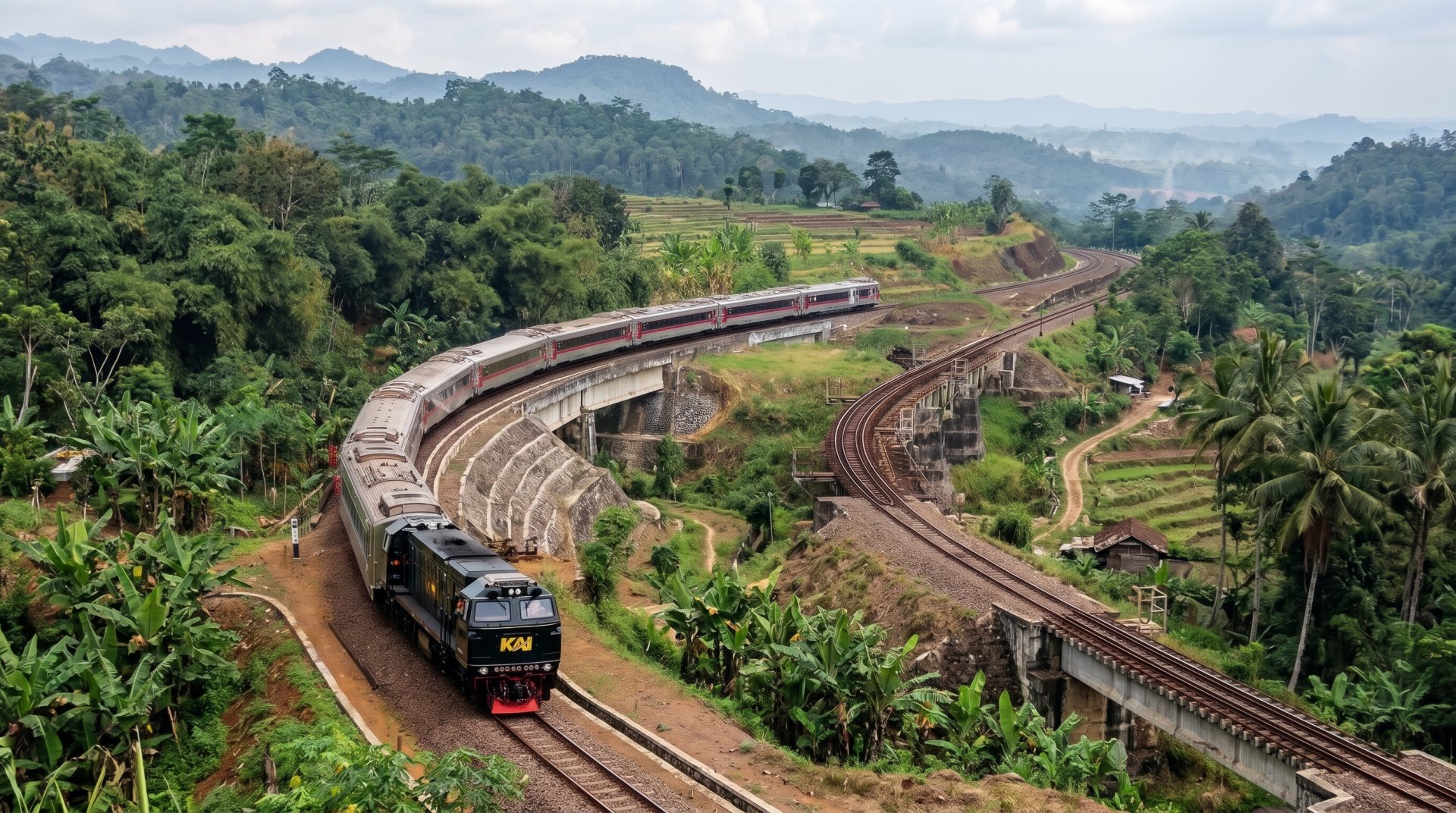
Executive Summary: The Fate of Indonesia's Flagship Rail Tier
Under the 2026 Train Travel Chart (Gapeka 2026) taking effect on 1 December 2026, Indonesia's prestigious Argo Class remains alive—though its roster has shrunk sharply amid brand simplification waves in 2025–2026. Official schedules compiled as of 18 November 2026 confirm that PT KAI still retains five trains carrying both the "Argo" name and official "Argo class" administrative designation: Argo Semeru, Argo Wilis, Argo Lawu, Argo Dwipangga, and Argo Anjasmoro.
Public perception that KAI abolished the Argo class stemmed from the phased removal of the "Argo" prefix on Argo Parahyangan, Argo Cheribon, Argo Bromo Anggrek (now KA Anggrek), and the Semarang trio merged into KA Muria. Tensions peaked on 1 November 2026 when Access by KAI briefly displayed a 20-train consolidation plan—only for KAI to cancel the rebranding on 2–3 November 2026 following intense public backlash.
When Indonesia's 2026 Train Travel Chart (Gapeka 2026) takes effect on 1 December 2026, passenger rail services designated as "Argo class" remain operational, even though their numbers have contracted sharply amid a sweeping brand-simplification drive across 2025–2026. According to schedule data compiled by national daily Kompas.com as of 18 November 2026, PT Kereta Api Indonesia (Persero) or KAI continues to operate five trains carrying the Argo name: Argo Semeru, Argo Wilis, Argo Lawu, Argo Dwipangga, and Argo Anjasmoro. Each runs two daily trips and is still administratively recorded as "Argo class" rather than ordinary executive class.
Public belief that KAI had "eliminated the Argo class" stems from two overlapping policy waves in late 2026. First, KAI progressively dropped the "Argo" prefix from several iconic routes: Argo Parahyangan and Argo Cheribon on 1 February 2025, Argo Bromo Anggrek into KA Anggrek on 9 May 2026, and the merger of Argo Muria, Argo Sindoro, and Argo Merbabu into KA Muria on 1 October 2026. Second, when Gapeka 2026 ticket sales opened on 1 November 2026, the Access by KAI app briefly displayed a plan to merge 20 long-distance train names—including folding Argo Semeru into Bima, Argo Wilis into Turangga, and Argo Anjasmoro into Anggrek. Intense pushback from passengers and railfan communities forced KAI to rescind the merger on 2–3 November 2026, preserving all five remaining Argo identities.
From a regulatory standpoint, PT KAI has never issued a formal decree abolishing "Argo class" as a ticketing tier—unlike its official elimination of Business Class across all regular Javanese trains on 15 July 2025. Instead, KAI's actions represent route-level brand consolidation, even as the functional gap between Argo and regular Executive services has steadily narrowed over the past decade.
Dissecting the Argo Paradox: Ticketing, Operations & Branding
The persistence of the Argo label in Gapeka 2026 highlights a growing divergence between ticketing metadata, operational fleet pooling, and public branding. In the ticketing system, Argo Semeru, Argo Wilis, Argo Lawu, Argo Dwipangga, and Argo Anjasmoro are explicitly tagged as "Argo class"—preserving the supreme service hierarchy established by Perumka in 1995.
Operationally, however, cabin comfort and rolling stock between Argo and non-Argo Executive trains (popularly dubbed "Satwa" trains such as Taksaka, Turangga, Bima, Gajayana, Anggrek, Sembrani, and Muria) have largely converged since Ignasius Jonan's service reforms. Shared rolling-stock rotation (such as Argo Semeru sharing consists with KA Bima, or Argo Wilis rotating with KA Turangga) means the primary differentiators are now speed and stopping patterns rather than seat quality.
Internal regional communications ahead of Gapeka 2026 reflect this blurred boundary: Daop 4 Semarang's timetable announcements still grouped KA Muria (KA 17–27) under the "KA ARGO" header even after the prefix was dropped on 1 October 2026, while Daop 8 Surabaya's November 2026 advisories still referred to KA 1 and KA 3 as "KA Argo Bromo Anggrek" months after its 9 May 2026 renaming to KA Anggrek. Internally and culturally, "Argo" still denotes KAI's premier flagship tier.
History of the Argo Class in Indonesia (1995–2025)
Origins and Naming Philosophy
The Argo class emerged from Perumka's 1990s passenger-tier restructuring. After streamlining classes from Executive-A/B, Business, and Economy (11 March 1992) into Executive, Business, and Economy, Perumka marked Indonesia's 50th Independence anniversary in 1995 by introducing an ultra-premium tier above regular Executive: "Argo Executive Class," officially defined by manufacturer PT INKA as Perumka's highest passenger tier.
Derived from the Old Javanese word for "mountain," the "Argo" prefix was paired with mountains near each train's destination or corridor to project prestige—to the point that an economy train from Yogyakarta to Ketapang originally named KA Argopuro was renamed KA Sri Tanjung in 1995 to protect exclusivity. Over time, exceptions emerged: Argo Bromo Anggrek (1997) added "Orchid" to signify its new-generation coaches; Argo Dwipangga (1998) kept the name of Indra's mythical elephant; Argo Jati (2007) honored Sunan Gunung Jati; and Argo Parahyangan (2010) and Argo Cheribon (2019) adopted cultural region and historic city names.
Pioneer Era and Mainline Expansion (1995–2007)
The Argo era began in July 1995 (31 July 1995 in national press archives; 17 July 1995 in community records) with two high-speed pioneers: KA Argo Bromo (JS-950, Jakarta–Surabaya Pasarturi in 9.5 hours, evolving from KA Suryajaya) and KA Argo Gede (JB-250, Jakarta–Bandung in 2.5 hours). Equipped with wide-window PT INKA coaches, complimentary snacks (and full meals on Argo Bromo), they launched at a steep IDR 150,000 fare.
Expansion followed swiftly: following the 13 July 1995 JS-750 Jakarta–Solo trial and JSO-751 prototype, KA Argo Lawu debuted on 21 September 1996 (8 coaches, 400 seats, 576 km in 7.5 hours, stopping only at Yogyakarta and Purwokerto), joined by KA Dwipangga on 21 April 1998 (upgraded to Argo Dwipangga on 5 October 1998). A technological leap arrived on 24 September 1997 with KA Argo Bromo Anggrek, introducing K1 97 coaches on French Alstom CL243 (K9) bogies with aircraft-inspired interiors modeled on France's TGV and Germany's ICE—eventually replacing JS-950 Argo Bromo in the early 2000s. Subsequent launches included KA Argo Muria (22 December 1997, with Argo Muria I becoming KA Argo Sindoro in 2007), KA Argo Wilis (8 November 1998, the sole Argo based outside Jakarta), and KA Argo Jati (12 April 2007, Gambir–Cirebon).
Mixed-Class Shift and Final Additions (2010–2025)
Argo purity eroded in 2010 after KA Argo Gede posted IDR 40 billion in losses in 2009 and ceased operations on 27 April 2010. Its successor, KA Argo Parahyangan, became the first "anomalous" Argo by mixing Executive with Business (later New Image Economy in 2016) and eventually offering Economy (IDR 150,000), Executive (from IDR 250,000), and Luxury (IDR 380,000–510,000), alongside the 2017 Argo Parahyangan Premium (rebranded KA Pangandaran on 2 January 2019). Mixed classes also characterized KA Argo Cheribon (16 August 2019). Between 2023 and 2025, KAI's naming strategy diverged: on 1 June 2023 it launched Argo Semeru and Argo Merbabu while simultaneously branding Solo–Gambir extras as KA Manahan without "Argo," before adding its final Argo service—KA Argo Anjasmoro (Gambir–Surabaya Pasarturi)—on 21 March 2025.
Chart 1: Active "Argo" Branded Train Services Over Time (1995–2026)
From 2 pioneers in 1995, active Argo-branded trains peaked at 11 in 2023–2024 before contracting to 5 in Gapeka 2026.
Chronology of Contraction & Reversal (2025–2026)
The reduction of Indonesia's Argo roster to five surviving services in Gapeka 2026 unfolded across four pivotal phases between February 2025 and November 2026.
Phase 1 (1 February 2025): Under Gapeka 2025, KAI stripped the "Argo" prefix from two mixed-class corridors. Following its final run on 31 January 2025, KA Argo Parahyangan officially became KA Parahyangan. Daop 2 Bandung spokesperson Ayep Hanapi explained to CNBC Indonesia and InfoPublik that the renaming aligned with its mixed consist of Executive, Economy, and Panoramic coaches, meaning it no longer qualified as a flagship Argo train—a restructuring that coincided with public debate over Whoosh high-speed rail occupancy. On the exact same date, KA Argo Cheribon was discontinued and split into two mixed-class (Executive and Economy) services, KA Gunungjati and KA Cakrabuana, extending partial or full routes to Semarang and Purwokerto.
Phase 2 (9 May 2026): Nearly 29 years of northern-line history ended when KA Argo Bromo Anggrek retired its Argo identity on 8 May 2026 and reopened as KA Anggrek on 9 May 2026. In its 5 May 2026 announcement, KAI framed the move as an "identity simplification" to mature the "Anggrek" heritage without altering schedules or service tiers (including Compartment Suite, which replaced Luxury Sleeper on 1 June 2025). National outlets including CNN Indonesia, Detik, and Inilah.com noted the announcement arrived one week after the fatal 27 April 2026 collision between KA Argo Bromo Anggrek and a KRL commuter train at Bekasi Timur Station (claiming 14 to 16 lives and injuring dozens), though Inilah.com emphasized that KAI management never officially linked the renaming to the accident.
Phase 3 (1 October 2026): KAI targeted the Jakarta–Semarang corridor. Announced on 24 August 2026 and effective 1 October 2026, KA Argo Muria, KA Argo Sindoro, and KA Argo Merbabu were consolidated into a single identity: KA Muria, operating 9 executive coaches (450 seats) per consist with added stops at Batang, Pemalang, and Karawang on select departures. However, as Kereta Api Kita reported, the name merger did not immediately standardize physical rolling stock: KA 17–22 (ex-Argo Muria and Argo Sindoro, upgraded to newest stainless-steel sets on 15 June 2025) run Stainless Steel New Generation coaches, whereas KA 23–28 (ex-Argo Merbabu) still use Executive New Image sets pending gradual fleet unification. Merging three distinct names into KA Muria subsequently sparked passenger complaints over schedule confusion and wrong-train boardings.
Phase 4 (1–3 November 2026): The climax arrived when Gapeka 2026 ticket sales opened on 1 November 2026 for departures starting 1 December 2026, revealing a draft rebranding of 20 long-distance trains on Access by KAI. Screenshots documented by IDN Times, Info Blitar, and Kereta Api Kita showed plans to fold Argo Anjasmoro (and Sembrani) into KA Anggrek, Argo Semeru into KA Bima, and Argo Wilis into KA Turangga, while leaving Argo Lawu and Argo Dwipangga unchanged. Netizens and railfan communities erupted in protest, warning that merging trains with different schedules and coach interiors under single umbrellas would confuse travelers and erase decades of brand equity. Responding swiftly, KAI restored all legacy names in the booking system on the evening of 2 November 2026, and on Tuesday, 3 November 2026, VP Corporate Communication Anne Purba formally canceled the Gapeka 2026 train-name merger—noting only that the initial simplification draft had aimed to avoid inventing new names whenever frequencies expanded.
Gapeka 2026 Schedule & Operational Policies for Surviving Argo Trains
From 1 December 2026, all five surviving Argo trains operate two daily trips (one round-trip), including Argo Anjasmoro's upgrade from a single facultative departure to regular daily service:
Chart 2: Gapeka 2026 Travel Time Comparison of Surviving Argo Trains (Minutes)
Northern-line Argo Anjasmoro runs 26 minutes faster to Gambir, while southern Argo Lawu & Dwipangga add 14–17 minutes due to 115 km/h speed caps and mandatory Bekasi stops.
Gapeka 2026 produces contrasting travel-time dynamics between Java's southern and northern corridors due to safety evaluations and track-capacity adjustments. On the Jakarta–Solo corridor, Argo Lawu and Argo Dwipangga slow down by 14 to 17 minutes compared to their Gapeka 2025 benchmark of 6 hours 55 minutes. KAI Commuter Operations and Commercial Director Heri Siswanto and Kereta Api Kita explain that this deceleration stems directly from two post-Bekasi Timur collision safety policies: reducing maximum permissible mainline speed from 120 km/h to 115 km/h, and requiring all long-distance trains to stop for boarding and alighting at Bekasi Station—a change that also widens Cikarang-line KRL Commuter Line headways from 15 to 17 minutes.
Conversely, on the northern Java mainline, Antara confirms that Argo Anjasmoro gains a 26-minute travel-time reduction on the Surabaya Pasarturi–Gambir run, paired with moving KA 35's departure 2 hours 5 minutes earlier (from 12:05 WIB to 10:00 WIB). Meanwhile, ex-Argo flagships remain the backbone of their corridors in Gapeka 2026: KA Anggrek (KA 1 and KA 3) from Surabaya Pasarturi shifts 55 minutes earlier (to 08:15 WIB) and 45 minutes earlier (to 20:30 WIB); KA Muria maintains six Semarang Tawang departures (KA 17, 19, 21, 23, 25, and 27, with KA 17 moving from 07:00 to 05:40 WIB); KA Parahyangan (KA 142F) accelerates by 7 minutes (to 2h 55m); and KA Cakrabuana (KA 122) cuts 5 minutes.
Nationwide, these Argo adjustments sit inside Gapeka 2026's sweeping capacity expansion, adding 8,466 daily passenger seats (5,166 in Java and 3,300 in Sumatra), 39 scheduled daily passenger train trips, and added station stops on 84 intercity services. Regarding faster journeys, KAI's official release and Kompas TV report 78 accelerated intercity trains, while Kompas Travel and Kumparan cite 74 faster trains led by KA Kahuripan (Blitar–Kiaracondong) shaving off up to 92 minutes.
Passenger Guide & Future Outlook
For travelers departing from 1 December 2026 onward, the evolving Argo ecosystem underscores that neither the "Argo" name nor the "Argo class" ticket label guarantees a uniform coach interior. As consumer guides at IDN Times note, train brand and ticket class are separate from physical rolling-stock type—spanning Luxury (Argo Lawu and Argo Dwipangga), Panoramic (Argo Wilis), Compartment Suite (Argo Semeru), and mixed Stainless Steel New Generation versus Executive New Image sets on KA Muria. Follow these five steps to verify your journey:
- Download and open the official Access by KAI app, log in, and select the "Antar Kota" (Intercity) menu.
- Enter your origin station (factoring in new access points such as mandatory long-distance stops at Bekasi Station), destination, travel date, and passenger count, then tap "Cari Kereta."
- Check the train name, KA number, departure time, and class/subclass label—distinguishing the five surviving Argo trains from ex-Argo services like KA Anggrek, KA Muria, KA Parahyangan, KA Gunungjati, and KA Cakrabuana.
- Inspect interior photos and amenity details on the seat-selection screen; if the consist type is unclear, contact KAI Contact Center 121 with your KA number and departure date.
- Re-verify your departure time a few days prior to travel, as several Gapeka 2026 schedules have shifted substantially from legacy timetables.
Looking ahead, although early November 2026's public pushback successfully preserved the five remaining Argo-class trains, KAI's long-term strategic direction still points toward corridor-based brand simplification and fleet-wide standardization on next-generation stainless-steel coaches. As some passengers noted when welcoming the November 2026 cancellation, once rolling-stock standards are fully equalized across all routes, proposals to unify train names—including the five surviving Argo services—may well resurface in future timetable cycles.