KA Argo Wilis: History, Southern Line Engineering, SSNG Fleet & GAPEKA 2026 Status
Executive Summary: The King of Java's Southern Line in GAPEKA 2026
Inaugurated on 8 November 1998 at the twilight of the Perumka era, KA Argo Wilis is Indonesia's only top-tier Argo-class passenger train operating across Java's full southern corridor without terminating in Jakarta (serving Bandung–Surabaya Gubeng across 696.347 km). Since 1 December 2025, its entire consist has been upgraded to PT INKA's Executive Stainless Steel New Generation (SSNG) coaches paired with a Panoramic Car.
Ahead of the GAPEKA 2026 timetable rollout on 1 December 2026, PT KAI briefly planned to merge Argo Wilis into KA Turangga on 1 November 2026—only to reverse the decision within two days following intense public backlash. Recording a dynamic load factor of 134.57% in Q3 2026, Argo Wilis retains its throne as one of only five remaining Argo-class trains in Indonesia.
Kereta Api (KA) Argo Wilis is PT Kereta Api Indonesia (Persero)'s highest-tier passenger rail service (Argo class), operated by Operational Area (Daop) II Bandung in synergy with subsidiary PT Kereta Api Pariwisata (KAI Wisata) for its Panoramic class, linking Bandung Station and Surabaya Gubeng Station across Java's full southern corridor over 696 kilometers (precisely 696.347 km in GAPEKA 2025 data). Launched on 8 November 1998 at the end of the Perumka era, it earned the legendary moniker "King of the Southern Line" (Raja Jalur Selatan) due to three defining traits: its status as the fastest train on the Bandung–Surabaya corridor, its strict adherence to pure executive-class service without mixing economy coaches (a "true Argo"), and its unique distinction as Indonesia's only Argo-class train that neither originates nor terminates in Jakarta (aside from a brief extension to Gambir between December 2019 and April 2020).
Entering late 2026, KA Argo Wilis occupies a pivotal historical and commercial position. Since 1 December 2025, its entire executive fleet has been modernized with PT Industri Kereta Api (INKA)'s latest Executive Stainless Steel New Generation (SSNG) rolling stock paired with a Panoramic coach. In Q3 2026, the eastbound Bandung departure (KA 10B) recorded a dynamic occupancy rate of 134.57%. Most dramatically, just weeks before the 1 December 2026 implementation of the 2026 Train Travel Chart (GAPEKA 2026), the Argo Wilis name was nearly abolished when KAI scheduled its merger into KA Turangga on 1 November 2026. Widespread criticism from passengers and railfan communities prompted KAI management to cancel the rebranding within one to two days. Consequently, Argo Wilis retains its throne in GAPEKA 2026 as one of only five trains in Java carrying both the "Argo" name and official "Argo class" designation, posting a travel time of 9 hours 46 minutes eastbound (KA 10) and 9 hours 56 minutes westbound (KA 9).
This monograph presents an exhaustive analysis of KA Argo Wilis as of November 2026, covering its colonial lineage and 28-year operational evolution, extreme East Priangan mountain topography and Cipeundeuy Station safety protocols, locomotive and SSNG–Panoramic engineering specifications, integrated rolling-stock rotation architecture, fare structures and intermodal competition, as well as a forensic safety review following the 2023 Kalimenur derailment. Regarding data availability as of 19 November 2026, complete station-by-station arrival and departure times under GAPEKA 2026 are published for eastbound KA 10, whereas westbound KA 9 has confirmed terminal timings and 14 station stops, meaning intermediate minute-by-minute stops should be verified directly via the Access by KAI app.
Genealogy, Etymology, and Historical Evolution (1929–2026)
Colonial Roots in De Eendaagsche Express and the Naming Philosophy
The concept of a rapid daytime rail service connecting the Priangan highlands with Surabaya dates back to the colonial era. Historically, KA Argo Wilis is the spiritual successor to the Bandung feeder wing of the legendary Dutch East Indies express, De Eendaagsche Express ("The One-Day Express"), inaugurated by state railway company Staatsspoorwegen (SS) on 1 November 1929. In its heyday, Eendaagsche Express shattered trans-Java mobility records by traversing the main Batavia–Surabaya corridor (around 820–827 km) between sunrise and sunset—taking 13 to 13.5 hours initially and accelerating to 12 hours by 1939 at speeds of 90–100 km/h.
Eendaagsche Express operated a split-and-join system at Kroya Station in Central Java. Every morning, a rake departed Bandung through the Priangan mountains to Kroya to couple with the main rake from Weltevreden (Batavia), continuing together via Yogyakarta and Madiun to Surabaya within the same day before uncoupling on the return leg. After World War II and the Japanese occupation halted the service in 1942, the spirit of a dedicated daytime Bandung–Surabaya express lay dormant for over half a century until KA Argo Wilis was born.
The name "Argo Wilis" reflects both Perumka's service hierarchy and southern Java's geography. Introduced in 1995, the prefix "Argo"—derived from the Old Javanese word for mountain—was reserved exclusively for the pinnacle executive tier, ranking above "Satwa" executive trains named after animals or wayang figures. Prior to Argo Wilis, the Argo family consisted of Argo Bromo and Argo Gede (1995), Argo Lawu (1996), Argo Muria (1997), and Argo Dwipangga (1998), all anchored at Gambir Station in Jakarta.
"Wilis" honors Mount Wilis, an inactive stratovolcano complex in East Java known in ancient texts as Mount Pawinihan. Covering roughly 1,980 km² across six regencies—Kediri, Tulungagung, Nganjuk, Madiun, Ponorogo, and Trenggalek—the massif also holds national historical significance as General Sudirman's guerrilla route ahead of the 1 March 1949 General Offensive. While several travel blogs cite an elevation of 2,169 masl, geographic mapping and regional profiles place the highest peak of the Liman–Wilis complex (Puncak Liman/Trogati on the Nganjuk–Ponorogo border) at 2,563 meters above sea level (masl). It towers directly southeast of Madiun and south of Kertosono, two key stops on Argo Wilis's itinerary.
The title "King of the Southern Line" stuck from its 1998 debut for three reasons: Argo Wilis inherited the corridor's prestige crown from KA Mutiara Selatan (especially after Mutiara Selatan was downgraded to business class in 1999); it offered the fastest end-to-end travel time between Bandung and Surabaya; and unlike Argo Parahyangan or other southern trains, it maintained pure executive-class exclusivity throughout its history.
From 1998 Launch Through Four Operational Eras
Across 28 years of service, KA Argo Wilis has navigated four distinct historical phases, evolving from near-cancellation to a modern luxury rail tourism icon.
1. Pioneer Era and Occupancy Nadir (1998–2015). KA Argo Wilis was inaugurated simultaneously at both terminals on 8 November 1998 (East Java provincial archives cited in press reports note 9 November 1998), becoming the final Argo train launched under Perumka. At Surabaya Gubeng, Minister of Transportation Giri Suseno Hardihardjono poured sacred earthen-jug water onto the cowcatcher of lead locomotive CC 203 25, while in Bandung, West Java Governor R. Nana Nuriana flagged off the eastbound consist hauled by CC 203 24. Unlike earlier Argo trains that carried promotional codes such as JS950 or JSO751, Argo Wilis launched without a marketing code.
Early consists deployed PT INKA's 1998 K1-988 executive coaches riding on NT-60 (K8) bogies in short formations of 4 to 5 K1 coaches, 1 dining car, and 1 generator car, frequently hauled by CC 201 and CC 203 locomotives. Back then, Argo Wilis skipped Banjar Station, swapped drivers at Kutoarjo, and briefly operated an optional night schedule supporting KA Turangga and KA Pasundan. However, single-track delays stretching journey times to ~12 hours caused ridership to plummet in the late 2000s. Around 2008, Argo Wilis was temporarily downgraded to facultative status and PT KA even considered discontinuing it before passenger demand recovered. A 2014 trial adding a parcel baggage car was also discontinued.
2. Revival, CC 206, and Stainless Steel Gen 1 (2016–2018). Market momentum turned in 2016–2017 as surging demand expanded the consist to 8 or 9 K1 executive coaches. Heavier trains on steep mountain grades prompted a shift from CC 201/CC 203 to the high-output CC 206 locomotive. During this period, KAI Wisata also began attaching 30-seat Priority luxury coaches on select dates. The first major fleet overhaul arrived on 8 June 2018, when Argo Wilis transitioned to PT INKA's 2018/2019 Stainless Steel Generation 1 executive coaches.
3. The Gambir Extension and Train Number 1 (GAPEKA 2019–2020). On 1 December 2019, GAPEKA 2019 broke a 21-year tradition by extending KA Argo Wilis (alongside Turangga and Mutiara Selatan) to Gambir Station in Jakarta. Argo Wilis was entrusted with Indonesia's most prestigious train numbers: KA 1 (departing Surabaya Gubeng 07:00 WIB, reaching Bandung 19:34 WIB, departing 19:55 WIB, arriving Gambir 23:15 WIB in 16h 15m) and KA 2 (departing Gambir 05:00 WIB, reaching Bandung 08:07 WIB, departing 08:40 WIB, arriving Surabaya Gubeng 20:54 WIB in 15h 54m). Fleet custody was temporarily transferred from Bandung Depot (BD) to Jakarta Kota Depot (JAKK) under Daop 1. Despite holding KA 1, Argo Wilis remained bound by mandatory 10-minute safety stops at Cipeundeuy plus East Priangan stops. The COVID-19 suspension in April 2020 ended the Gambir experiment; under GAPEKA 2021 (10 February 2021), Argo Wilis returned to Bandung–Surabaya Gubeng as KA 5/6, returning KA 1/2 to Argo Bromo Anggrek.
4. Speed Revolution, Panoramic Era, and SSNG Modernization (2021–2026). Completion of the southern Java double track revolutionized performance. On 10 February 2021, travel time dropped by over an hour to 10h 43m, followed on 24 September 2021 by a massive acceleration cutting another 48–50 minutes to break the 10-hour barrier: 9h 53m (SGU–BD) and 9h 55m (BD–SGU). In February 2023, KAI Wisata introduced the 38-seat Panoramic coach on weekends before making it a daily fixture alongside KA Turangga from 16 June 2023. On 1 June 2023 (GAPEKA 2023), Argo Wilis also added Ciamis Station and initiated shared rolling-stock rotation with Turangga. Under GAPEKA 2025 (1 February 2025), train numbers shifted to KA 9/10 and Ciamis was briefly dropped to set an all-time speed record of 9h 40m (BD–SGU) and 9h 47m (SGU–BD), though Ciamis was reinstated on 15 July 2025 without altering total travel time. Fleet modernization culminated on 1 December 2025 with the deployment of INKA's Executive SSNG trainsets.
Performance data underscores clear infrastructure causality: for over two decades (1998–2019), commercial speed stagnated at 56.9–58.0 km/h due to single-track crossing delays. Once 550 km of southern double track (Cirebon–Purwokerto–Kroya–Yogyakarta–Solo–Madiun–Jombang) connected in October 2020, commercial speed jumped 21% to 70.46 km/h by September 2021 before plateauing at 70.1–72.0 km/h—proving that the remaining bottleneck is no longer locomotive power or 120 km/h-rated SSNG coaches, but the immutable geometry of the East Priangan single-track mountain alignment.
Chart 1: KA Argo Wilis Travel Time & Commercial Speed Evolution (1998–2026)
Commercial speed surged 21% after the 550 km southern double-track link opened in 2020, then plateaued due to Priangan mountain geometry.
The November 2026 Drama: Aborted Merger into KA Turangga
The most dramatic episode in Argo Wilis's modern history unfolded less than a month before GAPEKA 2026 took effect. On 1 November 2026, when H-45 bookings opened on Access by KAI for departures starting 1 December 2026, passengers discovered that 20 legendary train names had been consolidated—merging KA Argo Wilis into KA Turangga, KA Argo Semeru into KA Bima, KA Sembrani and KA Argo Anjasmoro into KA Anggrek, and KA Gumarang with KA Kertajaya into KA Dharmawangsa.
KAI initially intended the simplification so it would not need to coin new train names when adding frequencies, following earlier 2026 rebrandings of Argo Bromo Anggrek to KA Anggrek (9 May 2026) and Argo Muria–Sindoro–Merbabu into KA Muria (1 October 2026). However, erasing 20 heritage names—especially Argo Wilis—triggered immediate public, railfan, and media backlash centered on three issues: schedule confusion (as names long signified morning vs. night slots), inconsistent rolling-stock standards under a single umbrella, and the loss of decades-old brand equity.
On the evening of 2 November 2026, KAI reverted all 20 names in its ticketing system, and on 3–4 November 2026, VP Corporate Communication Anne Purba and Daop 2 Bandung spokesperson Kuswardojo formally confirmed the cancellation. Thus, under GAPEKA 2026, only five trains in Java retain both the "Argo" name and official Argo class designation: KA Argo Wilis, KA Argo Semeru, KA Argo Lawu, KA Argo Dwipangga, and KA Argo Anjasmoro.
Route Anatomy, Extreme Topography & Southern Infrastructure
Elevation Profile, Priangan Gradients & Track Physics
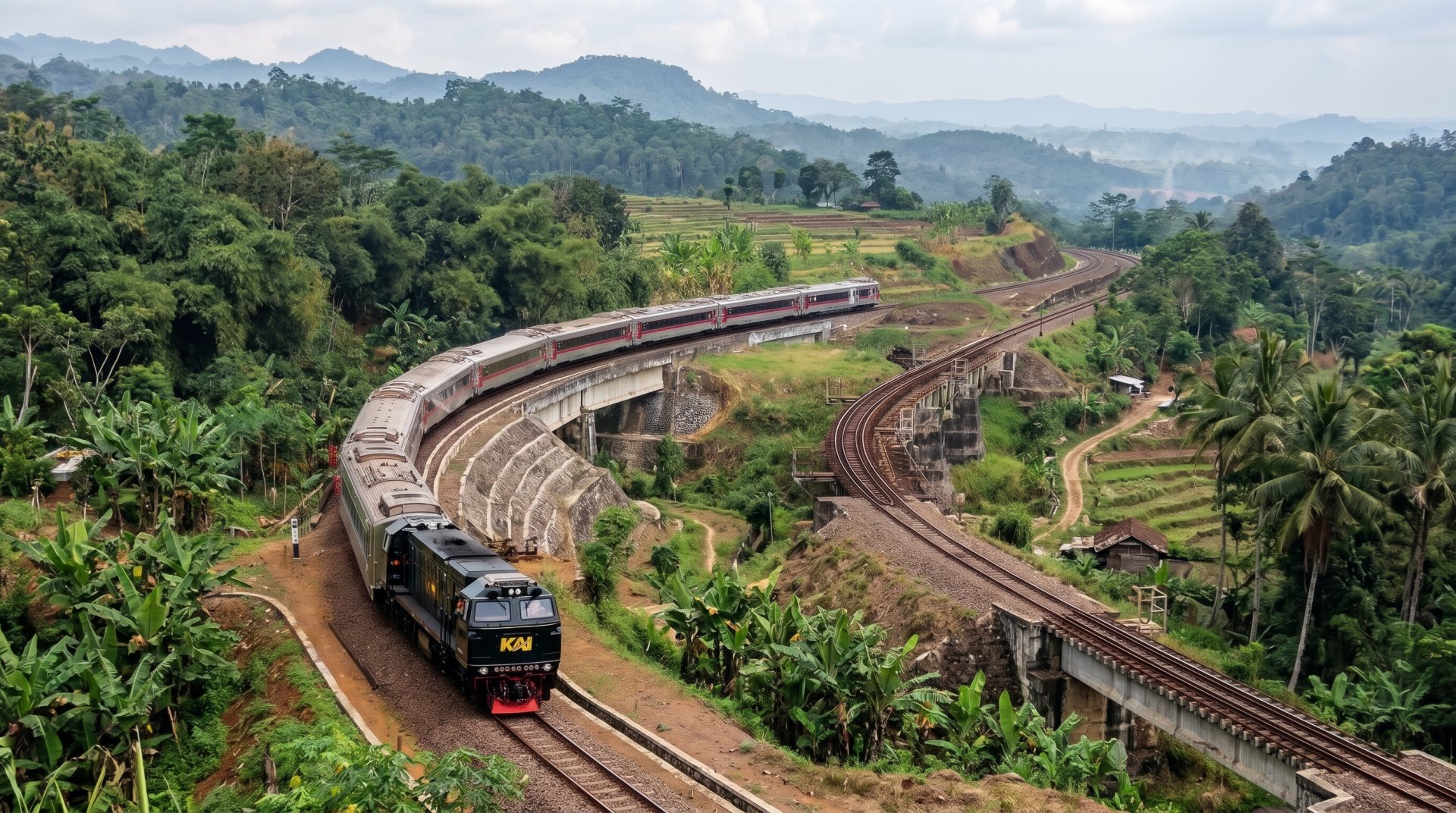
KA Argo Wilis traverses five KAI Operational Areas (Daop 2 Bandung, Daop 5 Purwokerto, Daop 6 Yogyakarta, Daop 7 Madiun, and Daop 8 Surabaya), facing volcanic mountain gradients unmatched by any other Argo service. Departing Bandung (+709 masl, KM 155+134), the train speeds across flat double track through Kiaracondong (+681 masl), Cimekar–Rancaekek (+668 masl), and Cicalengka (+689 masl, KM 182+271) before narrowing to single track and climbing to Nagreg (+848 masl, KM 190+756)—Indonesia's highest active railway station, with the summit east of Nagreg reaching +878 masl. Completed by Staatsspoorwegen in 1889, this Cicalengka–Garut mountain line was once dismissed as "an illusion" due to its severity.
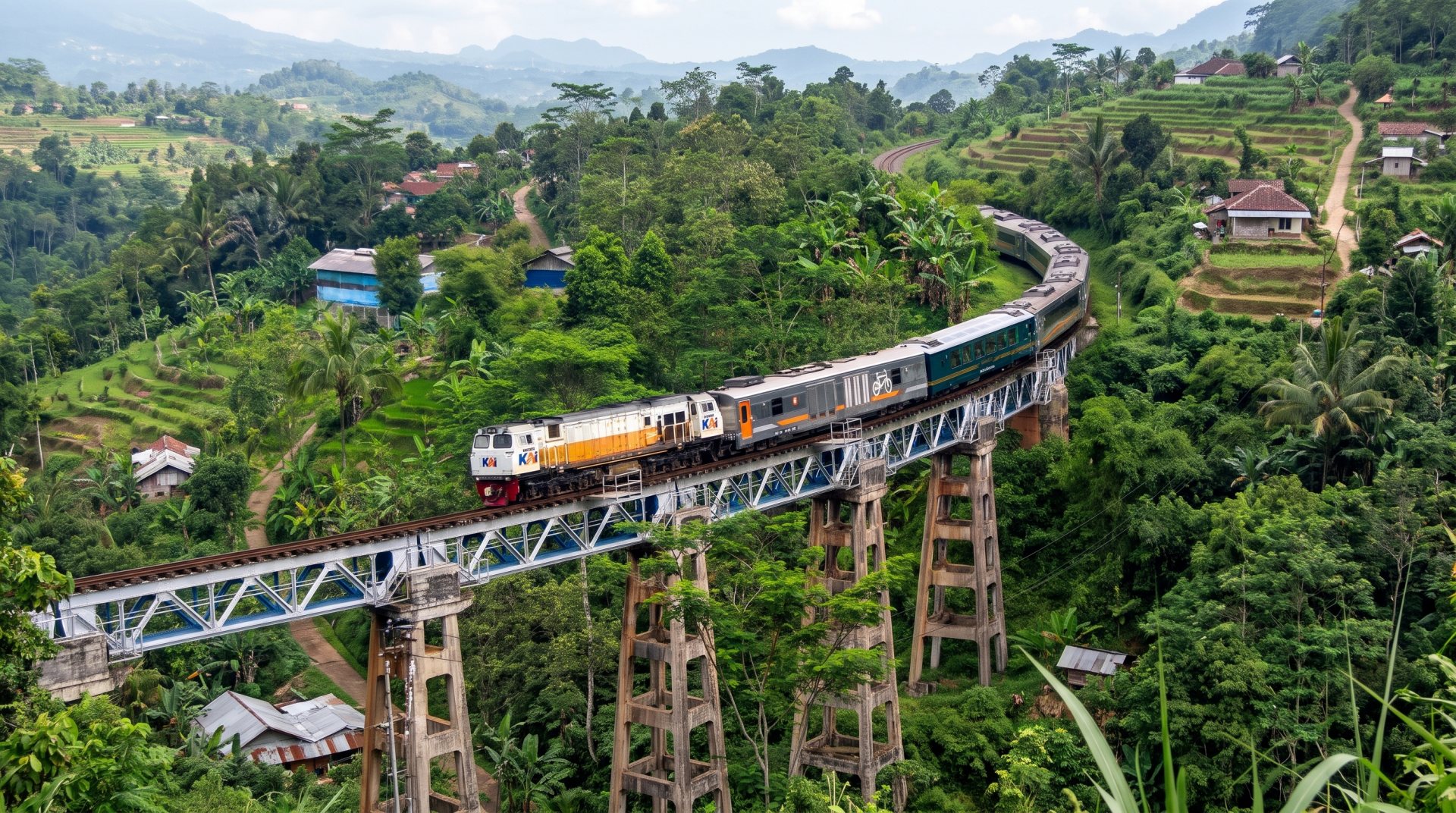
Descending past Nagreg, the track crosses Citiis Bridge—Indonesia's highest active railway bridge at 820 masl, spanning 173 meters on five European steel piers built in 1889 (reinforced with 20 tons of steel in 1921)—before winding through Lebakjero (+818 masl), scenic Leles (+697 masl), the Cimanuk River bridge, Cibatu (+612 masl, KM 213+631), and Warungbandrek (+612 masl), then climbing steeply from Bumiwaluya (+641 masl, KM 228+350) to Cipeundeuy (+772 masl, KM 234+588).
Gradient calculations reveal the physical extremes: Cicalengka–Nagreg (8.485 km, +159 m) averages +18.74‰ (1:53.4), while Bumiwaluya–Cipeundeuy (6.238 km, +131 m) averages +21.00‰ (1:47.6), matching Daop 2's 21‰ ruling gradient and 150-meter minimum curve radius. East of Cipeundeuy, the line plunges -18.67‰ (1:53.6) to Cirahayu (+619 masl, KM 242+785), passes Tasikmalaya (+349 masl, KM 270+193), crosses the dual-deck Cirahong Bridge (BH 1290, opened 1893, 202 m over the Citanduy River), serves Ciamis (+199 masl), and reaches Daop 2's eastern gateway at Banjar (+32 masl, KM 310+969). Remarkably, this 155.8 km mountain stretch (22.4% of total distance) consumes 192 minutes on KA 10—nearly 32.8% of total journey time—due to strict 50–60 km/h speed limits.
Chart 2: Southern Corridor Elevation Profile (Bandung +709 m to Surabaya Gubeng +5 m)
The 155.8 km East Priangan mountain stretch consumes 32.8% of total travel time due to 21‰ grades and 150 m minimum curves.
Beyond Banjar into Daop 5, line speeds jump to 115–120 km/h across Central Java's coastal plains. The train crosses the Serayu River bridge at Maos, passes Kroya (+11 masl, KM 377+122), and bores through the South Gombong limestone karst via the New Ijo Tunnel (BH 1649, 581 m long, 9 m diameter, opened 5 May 2020 for 120 km/h double-track operation beside the heritage 1885–1886 Old Ijo Tunnel). Past Kutoarjo (+16 masl) and the Daop 5/6 boundary at KM 480+800, Argo Wilis enters Yogyakarta over the 138-meter Mbeling Bridge (BH 2034) across the Progo River—designed by P.P. Bijlaard as the Dutch East Indies' first pillarless steel arch (Bijlaard Bent)—stopping at Yogyakarta (+113 masl, KM 542+494) and Solo Balapan (+93 masl, KM 262+775).
East of Solo Balapan, it crosses the 250 m Bengawan Solo (Jurug) Bridge and the Daop 6/7 boundary at Kali Sawur Bridge (KM 221+000), achieving peak commercial speeds of 93.9–94.1 km/h past Madiun (+63 masl, KM 165+783), Saradan (+107 masl on Mount Wilis's northern slope), and Kertosono (+44 masl, KM 96+805). Crossing the Brantas River twice at Kertosono and Tarik, it serves Jombang (+43 masl) and Mojokerto (+22 masl) before terminating at Surabaya Gubeng (+5 masl, KM 3+475). Following the 550 km double-track link (2020), Mojokerto–Sepanjang double track (1 Dec 2023), and Kiaracondong–Cicalengka switch-over (30–31 Dec 2024, IDR 717 billion), only two single-track bottlenecks remain in 2026: the 7 km urban Sepanjang–Wonokromo stretch in Surabaya and the Cicalengka–Kroya mountain corridor.
Cipeundeuy Station and the 1995 Trowek Tragedy Safety Legacy
Among Argo Wilis's 14 stops stands a small Class II mountain station in Malangbong, Garut: Cipeundeuy (+772 masl), dubbed the "Sacred Station" (Stasiun Sakti) because every train—even Argo Wilis when numbered KA 1—must stop for 10 minutes without exception. This mandatory brake-and-undercarriage inspection dates back to colonial regulations, which were briefly relaxed in the early 1990s until the catastrophic 24–25 October 1995 Trowek Disaster. That night, a 13-coach combined Galuh–Kahuripan rake (hauled by two CC 201s, departing Cibatu at 23:38 WIB) bypassed Cipeundeuy without inspection, suffered generator trouble, and lost all braking power on the -18.67‰ descent toward Trowek. Entering the 100 m Trowek Bridge curve at KM 241 at 00:10 WIB, four coaches derailed—one plunging into a 10-meter ravine—killing 14 to 20 people and injuring 71 to 90. Following earlier deadly crashes in 1959 (~185 dead) and 1962 (130 dead), Trowek was renamed Cirahayu and Cipeundeuy's 10-minute inspection was permanently reinstated—also sustaining a beloved local trackside culinary tradition.
Station Stops, Intermodal Integration & GAPEKA 2026 Timetable
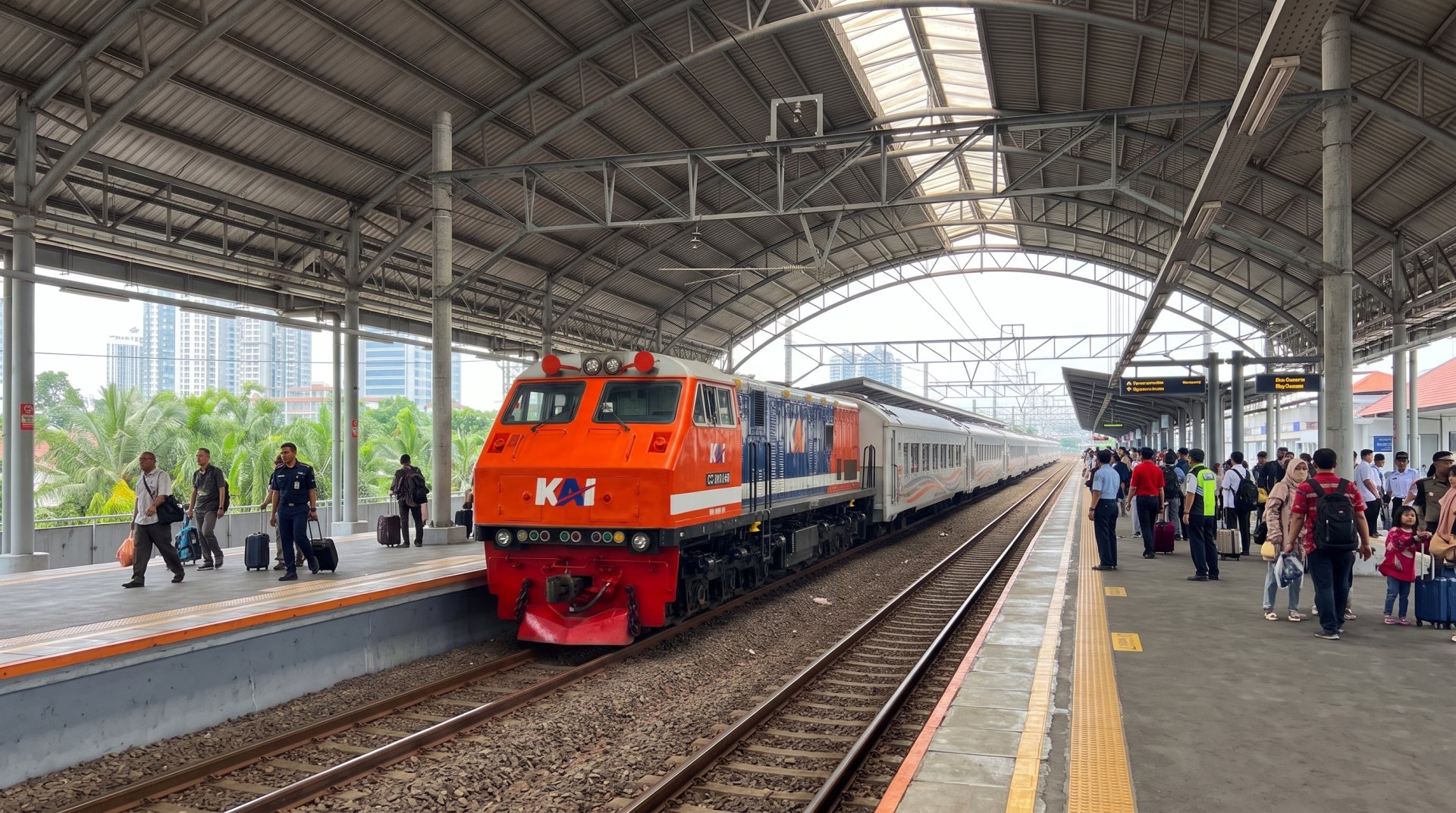
Under GAPEKA 2026 (effective 1 December 2026), KA Argo Wilis stops at 14 stations and passes 94 non-stop. Note that some late-2025 travel guides mislabeled older GAPEKA 2025 timings (07:35–17:15 and 08:30–18:17) as "GAPEKA 2026". The table below compares the official GAPEKA 2025/May 2026 schedule against GAPEKA 2026 alongside intermodal connections:
Rolling Stock Engineering, Livery Evolution & Integrated Fleet Rotation
Locomotive Evolution: From CC 201/CC 203 to CC 206 Dominance
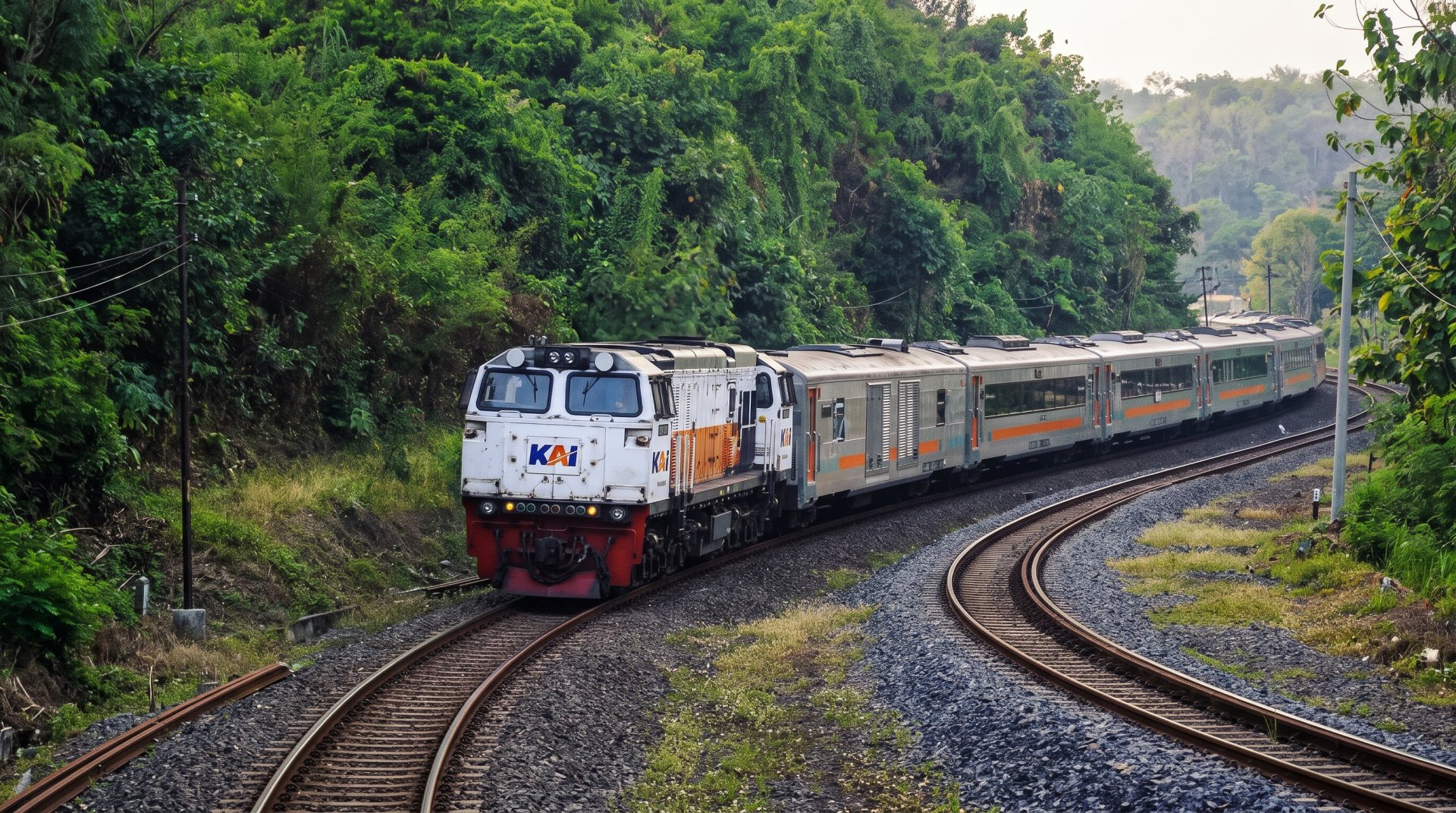
Maintaining punctuality across Priangan's mountain grades while cruising at 115–120 km/h across Central and East Java relies on General Electric diesel-electric motive power. From 1998 to 2016, short 4–6 coach rakes were hauled by CC 201 and CC 203 units; since 2016–2017, 8–10 coach formations have been powered by the dual-cab CC 206 (GE CM20EMP). Beyond its 2,250 hp output and 248 kN starting tractive effort for the +21‰ Bumiwaluya–Cipeundeuy climb, CC 206 provides dynamic braking for steep descents and eliminates terminal turntable maneuvers. In late 2025–2026, ex-Sumatra Kertapati units reassigned to Sidotopo Depot (such as CC 206 15 05 SDT and CC 206 16 10 SDT) have also been observed hauling Argo Wilis.
Fleet Modernization: Executive SSNG, Livery Evolution & Panoramic Coach
KA Argo Wilis's exterior captures the entire evolution of Indonesian executive liveries: from 1998 Perumka white-and-blue Argo livery, 2000s Ombak variants, and the 2010–2014 "Selendang Pecut" white-blue-yellow stripe scheme, to bare Stainless Steel Gen 1 (8 June 2018) and the latest SSNG livery (1 December 2025) featuring brushed stainless steel accented with pink-magenta window bands and electric sliding doors. A full SSNG trainset comprises 7 Executive SSNG coaches, 1 Panoramic coach, 1 Dining Car (M1), and 1 Generator Car (P). During 1–4 December 2025, the Panoramic car was briefly detached for corrugated-bellow gangway modifications to seal flush against SSNG coaches, returning on 5 December 2025.
All 11 Panoramic coaches nationwide (Gen I–III) are home-based at Bandung Depot (BD). Since 12 November 2026, KAI Wisata extended Luxury Lounge pre-departure access from 1 hour to 2 hours at 11 major stations, including Bandung, Yogyakarta, Solo Balapan, and Surabaya Gubeng. Behind daily operations, KAI runs the 3-4 Rotation Scheme introduced on 1 June 2023: three Bandung trainsets (TS1, TS2, TS3) rotate across four daily southern trips—KA 10 Argo Wilis turning around in 2h 19m at Surabaya Gubeng as night train KA 11 Turangga, while KA 12 Turangga turns around in 4h 35m as morning KA 9 Argo Wilis—and also cover idle-hour Bandung–Gambir KA Parahyangan services.
Fares, Market Performance & Intermodal Competition (2026)
KA Argo Wilis applies dynamic pricing within floor and ceiling tariffs across Executive subclasses (AA, AB, AC, AD). Full-route 2026 Executive SSNG fares range from IDR 680,000 to IDR 840,000 (up to IDR 870,000 during Eid peak), while Panoramic costs IDR 1,200,000–1,250,000 (from IDR 700,000 on shorter segments). Go-Show special fares reflect Argo Wilis's brand premium: Yogyakarta–Surabaya Gubeng is priced at IDR 360,000 versus IDR 310,000 on KA Bima and IDR 280,000 on Turangga/Argo Semeru. Onboard dining by KAI Services features Nasi Goreng Parahyangan Legend (IDR 40,000–44,000), Nasi Sapi Lada Hitam (IDR 40,000–50,000), and Wedang Uwuh (IDR 15,000), while Panoramic includes complimentary meals.
Commercially, KA 10B achieved 134.57% dynamic occupancy in Q3 2026, driven by multi-segment turnover. Argo Wilis also ranked as Indonesia's #1 train among international tourists (WNA) in Jan–Jul 2023 (5,793 WNA passengers), amid KAI Group's macro WNA surge to 760,601 passengers by October 2026. Nationwide Panoramic ridership grew 38.6% in 2025 (150,176 passengers) and jumped 62.86% YoY in Jan–Aug 2026 (140,583 passengers). Even with the 1 May 2026 launch of daily Bandung–Ketapang KA Sangkuriang (240.53% Q3 occupancy), the five Bandung–Surabaya trains complement one another by departure window.
Two infrastructure realities bolster Argo Wilis's competitiveness through 2030: first, Husein Sastranegara Airport's (BDO) September 2026 jet reactivation excluded Surabaya from its eight priority domestic routes while Kertajati (KJT) remains distant from central Bandung; second, the Gedebage–Tasikmalaya–Cilacap (Getaci) Toll Road remains stalled before physical construction, with earliest groundbreaking pushed to 2028.
Safety Record & KNKT Forensic Analysis of Kalimenur (2023)
Over 28 years, KA Argo Wilis has recorded notable safety milestones: a 6 September 2008 axle derailment at KM 233+100.200 in Malangbong, Garut (235 passengers safely evacuated to Cipeundeuy); a 4 February 2013 level-crossing collision in Tasikmalaya; and a heroic prevention on 20 December 2013 at KM 393+8/9 between Maos and Sikampuh when farmer Ahmad Suryadi flagged down KA Argo Wilis (CC 203 06) before a 10 cm broken rail section.
The most consequential incident was the 17 October 2023 Kalimenur Derailment between Sentolo and Wates (KM 520+400/420, Kulon Progo), involving KA 17 Argo Semeru (472 passengers) and KA 6 Argo Wilis (288 passengers). KNKT's 16 February 2024 report identified static rail buckling at curve 28i (397 m radius) where rail temperatures hit 54°C amid 36°C ambient heat with insufficient expansion gaps, compounded by failure to impose a temporary speed restriction despite an Airport Train driver reporting severe swaying 21 minutes earlier. When Argo Semeru's 6th coach (K1 0 18 63) fouled the adjacent track at 13:15 WIB, CC 206 13 53 BD hauling KA 6 Argo Wilis at 76 km/h collided one minute later despite emergency braking. Zero fatalities occurred (31–32 injured), though 3,851 tickets were canceled before 60 crew and 4 cranes restored full 80 km/h operations by 21 October 2023. Following KNKT's recommendations, KAI strengthened Control Center authority to halt trains upon sway reports and intensified hot-weather KPJ track inspections.
Strategic Outlook Toward 2030
Entering its 29th year, KA Argo Wilis's future rests on completing the 7 km Sepanjang–Wonokromo double track and Padalarang–Cicalengka electrification (41.8 km), capitalizing on the delayed Getaci Toll Road, and cementing its identity as Indonesia's premier luxury scenic rail tourism icon—combining SSNG comfort, 38-seat Panoramic views, 2-hour Luxury Lounge access, and seamless Whoosh Feeder connectivity across Java's southern highlands.