alurail alurail
Home & Hub Live Journey Map Timetables Route Search Special Trains (KLB) Train Directory Fleet Database Station Directory Facilities & Depots Operating Areas Safety & Incidents Updates & News Photo Gallery alurail pass
User Suite
Map Home Timetables Fleet
alurail alurail
Hub / Home Directory & Insights
Live Journey Map Crowdsourced Live Journey
Timetables Train Schedules
Search Routes Direct & Transit Finder
Extraordinary Trains (EOT) Extraordinary Trains
Train Directory Master Train Fleet
Fleet Database Rolling Stock Info
Stations Facilities & Hubs
Facilities Depots & Workshops
Operating Areas Daop & Divre
Incidents & Safety (EOE) Historical Rail Incidents
Updates & News Railway Dispatches & Insights
Photo Gallery Curated Collection
alurail pass Supporter Perks
About alurail Platform Info & Vision
Sign In / Account
Back to Updates • History, Train Profile
Live Radar alurail Pass Submit Photo
Live Journey / Updates / History & Profile of KA Bima (1967–2026): Night Blue Legend to Suite Class & GAPEKA 2026
History Train Profile 16 November 2026 • Updated 20 November 2026

History & Profile of KA Bima (1967–2026): Night Blue Legend to Suite Class & GAPEKA 2026
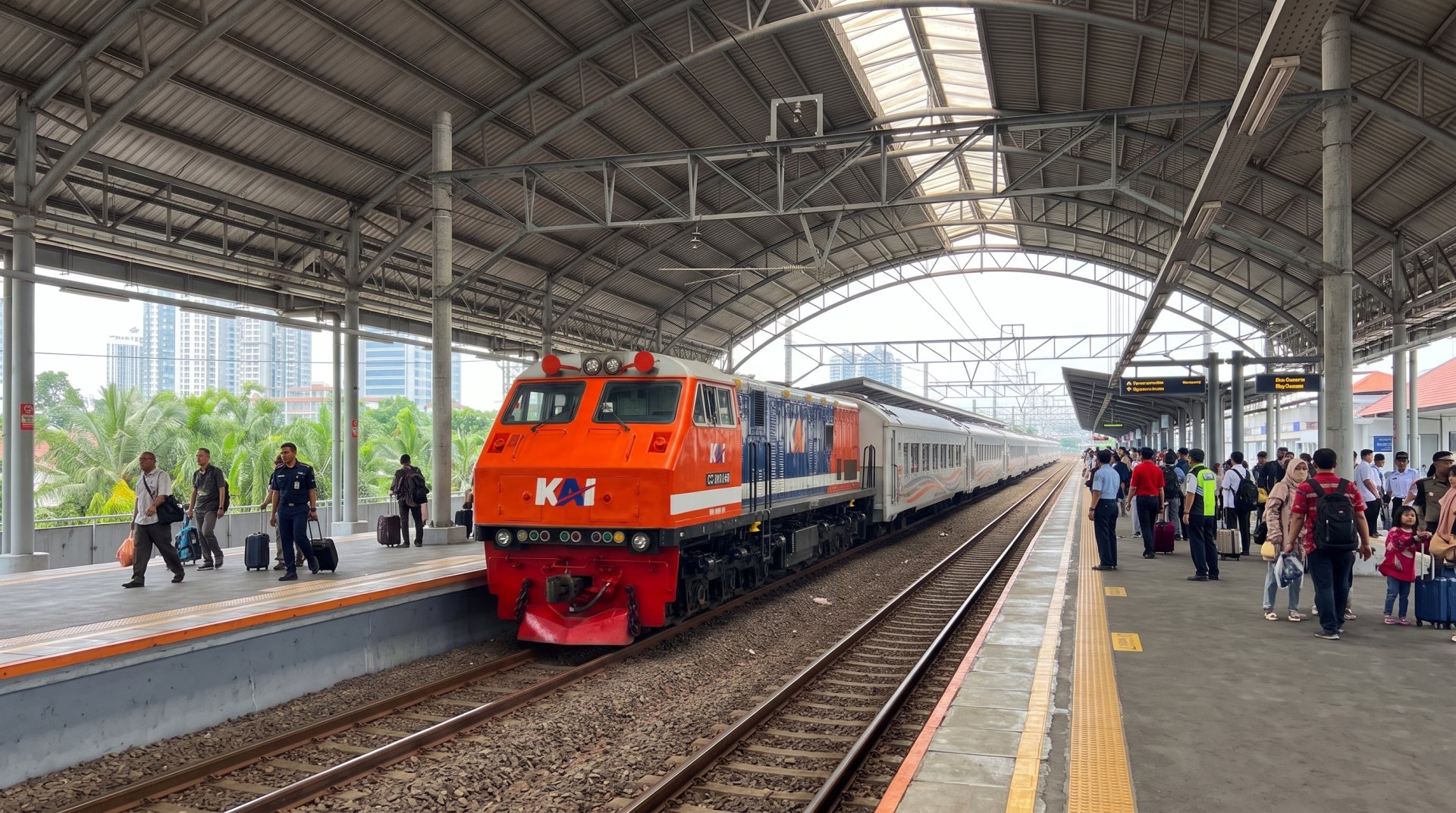
Complete monograph on KA Bima (1967–2026): East German Görlitz 'Rolling Hotel' sleepers, Astra Arad and Malang eras, 10h 20m speed record, Suite Class Compartment (+64.76%), GAPEKA 2025 vs 2026 timetables, and safety record.
alurail Editorial Team
Staff Writer & Rail Researcher • 967 views
History & Profile of KA Bima (1967–2026): Night Blue Legend to Suite Class & GAPEKA 2026
Table of Contents
  1. 1. 1. Identity, Etymology, and Core Operational Profile
  2. 2. 2. Six-Decade Historical Chronology (1967–2026)
  3. 3. 3. Modern Rolling Stock Engineering & Specifications
  4. 4. 4. Route Profile, Speeds, and GAPEKA 2025 vs. GAPEKA 2026 Schedules
  5. 5. 5. Service Ecosystem, Fares, and Commercial Performance (2023–2026)
  6. 6. 6. Safety Record and Cultural Legacy
alurail Executive Summary

Kereta Api (KA) Bima is one of Indonesia's oldest continuously operating intercity passenger trains and the nation's pioneer of Freon air conditioning and dedicated power-generator cars since June 1, 1967. Linking Gambir and Surabaya Gubeng across 821.079 km of Java's central-southern trunk line, the "Biru Malam" (Night Blue) enters its 60th year under flagship train numbers KA 7 and KA 8.

From its golden era as a VEB Waggonbau Görlitz "rolling hotel" (1967–1983), sleeper abolition (1984–1995), and Malang extension (2014–2020) to pioneering Suite Class Compartment sleepers (October 2023) and Stainless Steel New Generation coaches (December 2024), KA Bima enters GAPEKA 2026 (December 1, 2026) with a 115 km/h safety cap and a mandatory Bekasi stop.

Service Heritage
59+ Years
Operating since June 1, 1967; pioneer of Freon AC & power cars
Southern Trunk Line
821.08 km
Gambir–Surabaya Gubeng RT (KA 7–8); 15–16 stops
Suite Class H1 2026
+64.76%
26,123 passengers (144.3/day) following +47.8% growth in 2025
GAPEKA 2026 Calibration
115 km/h
10h 30–36m (+mandatory Bekasi stop on KA 7) for safety margin

Kereta Api (KA) Bima is one of Indonesia's oldest active intercity passenger trains and the pioneer of Freon air conditioning and dedicated power-generator cars since the 1960s. Connecting Gambir Station (Jakarta) and Surabaya Gubeng Station across 821 km (821.079 km in GAPEKA 2025 distance logs) of Java's central-southern corridor, the service—inaugurated on June 1, 1967 by Perusahaan Negara Kereta Api (PNKA)—enters its 60th year of operations (59 years, 5 months) as of November 2026. Across nearly six decades, KA Bima has completed a full historical arc: pioneering luxury overnight sleeper travel with East German VEB Waggonbau Görlitz coaches, losing its sleeping compartments in 1984–1995 over social considerations, enduring as a southern executive express (including a 2014–2020 extension to Malang), and reviving as the launchpad for Suite Class Compartment sleepers (2023) and Stainless Steel New Generation (SSNG) trainsets (2024).

As of November 19, 2026, KA Bima operates under PT KAI Daop 1 Jakarta as KA 7 (Surabaya Gubeng–Gambir) and KA 8 (Gambir–Surabaya Gubeng), sharing three active trainsets in rotation with daytime sibling KA Argo Semeru (nine K1 SSNG coaches and one T1 Suite Class coach, totaling 466 passengers). Effective December 1, 2026 (GAPEKA 2026), safety calibrations following the 2026 Bekasi Timur crash add a mandatory Bekasi stop for KA 7 and lower the mainline ceiling from 120 km/h to 115 km/h, shifting travel times from GAPEKA 2025's all-time record of 10h 20–25m to 10h 30–36m.

1. Identity, Etymology, and Core Operational Profile

While widely associated with the Pandava warrior Bhima from the Mahabharata, KA Bima carries two complementary etymologies: functionally, Bima is an acronym for "Biru Malam" (Night Blue), referring to the blue livery of its 1967 East German sleepers and its overnight schedule; culturally, local press accounts note President Soekarno personally chose the Pandava name in 1966. PT KAI continues to honor both traditions in corporate heritage communications.

Identity & Technical Parameter Current Specification (Nov 2026) Context & Historical Notes
Train Name & NumbersKA Bima — KA 7 (SGU–GMR) & KA 8 (GMR–SGU)Placed in top-tier KA Argo numbering slot since GAPEKA 2025
Inauguration DateJune 1, 1967 (59 years, 5 months as of Nov 2026)Launched alongside KA Limex Sriwijaya
PredecessorsJava Nacht Express (1936) & Bintang Sendja (1961)Southern corridor overnight express lineage
Operator & Home DepotPT KAI Daop 1 JakartaSuite Class Gen-1 based at Jakarta Kota Depot (JAKK)
InfrastructureDJKA, Ministry of Transportation (1,067 mm double track)821.079 km Gambir–Surabaya Gubeng (extended to Malang Feb 6, 2014 – Aug 31, 2020)
Duration (GAPEKA 2025 → 2026)10h 20m / 10h 25m → 10h 36m (KA 8) / 10h 30m (KA 7)115 km/h cap & mandatory Bekasi stop starting Dec 1, 2026
Classes & CapacityExecutive SSNG (50 seats/car) & Suite Class (16 cabins/car)466 seats on standard 9 K1 + 1 T1 formation; sharing trainset with Argo Semeru

2. Six-Decade Historical Chronology (1967–2026)

Pre-1967 Roots and PNKA's Revolutionary Launch (1936–1967)

Overnight express rail travel across Java began in the colonial era when state railway Staatsspoorwegen (SS) introduced the Java Nacht Express (De Nacht Expres) in 1936—followed by Indonesia's first air-conditioning assembly at the SS Manggarai workshops in October 1939—and continued post-nationalization with PNKA's Bintang Sendja in 1961. By the mid-1960s, however, aging colonial sleeping cars could no longer meet modern comfort standards. In 1966, the Indonesian government and PNKA ordered 28 new coaches from VEB Waggonbau Görlitz in East Germany: 7 First-Class Sleepers (SAGW-9xxx), 10 Second-Class Sleepers (SBGW-9xxx), 4 Air-Conditioned Dining Cars (FW/AC-9xxx), and 7 Baggage/Generator Cars (DPW/DPPW-9xxx) forming three trainsets (Bima I, Bima II, and one reserve). Because German tracks used 1,435 mm standard gauge while PNKA ordered 1,067 mm Cape gauge bogies, temporary 1,435 mm adapter consoles were fitted so the coaches could run from Görlitz to the ports of Rostock and Wismar for shipment. After trials on Jakarta–Bandung and a formal May 27, 1967 VIP trial run from Jakarta Kota Station, KA Bima entered public service on June 1, 1967—initially running via Semarang, Kedungjati, and Solo Jebres for several weeks before shifting permanently to the central-southern route via Purwokerto and Yogyakarta.

Golden Age of the "Rolling Hotel" and Görlitz Sleeper Anatomy (1967–1983)

Dubbed the "Rolling Hotel" (Hotel Berjalan) from the late 1960s through the early 1980s, the Görlitz fleet pioneered two revolutionary technologies in Indonesia: a dedicated power-generator car (DPW/DPPW) with a soundproof, air-conditioned crew rest cabin, and underfloor Freon air-conditioning compressors distributing cooled air through ceiling ducts (creating signature rounded roof vents). Hauled by green-and-yellow PNKA/PJKA locomotives (initially BB200, BB201, CC200, then BB301/BB304, before transitioning to GE CC201 in 1977), a standard consist carried 2 SAGW, 2 SBGW, 1 FW, 1 DPW/DPPW, and 1 baggage car. Each SAGW coach ingeniously solved narrow 1,067 mm loading-gauge constraints by arranging 13 trapezoid-shaped 2-berth private compartments along a distinctive zigzag center corridor, complete with wide windows, folding washbasins, wardrobes, and drink holders; SBGW cars featured 12 three-berth compartments along a side corridor. Following dinner in the 48-seat FW dining car (included via tuslah fares estimated at Rp1,500–Rp2,500 in secondary archives, serving steaks, nasi rames, fried rice, and pudding), attendants converted compartment seats into blue-blanketed beds.

Social Policy, the Astra Arad Era, and Twilight of the Sleepers (1984–1995)

Between 1984 and 1995, PJKA phased out sleeping cars primarily due to social considerations despite healthy occupancy and profitability. In 1984, PJKA imported 43 coaches from Romania's Astra Arad (35 AW, 3 FW, 5 DPW) to replace SAGW cars—a move widely criticized as Arad's rigid, non-reclining seats and declining catering quality earned them a reputation as PJKA's worst first-class coaches. Several displaced ex-Görlitz cars were rebuilt into the iconic Nusantara (19 seats + VIP bedroom), Bali (20 seats), and Toraja (22 seats) Tourist Coaches still operated by PT KAI Pariwisata. Second-class SBGW sleepers (reclassified KT-677xx in 1985) survived until 1990, followed briefly by air-conditioned 1964 Nippon Sharyo couchette conversions (1990–1995) before Perumka abolished all sleepers in mid-1995 and stripped SAGW/SBGW partitions to create standard K1-67xxx executive seating coaches.

Argo Rivalry, JS-950 Cascade, Malang Era, and Modern Renaissance (1995–2026)

Outpaced by the 9-hour northern JS-950 Argo Bromo in July 1995, KA Bima was rejuvenated from 2002 to 2016 with cascaded ex-JS-950 prototype coaches hauled by CC203, CC204, and CC206 (from 2013) locomotives. On February 6, 2014, PT KAI extended KA Bima beyond Surabaya Gubeng to Malang (via Waru, Sidoarjo, and Lawang; ~15h 18m to Gambir), operating there for over six years until COVID-19 ridership drops prompted a return to Gambir–Surabaya Gubeng on September 1, 2020. Since 2016, KA Bima has led KAI's modernization: New Image (July 21, 2016), Stainless Steel Gen-1 (late 2020), 120 km/h speedups (September 28, 2022), sharing trainset rotation with KA Argo Semeru (June 1, 2023), the return of true sleepers via Suite Class Compartment (commercial debut October 10, 2023, paired with a Suite-themed dining car on November 4, 2023 and Surabaya Gubeng Luxury Lounge on December 30, 2023), and Stainless Steel New Generation (December 5, 2024, part of a Rp5.5 trillion 612-coach INKA order) ahead of its elevation to KA 7–8 in GAPEKA 2025.

Era Operator Rolling Stock / Builder Main Locomotives Livery & Key Service Traits
1967–1983PNKA / PJKASAGW, SBGW, FW, DPW — VEB Waggonbau GörlitzBB200/201, CC200, BB301/304, CC201 (1977+)Green-yellow → Night Blue; 1st & 2nd class sleepers, Freon AC, tuslah dining
1984–1995PJKA / PerumkaAstra Arad (Romania) + SBGW → Couchette (1990–95)CC201Blue / Satwa transition; gradual sleeper abolition completed 1995
1995–2001Perumka / PT KASeated retrofits (K1-67xxx) & mixed K1CC201, CC203All-seated executive; overshadowed by northern Argo trains
2002–2016PT KA / PT KAIEx-JS-950 Argo Bromo prototypes (PT INKA)CC203, CC204, CC206 (2013+)White-blue → Kesepakatan (2010); extended to Malang (Feb 6, 2014)
2016–2020PT KAIK1 New Image (2016, TB-1014)CC206Continuous black window band; brief Priority car (Aug 2020); cut back to SGU
2020–2024PT KAIK1 SS Gen-1 (2018/19) + T1 Suite Class (Oct 2023)CC206Stainless steel + Midnight Blue-Gold T1; Argo Semeru rotation (Jun 2023)
Dec 2024–2026PT KAIK1 SSNG (PT INKA) + T1 Suite ClassCC206 (incl. B40 biodiesel stickers)Electric doors, corrugated bellows, PIDS, flagship KA 7–8

3. Modern Rolling Stock Engineering & Specifications

In daily operations, KA Bima and KA Argo Semeru share three active trainsets in rotation with a standard formation of 1 CC206 + 9 K1 SSNG + 1 T1 Suite Class + 1 M1 + 1 P (466 total seats: 450 executive seats + 16 private suites). The four first-generation T1 coaches (series T1 0 08 01 to T1 0 08 04, homed at Jakarta Kota Depot/JAKK) were converted by Balai Yasa Manggarai in 2023 from 2008 ex-Argo Lawu K1 donors (K1 0 08 03, 04, 07, and one spare unit) by upgrading their bogies from 100 km/h TB-398 to 120 km/h TB-1014 and retrofitting corrugated bellows:

Technical Parameter Executive SSNG (K1 SSNG) Suite Class Compartment (T1 0 08 XX — Gen-1)
Builder / WorkshopPT INKA Madiun (2023–2026)Balai Yasa Manggarai rebuild (2023) from 2008 ex-Argo Lawu K1
Carbody & DimensionsStainless steel; 20,920 × 2,990 × 3,815 mmMild steel (Midnight Blue-Gold); 20,920 × 2,990 × 3,810 mm
Bogie & Max SpeedTB-1014 / TB-1014 NG; 120 km/h; 15t axle loadUpgraded TB-398 → TB-1014; 120 km/h; 35,200 kg (8.8t axle load)
Doors, Windows & GangwaysElectric sliding doors, tempered double glass, corrugated bellowsElectric cabin sliding doors, automated blinds, corrugated bellows
Seating & Amenities50 seats (2–2), PIDS, CCTV, USB+AC outlets, 2 toilets + foot washer16 private suites (1–1, 180° flat bed, massage, heater), Android tablet, Wi-Fi, 1 sensor toilet

Three engineering pillars define the modern KA Bima ride. First is the bogie evolution from 1967's Görlitz K-7 coil-spring bogies without axle-guide friction plates to PT INKA's TB-1014 (K10) and TB-1014 NG bogies—a mandatory upgrade for T1 conversions so they could sustain 120 km/h without slowing schedules. Second is acoustic and thermal insulation: K1 SSNG's corrugated bellows, UV-blocking tempered double glass, and electric sliding doors significantly suppress rail and vestibule noise, complemented by foot washers in both restrooms, per-seat USB ports, and redundancy-topology PIDS screens showing live speed, cabin temperature, and next-station alerts. Third is electrical power and energy transition: a dedicated generator car (P) powers all HVAC, doors, and seat heaters while doubling as oversized luggage storage for adjacent Suite Class guests, and hauling CC206 locomotives now carry B40 Biodiesel (40% palm-oil biofuel blend trialed since July 2024) campaign liveries.

4. Route Profile, Speeds, and GAPEKA 2025 vs. GAPEKA 2026 Schedules

Spanning 821.079 km across Java's central-southern trunk line, KA Bima's travel time fell from ~13 hours in 1995 (63.16 km/h commercial average) to 11h 31m (2021) and 10h 30–40m (GAPEKA 2023) following staged southern double-tracking—Prupuk–Purwokerto (2011), 76-km Kroya–Kutoarjo (2020), Solo–Madiun–Mojokerto, and the final Mojokerto–Sepanjang segment on December 1, 2023—culminating in GAPEKA 2025's all-time record of 10 hours 20 minutes (79.46 km/h, saving 160 minutes or 20.5% over 1995). Entering GAPEKA 2026 (December 1, 2026), post-Bekasi Timur safety reforms mandate a Bekasi stop for KA 7 (05:11–05:13 WIB, raising stops from 15 to 16) and lower the mainline cap from 120 km/h to 115 km/h, adjusting durations to 10h 36m (KA 8) and 10h 30m (KA 7). Schedule cross-checks also correct an earlier public-site typo that listed KA 8's GAPEKA 2025 Bekasi stop as 19:24–19:26 WIB; the verified GAPEKA 2025 timing is 17:24–17:26 WIB:

KA Bima Southern Corridor Speed & Hub Profile (821.079 km — GAPEKA 2026)
115 km/h mainline speed ceiling with 70–80 km/h hill restrictions across Bumiayu–Purwokerto
Gambir Bekasi (Mand.) Cirebon Purwokerto Yogyakarta Solo Balapan Madiun S. Gubeng 60–80 km/h 70–80 km/h (Hills) 115 km/h (Full Double Track) 115 km/h Dense Jabodetabek corridor (60–80 km/h) Karanggandul–Kretek hills (70–80 km/h) Flat Double Track (115 km/h)
Station (Code) KA 8 (GMR→SGU) G25 / G26 KA 7 (SGU→GMR) G25 / G26 GAPEKA 2026 Speed Limit / Connections
Gambir (GMR)Dep 17:00 / 16:45Arr 05:45 / 05:40 (+1)Central Jakarta terminus; Transjakarta BRT
Jatinegara (JNG)Pass05:28–30 / 05:24–2660–80 km/h Matraman–Manggarai–Cikini
Bekasi (BKS)17:24–26 / 17:09–11Pass / 05:11–13 (New)80 km/h Cikarang–Bekasi; Cikarang KRL
Cirebon (CN)19:29–34 / 19:20–2403:09–14 / 02:57–03:01105–115 km/h Cirebon–Cikampek
Purwokerto (PWT)21:16–21 / 21:09–1401:19–24 / 01:08–1370–80 km/h Karanggandul–Bumiayu hills
Kroya (KYA)21:43–45 / 21:36–3800:54–56 / 00:45–47115 km/h (80–85 km/h Kebasen–Notog)
Kebumen (KM)22:17–19 / 22:11–1300:19–21 / 00:10–12115 km/h southern Central Java
Kutoarjo (KTA)22:39–42 / 22:34–3723:56–59 / 23:47–50115 km/h; Prameks & Trans Jateng
Yogyakarta (YK)23:25–30 / 23:22–2723:06–11 / 22:56–23:01115 km/h; YIA Airport Rail & KRL
Solo Balapan (SLO)00:10–13 / 00:07–1022:23–26 / 22:13–16115 km/h (65 km/h Lempuyangan)
Madiun (MN)01:15–20 / 01:13–1821:16–21 / 21:05–10115 km/h (80 km/h Solo Jebres)
Nganjuk (NJ)01:52–54 / 01:50–5220:43–45 / 20:31–33115 km/h via Saradan–Caruban
Kertosono (KTS)02:11–13 / 02:08–1020:25–27 / 20:13–15115 km/h; Dhoho Commuter Line
Jombang (JG)02:25–27 / 02:23–2520:10–12 / 19:59–20:01115 km/h East Java flatlands
Mojokerto (MR)02:45–47 / 02:43–4519:51–53 / 19:41–43115 km/h; Dhoho & Jenggala
Surabaya Gubeng (SGU)Arr 03:20 / 03:21 (+1)Dep 19:20 / 19:10115 km/h SGU–Madiun; regional hub

5. Service Ecosystem, Fares, and Commercial Performance (2023–2026)

Suite Class guests enjoy complimentary KAI Luxury Lounge access (available at 6 stations along KA Bima's route: Gambir, Cirebon, Purwokerto, Yogyakarta, Solo Balapan, and Surabaya Gubeng, extended to 2 hours pre-departure in GAPEKA 2026). Inside the Dayak-ornamented T1 coach, three dedicated KAI Services attendants provide welcome drinks, warm towels, amenity kits, three-course dining (Indonesian, Asian, or Western), and morning wake-up calls. Free baggage remains capped at 20 kg (100 dm³, max 70 × 48 × 30 cm, max 4 items; Rp10,000/kg excess up to 40 kg). Tickets open 45 days in advance via Access by KAI across dynamic subclasses:

Route / Segment Executive SSNG (Mon–Thu) Executive SSNG (Weekend / Peak) Suite Class Compartment (Regular – Peak)
Gambir – Surabaya Gubeng (RT) (Full)Rp680,000 – Rp880,000 (typical Rp730k–Rp800k)Rp800,000 – Rp880,000 (Holiday Rp880k)Rp2,100,000 – Rp2,500,000 (typical Rp2,150,000)
Gambir – Yogyakarta / Solo / MadiunRp585,000 – Rp705,000Rp640,000 – Rp705,000Rp1,680,000 – Rp1,720,000 (Madiun initially Rp1.95M)
Gambir – Cirebon / Purwokerto / KutoarjoRp440,000 – Rp530,000Rp480,000 – Rp530,000Rp1,260,000 – Rp1,290,000
Surabaya Gubeng – Yogyakarta / Solo / MadiunRp440,000 – Rp530,000Rp480,000 – Rp530,000Rp1,170,000 – Rp1,290,000
Suite Class Compartment Demand Surge (2024–H1 2026)
Combined Suite Class ridership across Bima, Argo Semeru, and Argo Bromo Anggrek/Anggrek (from Jun 2025)
0 25k 50k 28,496 2024 (Full Year) 121.7% Load Factor 42,118 (+47.8%) 2025 (Full Year) Jul Peak: 5,157 26,123 (+64.76%) H1 2026 (6 Mos) 144.3 riders/day

Following 1,798 riders in its first three weeks (Oct 10–Nov 2, 2023) and 28,496 riders in full-year 2024 (121.7% end-to-end load factor due to multi-segment turnover), annual Suite Class volume jumped 47.8% to 42,118 in 2025 (July peak: 5,157; December: 4,906) and surged 64.76% in H1 2026 to 26,123 riders (144.3/day). Compared against Trans-Java Class I highway tolls alone (Rp859,500 in 2026 before fuel) and LCC airfares (Rp850,900–Rp1.04M+ before airport transfers), KA Bima's overnight hotel-saving utility and low-carbon footprint keep it highly competitive.

6. Safety Record and Cultural Legacy

Operating nightly for nearly 60 years across 821 km, KA Bima's safety log reflects signaling, infrastructure, and level-crossing challenges—prompting the closure of 118 high-risk level crossings by mid-2026:

Date Location Incident & Brief Chronology Primary Cause Casualties & Damage
Jan 19, 1974Soka Station, KebumenKA B5 Mutiara Selatan (BB301 15) rear-ended KA S3 Bima I on sidingSignaler left home signal clear (jailed 6 years)0 killed; 1 serious, 35 minor injuries; Rp146.3M loss
May 5, 1979Near Kadokangabus, IndramayuKA Bima 2 struck Padi Kuning bus (18:55 WIB)Level crossing collisionNo fatalities
May 12, 1980Pasir Muncang, PurwokertoKA Bima II struck Jakarta-bound Arimbi busBus drove past closing barriers21 killed (local accounts cite 58 injured)
Jan 12, 2000Wonosari Station, KebumenKA Bima derailed at Wonosari StationNot detailed in secondary archivesEncyclopedia notes ~dozen fatalities
Jan 3, 2003Bumiayu Station (KM 312+8/9)Derailed at 04:45 WIB on Switch No. 13ATraversing Switch 13A5 K1 & 1 KM1 coaches derailed/damaged
Jun 3, 2005Terisi Station, IndramayuKA Bengawan (CC201 59) rear-ended KA Bima power car (05:02 WIB)KA Bengawan failed emergency brakingSeveral KA Bengawan minor injuries
Jun 13, 2008Wonokromo–Surabaya GubengCoach 6 of KA 34 Bima (CC203 12) derailed at 06:55 WIBInvestigated by Daop VIII6 passengers safe; 2h 50m rerailing
Oct 2, 2010Purwosari Station, SoloKA 34 Bima sideswiped tail of KA 144 GBMS (02:35–02:39 WIB)Dispatcher cleared Bima before GBMS cleared Track 11 killed (Suryo Catur Utomo, 23), 4 injured
Sep 8 & Nov 10, 2015Cipinang, Singosari, & SidoarjoSeries of pickup, motorcycle, and pedestrian crossing strikesBarrier violations & unguarded crossingsMotorcyclist (Malang) and mother-child (Sidoarjo) killed
Jul 26, 2017Wonokromo–Waru (KM 8+625)Surabaya–Malang KA Bima derailedBroken railMalang corridor disruption

Culturally, KA Bima remains immortalized in Ebiet G. Ade's December 1979 ballad "Cinta di Kereta Biru Malam" (Camellia II), capturing the cool air-conditioned cabin and signature blue blankets of the 1967 sleepers. Entering its seventh decade, the combination of surviving 1967 Görlitz tourist coaches and the Midnight Blue-and-Gold Suite Class Compartment ensures the "Biru Malam" legacy endures as Indonesia's benchmark for dignified overnight rail travel.
Key Takeaways & Assistive Q&A
What does the name KA Bima mean in Indonesian railway history?
While also linked to the Pandava warrior Bhima, Bima is functionally an acronym for 'Biru Malam' (Night Blue), referencing its 1967 blue East German sleeper livery and overnight schedule.
When did KA Bima debut and what technologies did it pioneer?
KA Bima launched on June 1, 1967 using 28 East German VEB Waggonbau Görlitz coaches, pioneering Indonesia's first Freon air-conditioning system and dedicated power-generator cars.
How does GAPEKA 2026 (December 1, 2026) change KA Bima's schedule?
GAPEKA 2026 lowers the mainline speed cap from 120 km/h to 115 km/h and adds a mandatory Bekasi stop for KA 7 (05:11–05:13 WIB), adjusting trip times to 10h 30m (KA 7) and 10h 36m (KA 8).
What are the capacity and fares for Suite Class Compartment on KA Bima?
Each T1 coach offers 16 private 1–1 suites with 180° lie-flat massage seats and three-course dining, priced at Rp2,100,000–Rp2,500,000 for full Gambir–Surabaya Gubeng trips.
How does KA Bima manage its rolling stock rotation?
KA Bima (overnight) shares three active trainsets in rotation with daytime sibling KA Argo Semeru along the identical Gambir–Surabaya Gubeng corridor.

Related Dispatches

History & Status of Indonesia's Argo Class: From 1995 Pioneers to Gapeka 2026
History, Analysis

History & Status of Indonesia's Argo Class: From 1995 Pioneers to Gapeka 2026

KA Argo Wilis: History, Southern Line Engineering, SSNG Fleet & GAPEKA 2026 Status
History, Train Profile

KA Argo Wilis: History, Southern Line Engineering, SSNG Fleet & GAPEKA 2026 Status

Evolution of KA Argo Parahyangan (1971–2026): From JB-250 & Whoosh to Sidareja
History, Train Profile

Evolution of KA Argo Parahyangan (1971–2026): From JB-250 & Whoosh to Sidareja

alurail alurail
Copyright ©️ 2024-2026 alurail by alula Made with 💗 from Pejaten, ID
Copyright ©️ 2024-2026 alurail by alula
Made with 💗 from Pejaten, ID

Community & Photographers

  • alurail Pass PRO
  • Submit Photo
  • User Suite
  • Curated Feed
  • Community Feed

Platform & Legal

  • About Platform
  • Terms & Conditions
  • Privacy Policy
  • Open Source Notices
  • FAQ / Help Center
Pass PRO PRO Upload Photo Suite Gallery
About
Terms
Privacy
License
FAQ
© 2026 alurail. All rights reserved.
alurail

alurail Legal & Info

About alurail

<h2>About AluRail</h2>

<p class="lead">
AluRail (Aluline TGV) is a free web-based platform that visualizes railway operations and train travel schedules across Indonesia. The service is available through <a href="https://alurail.web.id" target="_blank">alurail.web.id</a> and <a href="https://alurail.web.id" target="_blank">alurail.web.id</a>, developed independently by <strong>Alula</strong>
(<a href="https://alula.web.id" target="_blank">alula.web.id</a>) for railway enthusiasts (railfans) and passengers seeking a more intuitive understanding of train movements and timetable operations.
</p>

<h3>How It Works</h3>

<p>
AluRail transforms official <strong>GAPEKA 2025</strong> (Indonesia Railway Timetable Graph) data into an interactive geospatial visualization. Every train journey is reconstructed from scheduled departure and arrival times, station sequences, railway topology, and routing calculations to estimate how trains would move across the network.
</p>

<p>
Unlike conventional timetable viewers, AluRail continuously simulates train movement using a custom railway physics engine. The simulation considers various operational parameters including route geometry, train acceleration, braking, cruising speed, station dwell times, operational constraints, and other physical assumptions to estimate each train's position throughout its journey.
</p>

<p>
Whenever available, the platform also supports <strong>Crowdsourced Live Tracking</strong>. Passengers currently travelling on board may voluntarily share their GPS location. These telemetry reports are validated using map-matching algorithms and compared against the predicted GAPEKA route before being displayed to other users.
</p>

<h3>The Technology Behind AluRail</h3>

<ul>
<li><strong>PostgreSQL (PostGIS):</strong> Serves as the core geospatial database storing railway infrastructure, stations, and spatial relationships.</li>

<li><strong>Custom Railway Routing Engine:</strong> Implements graph-based routing algorithms including Dijkstra and A* to calculate railway paths, station connectivity, and operational routes.</li>

<li><strong>Railway Physics Engine:</strong> Simulates train movement by modelling acceleration, deceleration, cruising behaviour, station stops, speed restrictions, and travel progression based on timetable data.</li>

<li><strong>Viterbi Map-Matching:</strong> Validates crowdsourced GPS telemetry by matching noisy GPS observations onto the most probable railway track, improving live tracking reliability.</li>

<li><strong>Leaflet.js & OpenRailwayMap:</strong> Provide interactive map rendering and railway visualization layers.</li>
</ul>

<h3>Supported Railway Services</h3>

<p>
AluRail supports visualization for various railway services operating across Indonesia, including passenger, commuter, urban transit, heritage, and freight operations. Depending on data availability, the platform currently supports:
</p>

<ul>
<li>Intercity Passenger Trains (KA Antar Kota)</li>
<li>Whoosh High-Speed Railway</li>
<li>Commuter Line</li>
<li>Feeder Train Services</li>
<li>Local Passenger Trains</li>
<li>Freight Operations (Container, Cargo, Tanker, Coal, Cement and other freight services)</li>
<li>LRT Jakarta</li>
<li>LRT Jabodebek</li>
<li>LRT South Sumatra (Palembang)</li>
<li>Jakarta MRT</li>
<li>Ambarawa Heritage Railway</li>
</ul>

<p>
Additional railway operators and future services may be introduced as more infrastructure and timetable data become available.
</p>

<h3>Platform Features</h3>

<p>
AluRail combines timetable simulation, geospatial analysis, and live community participation into a single railway visualization platform. Key features include:
</p>

<ul>

<li>
<strong>Follow Mode</strong><br>
Automatically follows a selected train throughout its journey while continuously updating its estimated or live position.
</li>

<li>
<strong>Live GPS Cast</strong><br>
Passengers may voluntarily broadcast GPS telemetry while travelling onboard, allowing supported trains to display verified live positions instead of purely simulated movement.
</li>

<li>
<strong>Spotting Mode</strong><br>
Allows railfans to discover trains approaching nearby stations or railway crossings, making it easier to plan photography and train spotting activities.
</li>

<li>
<strong>Enhanced Railway Physics</strong><br>
Movement simulation considers railway gradient, elevation profile, track curvature, acceleration, braking, traction performance, speed restrictions, and operational constraints to produce more realistic train behaviour.
</li>

<li>
<strong>Detailed Route Analytics</strong><br>
Provides interactive charts including route elevation, curvature, gradient between stations, speed profile, and operational characteristics throughout the journey.
</li>

<li>
<strong>Train Information</strong><br>
Displays operational information about each service including operator, train category, route, schedule, formation details, and other service information.
</li>

<li>
<strong>Rolling Stock Database</strong><br>
Provides information about locomotives, EMUs, DMUs, coaches, wagons, and other railway vehicles used by supported services.
</li>

<li>
<strong>Coach & Class Information</strong><br>
Displays available passenger classes together with reference illustrations where available to help passengers identify onboard accommodation.
</li>
<li>
<strong>Adaptive Train Rendering</strong><br>
Train visualization automatically adjusts according to the current map zoom level. Different rendering modes are used to maintain smooth performance while displaying thousands of simultaneously simulated trains.
</li>

<li>
<strong>Train Filtering</strong><br>
Filter trains by service category such as Intercity, Commuter, High-Speed, Metro, LRT, Freight, Heritage, and other supported railway services.
</li>

<li>
<strong>Regional Filtering</strong><br>
Display trains operating within selected operational regions (Daerah Operasi / DAOP and other railway operational divisions) for easier monitoring.
</li>

<li>
<strong>Points of Interest (POI)</strong><br>
Explore railway-related locations including train spotting locations, photography viewpoints, railway landmarks, bridges, tunnels, stations, and other notable locations along the railway network.
</li>

<li>
<strong>Depots & Maintenance Facilities</strong><br>
View railway maintenance facilities including rolling stock depots, locomotive depots, maintenance workshops (Balai Yasa), stabling yards, and other operational infrastructure.
</li>

</ul>

<div class="disclaimer-box">
<h4>Disclaimer</h4>

<p>
<strong>AluRail is primarily a timetable simulation platform.</strong>
Unless a train is actively sharing verified Live Tracking data, all train positions displayed on the map are computational estimations generated from published schedules and the platform's railway physics engine.
</p>

<p>
Although the simulation attempts to realistically reproduce railway operations, actual train movements may differ significantly due to dispatching decisions, signal aspects, operational priorities, temporary speed restrictions, maintenance work, weather conditions, delays, early departures, extraordinary operations, GPS inaccuracies, or many other real-world factors that cannot always be observed by the platform.
</p>

<p>
Even when Live Tracking is available, GPS accuracy depends on user participation, mobile device quality, satellite reception, and local environmental conditions. Therefore, displayed positions should always be considered informational rather than authoritative.
</p>

<p>
<strong>This service must not be used as an official operational reference</strong> for travel planning, ticketing decisions, passenger information, or railway operations. Always refer to official PT Kereta Api Indonesia (Persero) information channels for accurate operational updates.
</p>

<p>
AluRail / Aluline TGV is an independent community project and is not affiliated with, endorsed by, partnered with, or officially associated with PT Kereta Api Indonesia (Persero), OpenStreetMap, OpenRailwayMap, or any other referenced organizations.
</p>
</div>

<p class="footer-note">
Made with ❣️ from Pejaten, Indonesia.
</p>

Terms of Use

<section id="terms-en" class="lang-content">
<h2>Terms of Service</h2>
<p class="effective-date"><strong>Effective Date:</strong> January 1, 2025 (Updated for GAPEKA 2025)</p>

<h3>1. Acceptance of Terms</h3>
<p>By accessing AluRail through alurail.web.id, alurail.web.id, and related subdomains (collectively, the "Service"), you acknowledge that you have read, understood, and agreed to these Terms of Service. If you do not agree, you must discontinue use of the Service.</p>

<h3>2. Independent Service</h3>
<p>AluRail is an independent community project developed by Alula. It is not affiliated with, endorsed by, or operated by any railway operator, government agency, or transportation authority unless explicitly stated.</p>

<h3>3. Nature of the Service</h3>
<p>The Service provides train schedule visualization, estimated train positions, operational simulations, and crowdsourced location validation based on publicly available information, GAPEKA data, and algorithmic processing. Displayed information may differ from actual railway operations.</p>

<h3>4. No Operational Guarantee</h3>
<p>Train movements, schedules, platform assignments, delays, cancellations, dispatching decisions, and operational conditions may change without notice. The Service must not be considered an official operational information source.</p>

<h3>5. Crowdsourced Contributions</h3>
<p>Users may voluntarily contribute GPS telemetry while onboard trains. Submission of fake GPS data, manipulated locations, automated submissions, spam, or attempts to interfere with system accuracy is strictly prohibited.</p>

<h3>6. Acceptable Use</h3>
<p>You agree not to misuse the Service, interfere with its infrastructure, reverse engineer protected components, exploit security vulnerabilities, scrape excessive data, or use automated systems that negatively impact platform availability.</p>

<h3>7. Intellectual Property</h3>
<p>Unless otherwise stated, the Service, its software, interface, branding, and original content remain the intellectual property of their respective owners. Open-source components remain governed by their own licenses.</p>

<h3>8. Availability</h3>
<p>The Service may be modified, suspended, restricted, or discontinued at any time without prior notice.</p>

<h3>9. Disclaimer ("AS IS")</h3>
<p>THE SERVICE IS PROVIDED "AS IS" AND "AS AVAILABLE" WITHOUT WARRANTIES OF ANY KIND, EXPRESS OR IMPLIED, INCLUDING MERCHANTABILITY, FITNESS FOR A PARTICULAR PURPOSE, NON-INFRINGEMENT, ACCURACY, OR CONTINUOUS AVAILABILITY.</p>

<h3>10. Limitation of Liability</h3>
<p>To the fullest extent permitted by law, Alula shall not be liable for direct, indirect, incidental, consequential, special, or punitive damages arising from the use of or inability to use the Service, including travel decisions, delays, missed connections, financial loss, personal injury, or data loss.</p>

<h3>11. Changes to these Terms</h3>
<p>These Terms may be updated periodically. Continued use of the Service constitutes acceptance of the revised Terms.</p>

<h3>12. Contact</h3>
<p>Questions regarding these Terms may be directed through the official AluRail contact channels.</p>
</section>

<h3>Independent Service Disclaimer</h3>

<p>AluRail is an independent community-developed platform created by Alula for railway visualization, research, educational, and enthusiast purposes.</p>

<p>AluRail is <strong>not affiliated with, associated with, authorized by, endorsed by, sponsored by, supported by, maintained by, operated by, or officially connected with</strong> PT Kereta Api Indonesia (Persero), PT Kereta Commuter Indonesia, PT Kereta Api Logistik, PT Kereta Api Pariwisata, PT Kereta Cepat Indonesia China (Whoosh), MRT Jakarta, LRT Jabodebek, LRT Jakarta, LRT Sumatera Selatan (Palembang), their subsidiaries, affiliates, successors, government agencies, transportation authorities, or any other railway operators unless explicitly stated.</p>

<p>All company names, railway service names, station names, train names, logos, trademarks, service marks, brands, route names, and other intellectual property displayed within the Service remain the property of their respective owners and are used solely for identification, informational, interoperability, historical, mapping, educational, or descriptive purposes.</p>

<p>The visualization presented by the Service represents publicly available operational information, algorithmic estimations, historical references, and voluntary community contributions. It must not be interpreted as an official operational system, railway dispatching platform, passenger information system, or real-time control center operated by any railway company.</p>

Privacy Policy

<section id="privacy-en" class="lang-content">
<h2>Privacy Policy</h2>
<p class="effective-date"><strong>Last Updated:</strong> June 2026</p>

<h3>1. Privacy Commitment</h3>
<p>Your privacy is important to us. We collect only the information reasonably necessary to operate and improve the Service.</p>

<h3>2. GPS Collection</h3>
<p>Your GPS location is accessed only after you intentionally enable Live Tracking. Background location is never collected without your explicit action.</p>

<h3>3. Processing</h3>
<p>Submitted GPS telemetry is processed using routing algorithms including Viterbi matching against the railway network to validate train positions. Telemetry is not associated with your personal identity.</p>

<h3>4. Server Logs</h3>
<p>Standard server logs such as IP address, browser type, timestamps, and technical diagnostics may be collected for security, abuse prevention, troubleshooting, and performance monitoring.</p>

<h3>5. Data Retention</h3>
<p>Live telemetry is temporary and automatically expires after the associated trip ends unless longer retention is required for security investigations.</p>

<h3>6. Third Parties</h3>
<p>We do not sell or rent your GPS telemetry. Limited technical processing by infrastructure providers may occur solely for operating the Service.</p>

<h3>7. Security</h3>
<p>Reasonable technical and organizational safeguards are implemented, although no online system can guarantee absolute security.</p>

<h3>8. User Safety</h3>
<p>We discourage publicly sharing real-time GPS positions. Anonymous mode or pseudonyms are strongly recommended.</p>

<h3>9. Your Responsibility</h3>
<p>Use of Live GPS or spotting features is entirely voluntary and at your own risk.</p>
</section>

Open Source Notices

<section id="opensource-en" class="lang-content">
<h2>Open Source Notice</h2>
<p>AluRail is built upon numerous open-source technologies and open data projects. We sincerely thank the communities maintaining them.</p>
<ul>
<li><strong>PostgreSQL, PostGIS & pgRouting</strong> — Spatial database, GIS extension, and routing engine.</li>
<li><strong>OpenStreetMap & OpenRailwayMap</strong> — Railway infrastructure and mapping data under their respective licenses.</li>
<li><strong>Leaflet.js</strong> — Interactive mapping library.</li>
</ul>
<p>All trademarks, copyrights, and licenses belong to their respective owners. Use within AluRail does not imply endorsement by those projects.</p>
</section>

alurail for Android

Version 1.3.0 • APK (110 MB)

Download the official alurail app package for Android.

Download APK
Requires Android 8.0 (Oreo) or later
alurail Pass Prime GRATIS!
early access

alurail Pass Prime GRATIS!