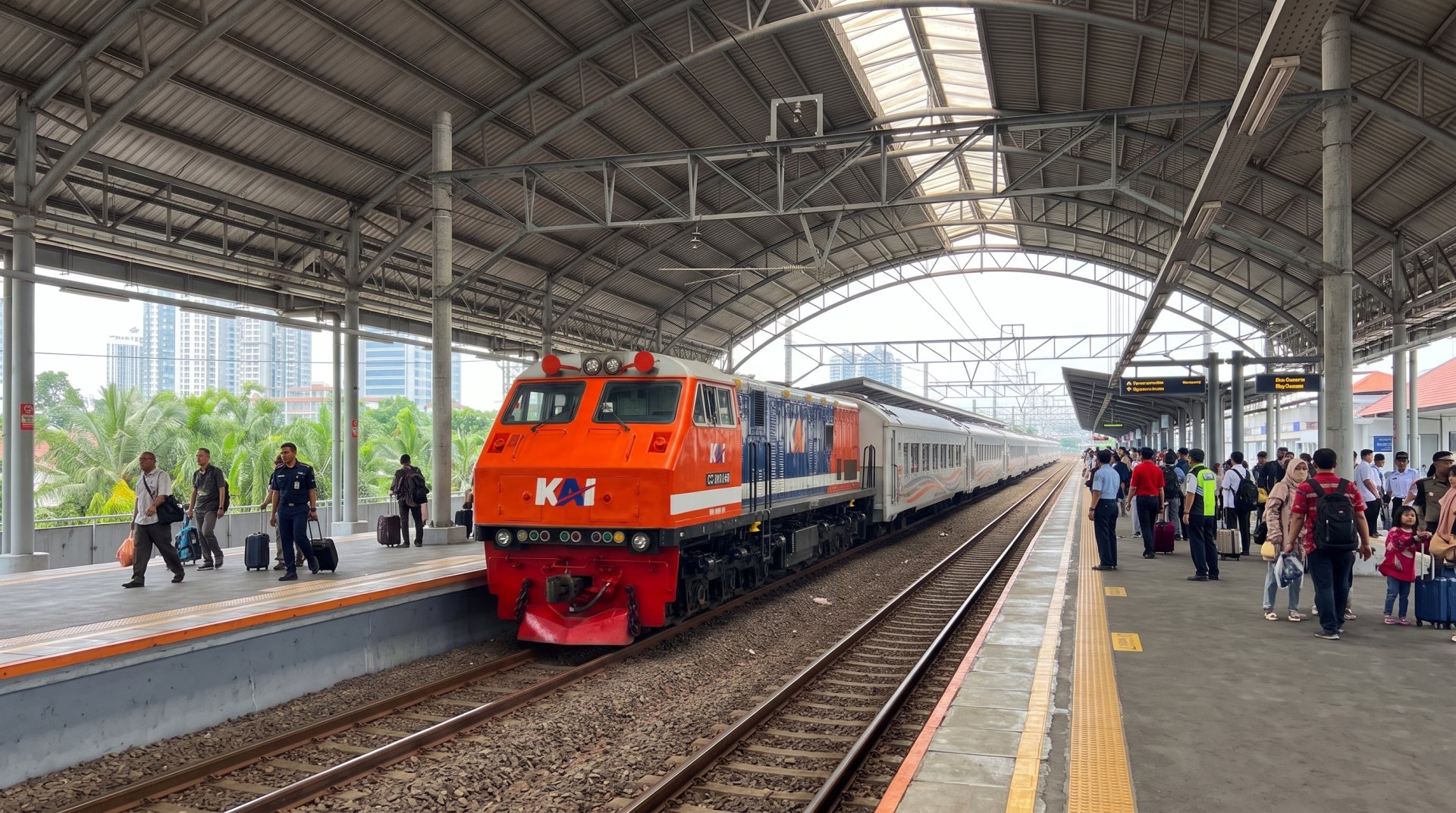
alurail alurail
Home & Hub Live Journey Map Timetables Route Search Special Trains (KLB) Train Directory Fleet Database Station Directory Facilities & Depots Operating Areas Safety & Incidents Updates & News Photo Gallery alurail pass
User Suite
Map Home Timetables Fleet
alurail alurail
Hub / Home Directory & Insights
Live Journey Map Crowdsourced Live Journey
Timetables Train Schedules
Search Routes Direct & Transit Finder
Extraordinary Trains (EOT) Extraordinary Trains
Train Directory Master Train Fleet
Fleet Database Rolling Stock Info
Stations Facilities & Hubs
Facilities Depots & Workshops
Operating Areas Daop & Divre
Incidents & Safety (EOE) Historical Rail Incidents
Updates & News Railway Dispatches & Insights
Photo Gallery Curated Collection
alurail pass Supporter Perks
About alurail Platform Info & Vision
Sign In / Account
Back to Updates • History, Train Profile
Live Radar alurail Pass Submit Photo
Live Journey / Updates / Evolution of KA Argo Parahyangan (1971–2026): From JB-250 & Whoosh to Sidareja
History Train Profile 14 November 2026 • Updated 20 November 2026

Evolution of KA Argo Parahyangan (1971–2026): From JB-250 & Whoosh to Sidareja
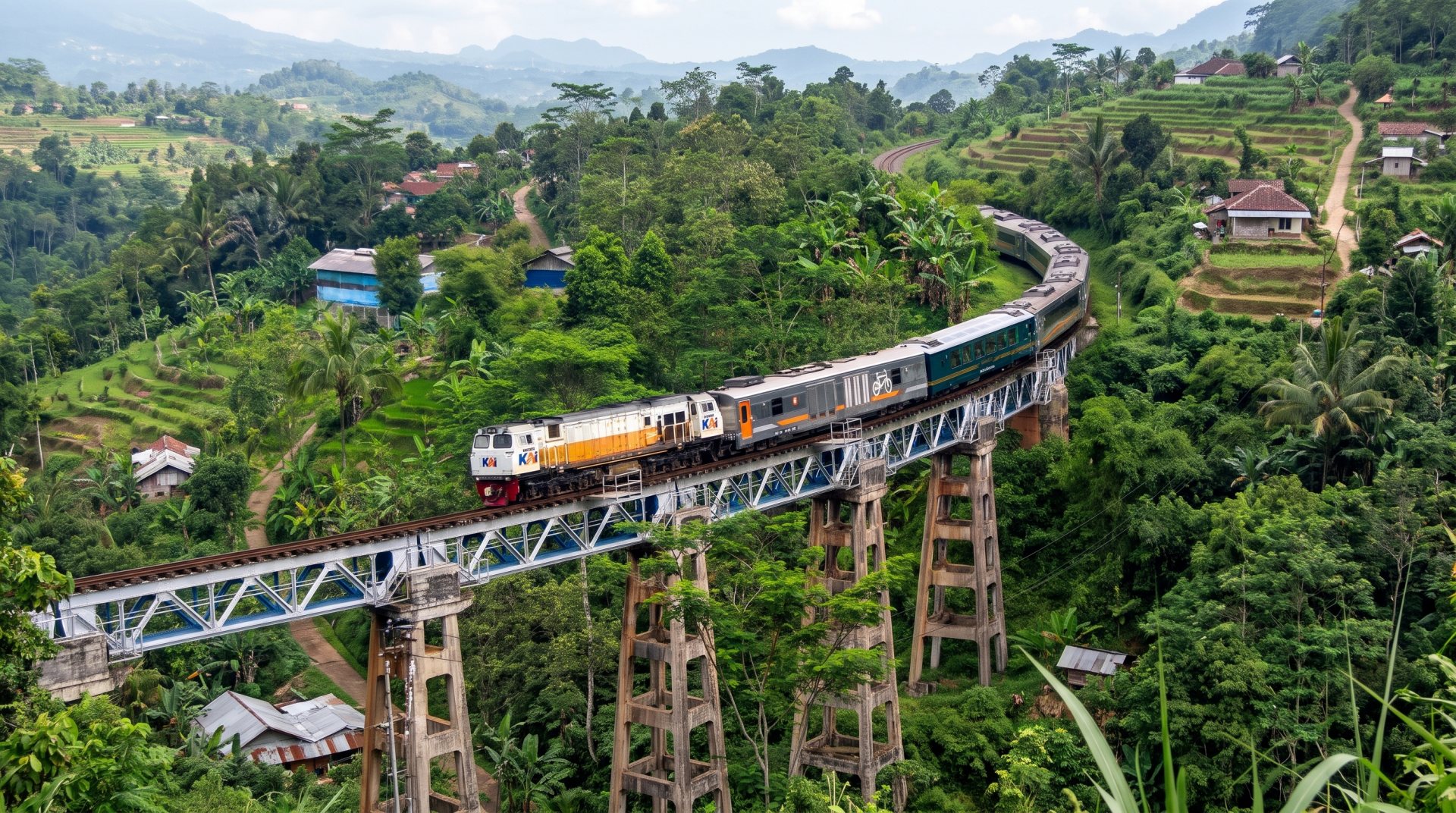
Full history of the Jakarta–Bandung–East Priangan rail corridor (1971–2026): KA Parahyangan, Argo Gede JB-250, the 2010 merger, +41.75% ridership rebound alongside Whoosh, Gapeka 2026 Sidareja expansion, and 2027 KRL electrification.
alurail Editorial Team
Staff Writer & Rail Researcher • 1,188 views
Evolution of KA Argo Parahyangan (1971–2026): From JB-250 & Whoosh to Sidareja
Table of Contents
  1. 1. 1. The Dual-Pole Era (1971–2010): KA Parahyangan and KA Argo Gede JB-250
  2. 2. 2. The Cipularang Toll Shock and Birth of KA Argo Parahyangan (2005–2023)
  3. 3. 3. Whoosh Disruption and the 2025 Ridership Paradox (2023–2026)
  4. 4. 4. East Priangan Expansion and KA Parahyangan Revival (2024–2026)
  5. 5. 5. Mountain Engineering, Safety Record, and 2027 Bandung Raya KRL Electrification
alurail Executive Summary

Conventional rail along the Jakarta–Bandung–East Priangan corridor (1971–2026) reflects Java's most dynamic intermodal evolution—from the birth of KA Parahyangan (July 31, 1971) and KA Argo Gede JB-250 (July 31, 1995), their merger into KA Argo Parahyangan (April 27, 2010) under Cipularang Toll Road pressure, to major restructuring after the Whoosh High-Speed Rail launch in October 2023.

Rather than disappearing, PT KAI reallocated slots into East Priangan via KA Papandayan and KA Pangandaran (January 24, 2024), revived the historic KA Parahyangan name under Gapeka 2025 (February 1, 2025)—driving a 41.75% ridership surge to 728,949 passengers in Jan–Oct 2025—and extended KA Pangandaran to Sidareja (Cilacap) in Gapeka 2026 ahead of the 2027 Bandung Raya KRL electrification.

2025 Ridership Surge
+41.75%
728,949 passengers (Jan–Oct 2025) vs 514,253 (2024) alongside Whoosh
Heritage Revival
Feb 1, 2025
KA Argo Parahyangan (2010–2025) restored as KA Parahyangan
Gapeka 2026 Extension
Sidareja
KA Pangandaran extended beyond Banjar to Cilacap starting Dec 1, 2026
Electrification Target
2027 (42 km)
Bandung Raya KRL (Padalarang–Cicalengka) cuts trip from 2h to 1h

Conventional passenger rail along the Jakarta–Bandung corridor from 1971 to 2026 has undergone structural transformations mirroring Java's intermodal competition: from the launch of the legendary KA Parahyangan on July 31, 1971 and the technological icon KA Argo Gede (JB-250) on July 31, 1995, to their 2010 merger into KA Argo Parahyangan under pressure from the Cipularang Toll Road, and sweeping network repositioning after the Whoosh High-Speed Railway opened in October 2023. In January 2024, sharp frequency cuts to Argo Parahyangan—which sparked public accusations that KAI was curbing conventional trains to boost Whoosh ridership—coincided with KAI's launch of direct long-distance routes from Gambir to East Priangan via KA Pangandaran (Gambir–Bandung–Banjar) and KA Papandayan (Gambir–Bandung–Garut).

Far from being rendered obsolete by high-speed rail, conventional corridor services discovered a resilient new market equilibrium. Under Gapeka 2025 on February 1, 2025, KAI retired the "Argo Parahyangan" name, dropped the Argo tier designation, and restored the original KA Parahyangan identity with mixed-class consists and broader intermediate stops. Between January and October 2025, ridership surged 41.75% to 728,949 passengers (up from 514,253 in the same period of 2024). Entering Gapeka 2026 on December 1, 2026, the corridor expands into western Central Java via KA Pangandaran's extension to Sidareja Station (Cilacap), supported by New Generation and Ekonomi Kerakyatan rolling stock and the 42-km Bandung Raya KRL electrification targeted for 2027.

1. The Dual-Pole Era (1971–2010): KA Parahyangan and KA Argo Gede JB-250

Birth of the Legendary KA Parahyangan (1971–1995)

Before mountain expressways existed, rail was the fastest overland link between Jakarta and Bandung. While colonial-era express roots in the Dutch East Indies included the fast Vlugge Vier service, the modern era began when state operator Perusahaan Negara Kereta Api (PNKA) inaugurated KA Parahyangan (originally spelled Parahiangan/Parahijangan) on July 31, 1971. Initially operating as a Second/Business Class service taking 4 hours 3 minutes, it deployed 1960s German-built BW/K2 coaches in cream-and-orange livery hauled by BB301 locomotives.

Within its first decade, traction and passenger coaches were progressively upgraded to keep pace with surging demand. According to railfan historical archives, BB301 locomotives were briefly succeeded by BB304 units in 1976 before traction transitioned permanently to the CC201 diesel-electric fleet starting in 1977, followed by the replacement of German-built cars with new Japanese-built Business Class coaches in 1978. By the late 1970s, First/Executive Class (K1) coaches were marshaled into the consist and became a permanent fixture throughout the 1980s. At its 1980s peak under Perusahaan Jawatan Kereta Api (PJKA), regular 14-coach consists double-headed by two CC201 locomotives operated up to 20 trips per day—surging to 30 trips daily on weekends. With passengers routinely commuting from Bandung to Jakarta on Sunday evenings and returning on Friday afternoons, KA Parahyangan functioned as an intercity commuter backbone dominating Jakarta–Bandung land transport for nearly four decades.

Launch of KA Argo Gede JB-250 (1995–2010)

Parahyangan's solo dominance ended with Indonesia's mid-1990s national rail modernization agenda. The concept for a higher-speed flagship train was sparked by Minister of Research and Technology B.J. Habibie aboard the Toraja tourist coach during a Jakarta–Bandung trip on December 6, 1992. Designed not merely as a new executive service but as a stepping stone toward high-speed rail, the program introduced fixed-consist operations, aircraft-style cabin interiors, acoustic and vibration damping, and the new NT-60 bogie rated for 120 km/h—breaking the previous 90 km/h ceiling.

On July 31, 1995—coinciding with National Technology Day, Indonesia's 50th Independence Anniversary year, and KA Parahyangan's 24th anniversary—President Soeharto inaugurated two top-tier Argo services (meaning "mountain" in Old Javanese/Kawi) at Gambir Station: JS-950 Argo Bromo (Jakarta–Surabaya) and JB-250 Argo Gede (named after Mount Gede in West Java) for Jakarta–Bandung. While a single community blog cited July 17, 1995, official Perumka archives, PT INKA documentation, and historical press consistently confirm July 31, 1995. The acronym JB-250 stood for Jakarta–Bandung 2 Hours for Indonesia's 50th Independence, targeting an operational travel time of 2 hours 30 minutes (150 minutes)—sharply undercutting KA Parahyangan's 3 to 3.5-hour schedule.

To support JS-950 and JB-250, the Department of Transportation imported 12 CC203 locomotives from General Electric (USA) and ordered PT INKA Madiun executive coaches (white with grey window bands) worth Rp 43.5 billion with domestic component suppliers. JB-250 Argo Gede received an allocation of 6 Executive coaches (K1), 1 dining car (KM1), and 1 generator car (BP) maintained at Bandung Coach Depot. Its maiden run hauled by CC203 01 encountered a minor mishap near Tambun after striking a motorcycle; the train halted only after onboard technicians reported debris caught in the power car bogie, arriving 5 minutes late in Bandung with scratches on the locomotive's right lower cowcatcher. Initially operating just 2 daily round trips with 5–6 K1 coaches (priced at Rp 40,000 in October 1999), CC201 locomotives frequently assisted from ~1996 onward. Even after Parahyangan added televisions and velvet-upholstered seats, Argo Gede's speed and prestige steadily won out—culminating on May 20, 2001 with the launch of Argo Gede II (utilizing idle KA Turangga coaches before becoming optional), doubling frequency to 4 daily round trips (8 trips) and sidelining KA Parahyangan.

Technical & Operational Attribute KA Parahyangan (1971–2010) KA Argo Gede / JB-250 (1995–2010) KA Argo Parahyangan (2010–2025) KA Parahyangan Revival (2025–2026)
Operator PNKA / PJKA / PT KA Perumka / PT KA PT KAI (Daop 2 Bandung) PT KAI (Daop 2 Bandung)
Service Span Jul 31, 1971 – Apr 26, 2010 Jul 31, 1995 – Apr 26, 2010 Apr 27, 2010 – Jan 31, 2025 Feb 1, 2025 – present
Service Classes Business (K2) & Executive (K1, late 1970s+) Argo Executive (INKA 1995 K1) Mixed (Exec + Business / Econ Plus / Econ Premium), Priority, Luxury, Panoramic Mixed: Economy Premium, Executive, Priority, Luxury, Panoramic
Traction & Coaches BB301, BB304 (1976), CC201 (1977–2010); German then Japanese K2 CC203 (1995), CC201 (~1996); K1 on NT-60 bogies (120 km/h) CC201/CC203/CC206; INKA 2016, Stainless Steel 2018–19, Tourist cars Mixed sets incl. Stainless Steel New Generation & Luxury New Generation (2026)
Travel Time 4h 03m (1971); ~3–3.5h (1990s) 2h 30m (150 min) 2h 50m (Excellence 2019) to ~3h 10m Avg 2h 59m (range 2h 51m – 3h 13m)
Transition Trigger Load factor collapsed after Cipularang Toll; merged with Argo Gede Pressured by Cipularang Toll; merged with Parahyangan Post-Whoosh adjustment, East Priangan slot reallocation, Argo tier removal Continues in Gapeka 2026 alongside Whoosh & 2027 Bandung Raya KRL

2. The Cipularang Toll Shock and Birth of KA Argo Parahyangan (2005–2023)

The "Rubber-Tire" Crisis and 2010 Merger

Three decades of rail supremacy ended abruptly when the Cikampek–Purwakarta–Padalarang (Cipularang) Toll Road opened in 2004–2005, cutting highway travel between Bandung and Jakarta to roughly 3 hours—or even less in light traffic—and fueling a boom in door-to-door shuttle vans (travel). Within a year, KA Parahyangan's occupancy collapsed to 25%, shrinking its consist to just 2 executive and 3 business coaches in 2005. PT Kereta Api (Persero) fought back with promotional fares starting March 7, 2008 down to Rp 25,000. While discounts lifted load factors to 70%, highway shuttle operators matched the fare cuts, leaving rail occupancy short of its 80% operational break-even point and resulting in a Rp 36 billion loss in 2009. Meanwhile, KA Argo Gede's consists shrank to 4–5 executive coaches during 2006–2007, though it maintained healthier occupancy than Parahyangan.

To halt mounting losses and preserve Jakarta–Bandung rail service, PT KA merged both trains effective April 26, 2010. On its final day, April 26, 2010, KA Parahyangan ran a farewell Gambir–Bandung trip hauled by CC201 99, witnessed by more than 150 railfans and two television crews. The following day, April 27, 2010, the combined KA Argo Parahyangan debuted. To save time, PT KA immediately coupled 3–4 ex-Argo Gede executive coaches with 2–3 ex-Parahyangan business coaches without repainting—marking an unprecedented historical anomaly as Indonesia's first Argo-branded train carrying non-executive classes.

Rolling Stock Evolution from Class Compromises to Panoramic Cars (2010–2023)

Over its 15-year lifespan, KA Argo Parahyangan's consist adapted continuously to shifting demand and worsening Cipularang Toll congestion. Strong executive demand led KAI to drop Business Class entirely on December 30, 2011, returning the train to all-Executive status until mid-2016 when the abolition of buffer-coach rules allowed Business Class to return. On October 25, 2016, Business Class was replaced by 2016 PT INKA Economy Plus (New Image) coaches transferred from KA Mutiara Selatan. Despite passenger complaints over tight seat pitch, severe highway gridlock drove soaring rail demand, prompting KAI to deploy 2017 INKA Economy Premium and 2018 Stainless Steel Executive coaches on extra runs (2017–2019) before upgrading the entire regular fleet to Stainless Steel starting in 2019.

The late 2010s and early 2020s ushered in a new golden era of premium offerings: Priority tourist coaches debuted on March 9, 2018; Argo Parahyangan Excellence launched on October 1, 2019 cutting travel time back to 2 hours 50 minutes; and 26-seat Luxury coaches (1–2 layout with 140°–180° reclining rotating seats) joined the consist. Under Gapeka 2021, Argo Parahyangan operated 4 daily regular round trips plus 6 optional trips. On February 3, 2023, KAI trialed the 38-seat Panoramic observation car (featuring heat-insulated duplex panoramic windows and an automatic sunroof) on Fridays (KA 44A) and Sundays (KA 51A), before launching regular Panoramic operations on June 3, 2023 across KA 33–36 and KA 43–44—two days after Gapeka 2023 removed Kiaracondong Station stops.

3. Whoosh Disruption and the 2025 Ridership Paradox (2023–2026)

January 2024 Schedule Cuts: Cannibalization or Slot Reallocation?

The second structural shock arrived when KCIC's 350 km/h Whoosh High-Speed Railway (142.3 km, 13 tunnels) began operations on October 2, 2023 and full commercial service on October 17–18, 2023, slashing intercity rail time to 40–47 minutes (Halim–Padalarang in 35–50 minutes) and carrying 4 million cumulative riders by July 9, 2024 (with weekday load factors of 60–70% and a 24,000-passenger daily peak). Although KAI management initially stated in November 2023 that Whoosh had minimal impact due to differing stations and markets, on January 24, 2024 Argo Parahyangan was slashed from 14–16 daily trips to just 6 regular daily trips—3 from Gambir (07:25, 13:10, 18:30 WIB, plus Sunday 23:10) and 3 from Bandung (06:00, 09:35, 10:50 WIB). While public critics accused KAI of protecting Whoosh, VP Public Relations Joni Martinus clarified that slots (such as Gambir 06:30 and 09:30 WIB, and Bandung 15:00 and 22:00 WIB) were reallocated to launch KA Papandayan (Gambir–Garut), KA Pangandaran (Gambir–Banjar), and morning KA Malabar departures—reflecting both Whoosh's absorption of time-sensitive travelers and KAI's pivot toward East Priangan.

Competitive Anatomy and the 2025 Ridership Surge

Despite a wide gap in track speed, conventional KAI trains remained highly competitive thanks to three structural advantages: city-center terminals, lower fares, and a scenic mountain rail experience:

Comparison Dimension KA Parahyangan (Gapeka 2025/2026) Whoosh High-Speed Rail (KCIC)
Jakarta Terminal Gambir Station (Central Jakarta) Halim Station (East Jakarta, Jabodebek LRT link)
Bandung Terminal Bandung Station (city center; direct to Braga, Asia Afrika, Dago) Padalarang (West Bandung) & Tegalluar Summarecon (eastern outskirts)
City-Center Access Direct, zero transfers Requires free KA Feeder via Cimahi (~18–22 min, avg 19 min) or road transfer
Rail vs. Total City-Center Time 2h 51m – 3h 13m (avg 2h 59m) station-to-station 35–50 min on Whoosh; ~59 min – 1h 13m (avg 1h 10m) total via KA Feeder
Distance & Max Speed 169 km (some archives cite 173 km); 60–120 km/h (40–60 km/h in mountains) 142.3 km; up to 350 km/h
Capacity & Classes ~520 seats; Economy Premium, Executive, Priority, Luxury, Panoramic 583–601 seats (8 cars); Premium Economy, Business Class, First Class
Fare Range Economy: Rp 145k–150k; Executive: Rp 195k–250k; Panoramic/Priority/Luxury: Rp 352k–435k Dynamic Premium Economy: Rp 150k–250k (up to Rp 300k–350k peak/higher class; free Feeder)
Core Value Proposition Budget-friendly, transfer-free families & scenic mountain rail travelers Time-sensitive commuters & business travelers
KA Parahyangan Ridership Rebound (2024–2025) & Daop 2 Rankings (H1 2026)
Left: Jan–Oct 2025 surge (+41.75%); Right: Top Daop 2 Bandung trains by H1 2026 passenger volume
KA Parahyangan (Jan–Oct) 514,253 Jan–Oct 2024 728,949 Jan–Oct 2025 +41.75% YoY Daop 2 Bandung Ridership (H1 2026) KA Cikuray (PSO) 152,708 KA Kahuripan 132,310 KA Kutojaya Sel. 124,051 KA Lodaya 63,992 KA Malabar 57,124 KA Serayu (PSO) 55,539

Anchored by central Gambir–Bandung access, lower fares, and scenic valley-bridge vistas, KA Parahyangan rebounded sharply—carrying 728,949 passengers from January to October 2025, a 41.75% jump over 514,253 in Jan–Oct 2024.

4. East Priangan Expansion and KA Parahyangan Revival (2024–2026)

KA Pangandaran and KA Papandayan: Extending the Corridor to Sidareja

Direct rail links from Jakarta to East Priangan were first trialed via KA Priangan Ekspres in 2009 before low demand left Banjar dependent on the subsidized KA Serayu. On January 2, 2019, KAI launched KA Pangandaran (Gambir–Bandung–Banjar), which paused for nearly four years during COVID-19 before returning as daily regular service on January 24, 2024 alongside KA Papandayan (Gambir–Bandung–Garut). Both launched with Executive, Economy Premium, and Panoramic classes at 20% promo fares through January 31, 2024 (Rp 296,000 Executive / Rp 180,000 Economy for Pangandaran; Rp 252,000 / Rp 156,000 for Papandayan). Operationally, Parahyangan, Papandayan, and Pangandaran share an integrated trainset rotation at Gambir; from August 1, 2025, Pangandaran's Panoramic car was temporarily substituted with a Priority car during maintenance. Through March 2025, KA Papandayan carried 45,301 Garut–Gambir riders and 36,943 Gambir–Garut riders. Under Gapeka 2026 (December 1, 2026), KA Pangandaran extends beyond Banjar to Sidareja Station (Cilacap, Central Java)—37 km from Pangandaran Beach—supported by Sidareja's steady monthly traffic growth from 19,489 riders (2023) to 24,652 (2024), 25,909 (2025), and 28,456 (2026).

Subsidized Economy Pillars: KA Cikuray and KA Serayu

Outside commercial services, affordable mobility relies on Public Service Obligation (PSO) trains. KA Cikuray (Pasar Senen–Garut, inaugurated March 25, 2022 at a flat PSO fare of Rp 45,000 for 245 km, or Rp 15,000 partial) ranked first across Daop 2 Bandung in H1 2026 with 152,708 passengers—ahead of KA Kahuripan (132,310), KA Kutojaya Selatan (124,051), KA Lodaya (63,992), KA Malabar (57,124), and southern partner KA Serayu (55,539). On June 10–11, 2026, KA Cikuray upgraded to six Balai Yasa Manggarai-modified Ekonomi Kerakyatan coaches (93 reversible 3–2 seats each, Java's only 93-seat PSO contract) plus a 73-seat Farmers and Traders Special Coach modified by Balai Yasa Surabaya Gubeng.

KA Parahyangan Revival (Gapeka 2025) Toward Gapeka 2026

On January 31, 2025, Argo Parahyangan concluded its 15-year run. On February 1, 2025 (Gapeka 2025), KAI restored KA Parahyangan across 5 daily regular round trips plus 1 optional round trip (7 daily corridor round trips combined with Papandayan and Pangandaran), dropping the Argo label due to its mixed consist (80-seat Economy Premium, 50-seat Executive, 28-seat Priority, 26-seat Luxury, 38-seat Panoramic) and added stops (Cimahi, Purwakarta, Bekasi, Jatinegara, plus Karawang, Cikampek, Plered, or Sasaksaat on select trips), with Stainless Steel New Generation and Luxury New Generation rolling stock deployed in 2026:

Train Name & No. Route Gapeka 2025 (From Feb 1, 2025) Gapeka 2026 (From Dec 1, 2026) Classes & Notes
KA 130 Papandayan Gambir – Bandung – Garut Dep GMR 06:35 → Arr BD 09:42 Dep GMR 05:35 → Arr Garut 10:45 Executive, Economy Premium, Panoramic
KA 132 Parahyangan Gambir – Bandung Dep GMR 07:30 → Arr BD 10:21 Dep GMR 06:30 Economy Premium, Executive, Luxury
KA 138 Parahyangan Gambir – Bandung Dep GMR 09:15 → Arr BD 12:18 Dep GMR 07:35 → Arr BD 10:45 Includes Priority coach in Gapeka 2026
KA 128 Pangandaran Gambir – Bandung – Banjar / Sidareja Dep GMR 08:30 → Arr BD 11:43 (to Banjar) Dep GMR 08:55 (extended to Sidareja) Executive, Economy Premium, Panoramic (128PC)
KA 136 Parahyangan Gambir – Bandung Dep GMR 10:05 → Arr BD 13:18 Dep GMR 10:25 → Arr BD 13:37 Includes Priority coach in Gapeka 2026
KA 142F Parahyangan Gambir – Bandung (Optional) Dep GMR 13:40 → Arr BD 16:42 Dep GMR 13:55 (selected days) Operates on selected days
KA 134 Parahyangan Gambir – Bandung Dep GMR 18:25 → Arr BD 21:20 Dep GMR 18:55 → Arr BD 22:07 Includes Panoramic coach in Gapeka 2026
KA 140 Parahyangan Gambir – Bandung Dep GMR 23:05 → Arr BD 02:02 (+1) Dep GMR 23:00 Final night departure Gambir–Bandung
KA 131 Parahyangan Bandung – Gambir Dep BD 05:00 → Arr GMR 08:00 Dep BD 05:00 → Arr GMR 08:08 (Panoramic) Includes Panoramic coach in Gapeka 2026
KA 135 Parahyangan Bandung – Gambir Dep BD 06:35 → Arr GMR 09:40 Dep BD 06:35 → Arr GMR 09:42 (Priority) Includes Priority coach in Gapeka 2026
KA Parahyangan (Midday) Bandung – Gambir KA 133: 11:05 → 14:12 (also 141F 10:25 & 137 13:05) Priority Dep BD 12:05 → Arr GMR 15:19 (other slots via Access by KAI) Luxury at 11:05 (2025); midday Priority (2026)
KA 129 Papandayan Garut – Bandung – Gambir Dep BD 14:54 → Arr GMR 18:00 Dep Garut 12:25 → Arr GMR 18:01 Carries Panoramic (129PC)
KA Pangandaran (Northbound) Sidareja / Banjar – Gambir Dep Banjar 16:55 → BD 22:00 → GMR 00:49 (+1) Dep Sidareja 17:00 → Arr GMR 01:12 (+1) Carries Panoramic back to Gambir

5. Mountain Engineering, Safety Record, and 2027 Bandung Raya KRL Electrification

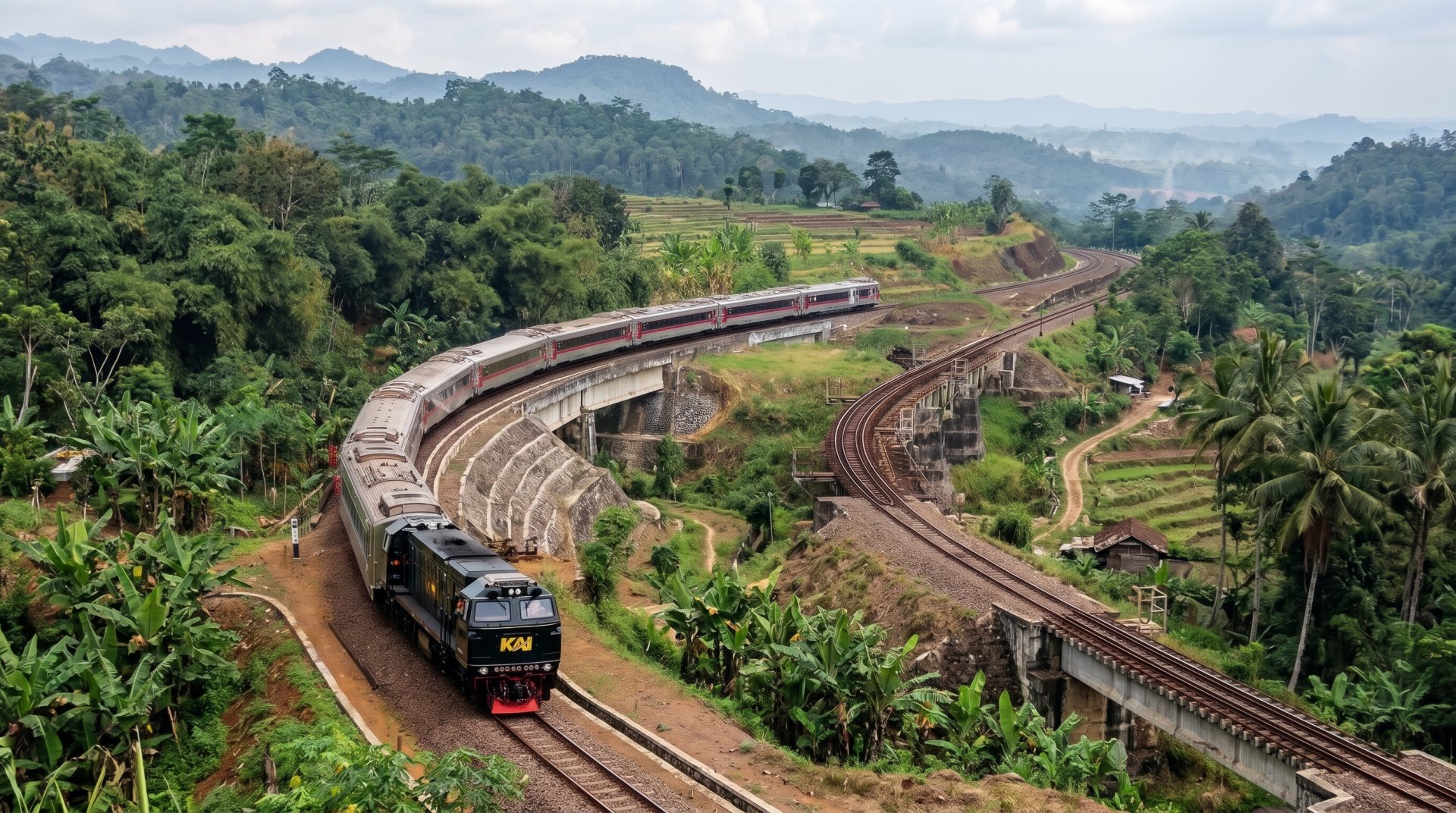
Speed ceilings along the 169-km conventional line (electrified at 1,500 V DC only up to Cikarang) drop from 90–120 km/h on the flat Cikarang–Cikampek plain to 40–60 km/h across the 56-km Purwakarta–Padalarang mountain section opened by Staatsspoorwegen on May 2, 1906. This historic engineering showcase includes the 949-meter Sasaksaat Tunnel (725 m ASL, Java's longest active conventional rail tunnel), the 300-meter Cikubang Bridge (80 m high, reinforced by DKA in 1953), and the 100-meter-high Cisomang Bridge (Indonesia's tallest rail bridge, rebuilt in 2004).

Mountain Corridor Engineering & East Priangan Expansion (1906–2027)
Speed profile, colonial civil structures (Cisomang, Cikubang, Sasaksaat), Garut & Sidareja branches
Gambir Cikampek Purwakarta Cisomang 100m Sasaksaat 949m Padalarang Bandung Cibatu Garut (Papandayan) Banjar Sidareja (2026) 90–120 km/h 80–100 km/h 40–60 km/h (56 km mountain) Cikubang 300m (1906) Bandung Raya KRL 42 km (2027) KA Pangandaran Purwakarta–Padalarang mountain section 2027 Padalarang–Cicalengka KRL electrification Gapeka 2026 extension

High-frequency mountain operations demand strict safety discipline. Key incidents include the February 7, 1998 Sadang Station head-on collision between two KA Parahyangan trains (53 injured), landslides at KM 156+4/5 Padalarang–Cilame, the Cisomang derailment (KNKT-14-05-04-02), East Priangan's Trowek corridor tragedies (Sep 24, 1962 killing 130; Oct 24, 1995 killing 20, prompting mandatory brake checks at Cipeundeuy), the January 5, 2024 Cicalengka–Haurpugur collision between KA Turangga and Bandung Raya Commuter Line KA 350 (4 crew killed), and the December 2023 Ngamprah Whoosh Feeder crossing crash (5 killed). Looking ahead, the Ministry of Transportation, West Java Provincial Government, and PT KAI agreed in October 2025 to electrify the 42-km Padalarang–Cicalengka corridor by 2027, cutting cross-basin Commuter Line travel from 2 hours to 1 hour and seamlessly linking Whoosh at Padalarang with long-distance trains at Bandung Station.
Key Takeaways & Assistive Q&A
When was KA Argo Parahyangan renamed back to KA Parahyangan?
PT KAI retired the Argo Parahyangan name on January 31, 2025 and officially restored the historic KA Parahyangan name on February 1, 2025 under Gapeka 2025.
Why did KA Parahyangan and KA Argo Gede merge on April 27, 2010?
The opening of the Cipularang Toll Road (2004–2005) caused KA Parahyangan occupancy to plunge to 25% and led to a Rp 36 billion loss in 2009, prompting PT KA to merge both trains into KA Argo Parahyangan.
How did KA Parahyangan ridership perform after Whoosh High-Speed Rail launched?
From January to October 2025, KA Parahyangan carried 728,949 passengers—a 41.75% surge over the 514,253 carried in Jan–Oct 2024—buoyed by direct city-center Gambir–Bandung access.
Where is KA Pangandaran's route extended in Gapeka 2026?
Starting December 1, 2026, KA Pangandaran extends beyond Banjar to Sidareja Station in Cilacap Regency, Central Java, roughly 37 km from Pangandaran Beach.
When is the Bandung Raya KRL electrification project scheduled for completion?
Electrification of the 42-km Padalarang–Cicalengka corridor is targeted for completion by 2027, halving cross-basin commuter travel time from 2 hours to 1 hour.

Related Dispatches

History & Status of Indonesia's Argo Class: From 1995 Pioneers to Gapeka 2026
History, Analysis

History & Status of Indonesia's Argo Class: From 1995 Pioneers to Gapeka 2026

KA Argo Wilis: History, Southern Line Engineering, SSNG Fleet & GAPEKA 2026 Status
History, Train Profile

KA Argo Wilis: History, Southern Line Engineering, SSNG Fleet & GAPEKA 2026 Status

History & Profile of KA Bima (1967–2026): Night Blue Legend to Suite Class & GAPEKA 2026
History, Train Profile

History & Profile of KA Bima (1967–2026): Night Blue Legend to Suite Class & GAPEKA 2026

alurail alurail
Copyright ©️ 2024-2026 alurail by alula Made with 💗 from Pejaten, ID
Copyright ©️ 2024-2026 alurail by alula
Made with 💗 from Pejaten, ID

Community & Photographers

  • alurail Pass PRO
  • Submit Photo
  • User Suite
  • Curated Feed
  • Community Feed

Platform & Legal

  • About Platform
  • Terms & Conditions
  • Privacy Policy
  • Open Source Notices
  • FAQ / Help Center
Pass PRO PRO Upload Photo Suite Gallery
About
Terms
Privacy
License
FAQ
© 2026 alurail. All rights reserved.
alurail

alurail Legal & Info

About alurail

<h2>About AluRail</h2>

<p class="lead">
AluRail (Aluline TGV) is a free web-based platform that visualizes railway operations and train travel schedules across Indonesia. The service is available through <a href="https://alurail.web.id" target="_blank">alurail.web.id</a> and <a href="https://alurail.web.id" target="_blank">alurail.web.id</a>, developed independently by <strong>Alula</strong>
(<a href="https://alula.web.id" target="_blank">alula.web.id</a>) for railway enthusiasts (railfans) and passengers seeking a more intuitive understanding of train movements and timetable operations.
</p>

<h3>How It Works</h3>

<p>
AluRail transforms official <strong>GAPEKA 2025</strong> (Indonesia Railway Timetable Graph) data into an interactive geospatial visualization. Every train journey is reconstructed from scheduled departure and arrival times, station sequences, railway topology, and routing calculations to estimate how trains would move across the network.
</p>

<p>
Unlike conventional timetable viewers, AluRail continuously simulates train movement using a custom railway physics engine. The simulation considers various operational parameters including route geometry, train acceleration, braking, cruising speed, station dwell times, operational constraints, and other physical assumptions to estimate each train's position throughout its journey.
</p>

<p>
Whenever available, the platform also supports <strong>Crowdsourced Live Tracking</strong>. Passengers currently travelling on board may voluntarily share their GPS location. These telemetry reports are validated using map-matching algorithms and compared against the predicted GAPEKA route before being displayed to other users.
</p>

<h3>The Technology Behind AluRail</h3>

<ul>
<li><strong>PostgreSQL (PostGIS):</strong> Serves as the core geospatial database storing railway infrastructure, stations, and spatial relationships.</li>

<li><strong>Custom Railway Routing Engine:</strong> Implements graph-based routing algorithms including Dijkstra and A* to calculate railway paths, station connectivity, and operational routes.</li>

<li><strong>Railway Physics Engine:</strong> Simulates train movement by modelling acceleration, deceleration, cruising behaviour, station stops, speed restrictions, and travel progression based on timetable data.</li>

<li><strong>Viterbi Map-Matching:</strong> Validates crowdsourced GPS telemetry by matching noisy GPS observations onto the most probable railway track, improving live tracking reliability.</li>

<li><strong>Leaflet.js & OpenRailwayMap:</strong> Provide interactive map rendering and railway visualization layers.</li>
</ul>

<h3>Supported Railway Services</h3>

<p>
AluRail supports visualization for various railway services operating across Indonesia, including passenger, commuter, urban transit, heritage, and freight operations. Depending on data availability, the platform currently supports:
</p>

<ul>
<li>Intercity Passenger Trains (KA Antar Kota)</li>
<li>Whoosh High-Speed Railway</li>
<li>Commuter Line</li>
<li>Feeder Train Services</li>
<li>Local Passenger Trains</li>
<li>Freight Operations (Container, Cargo, Tanker, Coal, Cement and other freight services)</li>
<li>LRT Jakarta</li>
<li>LRT Jabodebek</li>
<li>LRT South Sumatra (Palembang)</li>
<li>Jakarta MRT</li>
<li>Ambarawa Heritage Railway</li>
</ul>

<p>
Additional railway operators and future services may be introduced as more infrastructure and timetable data become available.
</p>

<h3>Platform Features</h3>

<p>
AluRail combines timetable simulation, geospatial analysis, and live community participation into a single railway visualization platform. Key features include:
</p>

<ul>

<li>
<strong>Follow Mode</strong><br>
Automatically follows a selected train throughout its journey while continuously updating its estimated or live position.
</li>

<li>
<strong>Live GPS Cast</strong><br>
Passengers may voluntarily broadcast GPS telemetry while travelling onboard, allowing supported trains to display verified live positions instead of purely simulated movement.
</li>

<li>
<strong>Spotting Mode</strong><br>
Allows railfans to discover trains approaching nearby stations or railway crossings, making it easier to plan photography and train spotting activities.
</li>

<li>
<strong>Enhanced Railway Physics</strong><br>
Movement simulation considers railway gradient, elevation profile, track curvature, acceleration, braking, traction performance, speed restrictions, and operational constraints to produce more realistic train behaviour.
</li>

<li>
<strong>Detailed Route Analytics</strong><br>
Provides interactive charts including route elevation, curvature, gradient between stations, speed profile, and operational characteristics throughout the journey.
</li>

<li>
<strong>Train Information</strong><br>
Displays operational information about each service including operator, train category, route, schedule, formation details, and other service information.
</li>

<li>
<strong>Rolling Stock Database</strong><br>
Provides information about locomotives, EMUs, DMUs, coaches, wagons, and other railway vehicles used by supported services.
</li>

<li>
<strong>Coach & Class Information</strong><br>
Displays available passenger classes together with reference illustrations where available to help passengers identify onboard accommodation.
</li>
<li>
<strong>Adaptive Train Rendering</strong><br>
Train visualization automatically adjusts according to the current map zoom level. Different rendering modes are used to maintain smooth performance while displaying thousands of simultaneously simulated trains.
</li>

<li>
<strong>Train Filtering</strong><br>
Filter trains by service category such as Intercity, Commuter, High-Speed, Metro, LRT, Freight, Heritage, and other supported railway services.
</li>

<li>
<strong>Regional Filtering</strong><br>
Display trains operating within selected operational regions (Daerah Operasi / DAOP and other railway operational divisions) for easier monitoring.
</li>

<li>
<strong>Points of Interest (POI)</strong><br>
Explore railway-related locations including train spotting locations, photography viewpoints, railway landmarks, bridges, tunnels, stations, and other notable locations along the railway network.
</li>

<li>
<strong>Depots & Maintenance Facilities</strong><br>
View railway maintenance facilities including rolling stock depots, locomotive depots, maintenance workshops (Balai Yasa), stabling yards, and other operational infrastructure.
</li>

</ul>

<div class="disclaimer-box">
<h4>Disclaimer</h4>

<p>
<strong>AluRail is primarily a timetable simulation platform.</strong>
Unless a train is actively sharing verified Live Tracking data, all train positions displayed on the map are computational estimations generated from published schedules and the platform's railway physics engine.
</p>

<p>
Although the simulation attempts to realistically reproduce railway operations, actual train movements may differ significantly due to dispatching decisions, signal aspects, operational priorities, temporary speed restrictions, maintenance work, weather conditions, delays, early departures, extraordinary operations, GPS inaccuracies, or many other real-world factors that cannot always be observed by the platform.
</p>

<p>
Even when Live Tracking is available, GPS accuracy depends on user participation, mobile device quality, satellite reception, and local environmental conditions. Therefore, displayed positions should always be considered informational rather than authoritative.
</p>

<p>
<strong>This service must not be used as an official operational reference</strong> for travel planning, ticketing decisions, passenger information, or railway operations. Always refer to official PT Kereta Api Indonesia (Persero) information channels for accurate operational updates.
</p>

<p>
AluRail / Aluline TGV is an independent community project and is not affiliated with, endorsed by, partnered with, or officially associated with PT Kereta Api Indonesia (Persero), OpenStreetMap, OpenRailwayMap, or any other referenced organizations.
</p>
</div>

<p class="footer-note">
Made with ❣️ from Pejaten, Indonesia.
</p>

Terms of Use

<section id="terms-en" class="lang-content">
<h2>Terms of Service</h2>
<p class="effective-date"><strong>Effective Date:</strong> January 1, 2025 (Updated for GAPEKA 2025)</p>

<h3>1. Acceptance of Terms</h3>
<p>By accessing AluRail through alurail.web.id, alurail.web.id, and related subdomains (collectively, the "Service"), you acknowledge that you have read, understood, and agreed to these Terms of Service. If you do not agree, you must discontinue use of the Service.</p>

<h3>2. Independent Service</h3>
<p>AluRail is an independent community project developed by Alula. It is not affiliated with, endorsed by, or operated by any railway operator, government agency, or transportation authority unless explicitly stated.</p>

<h3>3. Nature of the Service</h3>
<p>The Service provides train schedule visualization, estimated train positions, operational simulations, and crowdsourced location validation based on publicly available information, GAPEKA data, and algorithmic processing. Displayed information may differ from actual railway operations.</p>

<h3>4. No Operational Guarantee</h3>
<p>Train movements, schedules, platform assignments, delays, cancellations, dispatching decisions, and operational conditions may change without notice. The Service must not be considered an official operational information source.</p>

<h3>5. Crowdsourced Contributions</h3>
<p>Users may voluntarily contribute GPS telemetry while onboard trains. Submission of fake GPS data, manipulated locations, automated submissions, spam, or attempts to interfere with system accuracy is strictly prohibited.</p>

<h3>6. Acceptable Use</h3>
<p>You agree not to misuse the Service, interfere with its infrastructure, reverse engineer protected components, exploit security vulnerabilities, scrape excessive data, or use automated systems that negatively impact platform availability.</p>

<h3>7. Intellectual Property</h3>
<p>Unless otherwise stated, the Service, its software, interface, branding, and original content remain the intellectual property of their respective owners. Open-source components remain governed by their own licenses.</p>

<h3>8. Availability</h3>
<p>The Service may be modified, suspended, restricted, or discontinued at any time without prior notice.</p>

<h3>9. Disclaimer ("AS IS")</h3>
<p>THE SERVICE IS PROVIDED "AS IS" AND "AS AVAILABLE" WITHOUT WARRANTIES OF ANY KIND, EXPRESS OR IMPLIED, INCLUDING MERCHANTABILITY, FITNESS FOR A PARTICULAR PURPOSE, NON-INFRINGEMENT, ACCURACY, OR CONTINUOUS AVAILABILITY.</p>

<h3>10. Limitation of Liability</h3>
<p>To the fullest extent permitted by law, Alula shall not be liable for direct, indirect, incidental, consequential, special, or punitive damages arising from the use of or inability to use the Service, including travel decisions, delays, missed connections, financial loss, personal injury, or data loss.</p>

<h3>11. Changes to these Terms</h3>
<p>These Terms may be updated periodically. Continued use of the Service constitutes acceptance of the revised Terms.</p>

<h3>12. Contact</h3>
<p>Questions regarding these Terms may be directed through the official AluRail contact channels.</p>
</section>

<h3>Independent Service Disclaimer</h3>

<p>AluRail is an independent community-developed platform created by Alula for railway visualization, research, educational, and enthusiast purposes.</p>

<p>AluRail is <strong>not affiliated with, associated with, authorized by, endorsed by, sponsored by, supported by, maintained by, operated by, or officially connected with</strong> PT Kereta Api Indonesia (Persero), PT Kereta Commuter Indonesia, PT Kereta Api Logistik, PT Kereta Api Pariwisata, PT Kereta Cepat Indonesia China (Whoosh), MRT Jakarta, LRT Jabodebek, LRT Jakarta, LRT Sumatera Selatan (Palembang), their subsidiaries, affiliates, successors, government agencies, transportation authorities, or any other railway operators unless explicitly stated.</p>

<p>All company names, railway service names, station names, train names, logos, trademarks, service marks, brands, route names, and other intellectual property displayed within the Service remain the property of their respective owners and are used solely for identification, informational, interoperability, historical, mapping, educational, or descriptive purposes.</p>

<p>The visualization presented by the Service represents publicly available operational information, algorithmic estimations, historical references, and voluntary community contributions. It must not be interpreted as an official operational system, railway dispatching platform, passenger information system, or real-time control center operated by any railway company.</p>

Privacy Policy

<section id="privacy-en" class="lang-content">
<h2>Privacy Policy</h2>
<p class="effective-date"><strong>Last Updated:</strong> June 2026</p>

<h3>1. Privacy Commitment</h3>
<p>Your privacy is important to us. We collect only the information reasonably necessary to operate and improve the Service.</p>

<h3>2. GPS Collection</h3>
<p>Your GPS location is accessed only after you intentionally enable Live Tracking. Background location is never collected without your explicit action.</p>

<h3>3. Processing</h3>
<p>Submitted GPS telemetry is processed using routing algorithms including Viterbi matching against the railway network to validate train positions. Telemetry is not associated with your personal identity.</p>

<h3>4. Server Logs</h3>
<p>Standard server logs such as IP address, browser type, timestamps, and technical diagnostics may be collected for security, abuse prevention, troubleshooting, and performance monitoring.</p>

<h3>5. Data Retention</h3>
<p>Live telemetry is temporary and automatically expires after the associated trip ends unless longer retention is required for security investigations.</p>

<h3>6. Third Parties</h3>
<p>We do not sell or rent your GPS telemetry. Limited technical processing by infrastructure providers may occur solely for operating the Service.</p>

<h3>7. Security</h3>
<p>Reasonable technical and organizational safeguards are implemented, although no online system can guarantee absolute security.</p>

<h3>8. User Safety</h3>
<p>We discourage publicly sharing real-time GPS positions. Anonymous mode or pseudonyms are strongly recommended.</p>

<h3>9. Your Responsibility</h3>
<p>Use of Live GPS or spotting features is entirely voluntary and at your own risk.</p>
</section>

Open Source Notices

<section id="opensource-en" class="lang-content">
<h2>Open Source Notice</h2>
<p>AluRail is built upon numerous open-source technologies and open data projects. We sincerely thank the communities maintaining them.</p>
<ul>
<li><strong>PostgreSQL, PostGIS & pgRouting</strong> — Spatial database, GIS extension, and routing engine.</li>
<li><strong>OpenStreetMap & OpenRailwayMap</strong> — Railway infrastructure and mapping data under their respective licenses.</li>
<li><strong>Leaflet.js</strong> — Interactive mapping library.</li>
</ul>
<p>All trademarks, copyrights, and licenses belong to their respective owners. Use within AluRail does not imply endorsement by those projects.</p>
</section>

alurail for Android

Version 1.3.0 • APK (110 MB)

Download the official alurail app package for Android.

Download APK
Requires Android 8.0 (Oreo) or later
alurail Pass Prime GRATIS!
early access

alurail Pass Prime GRATIS!