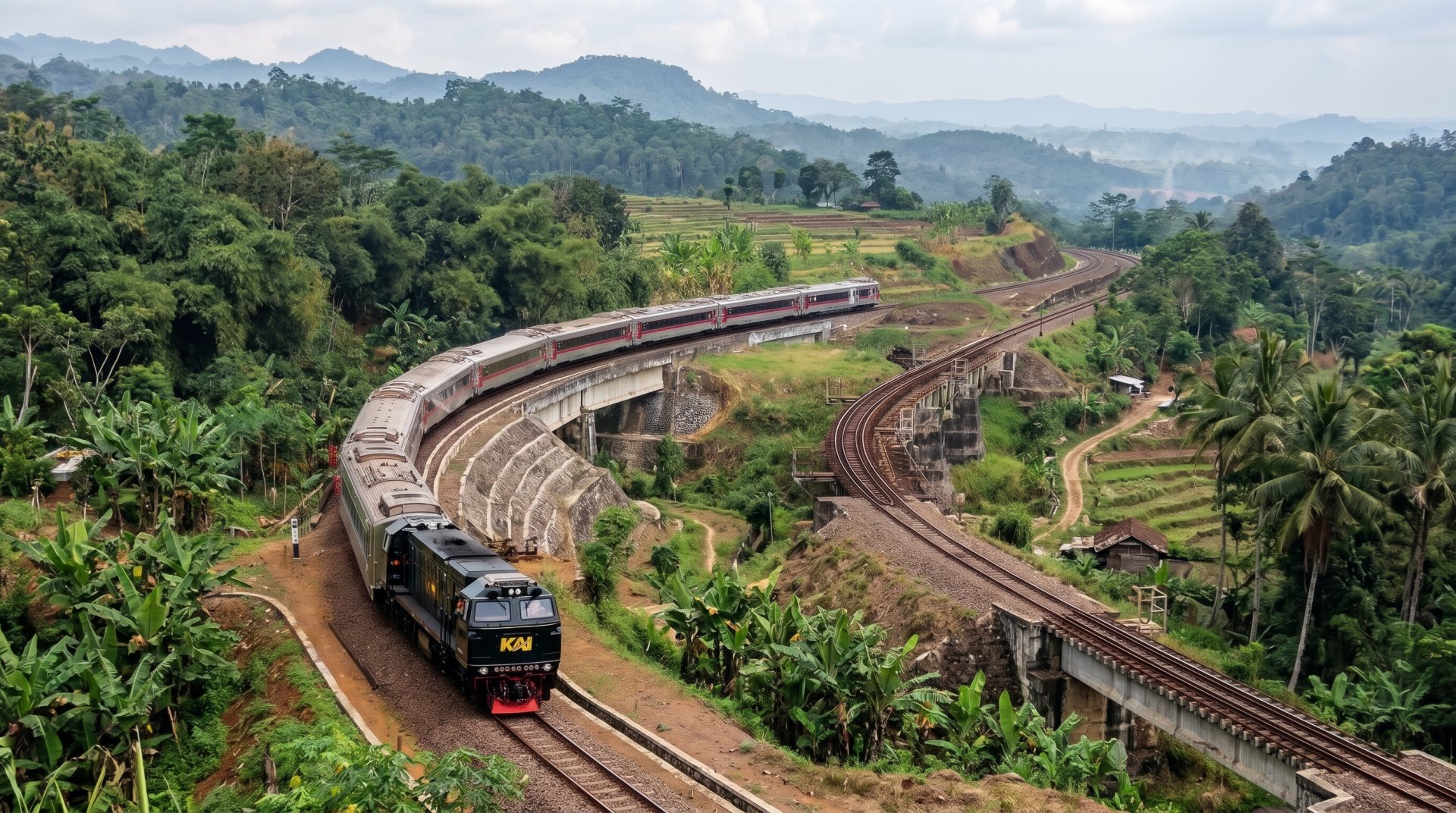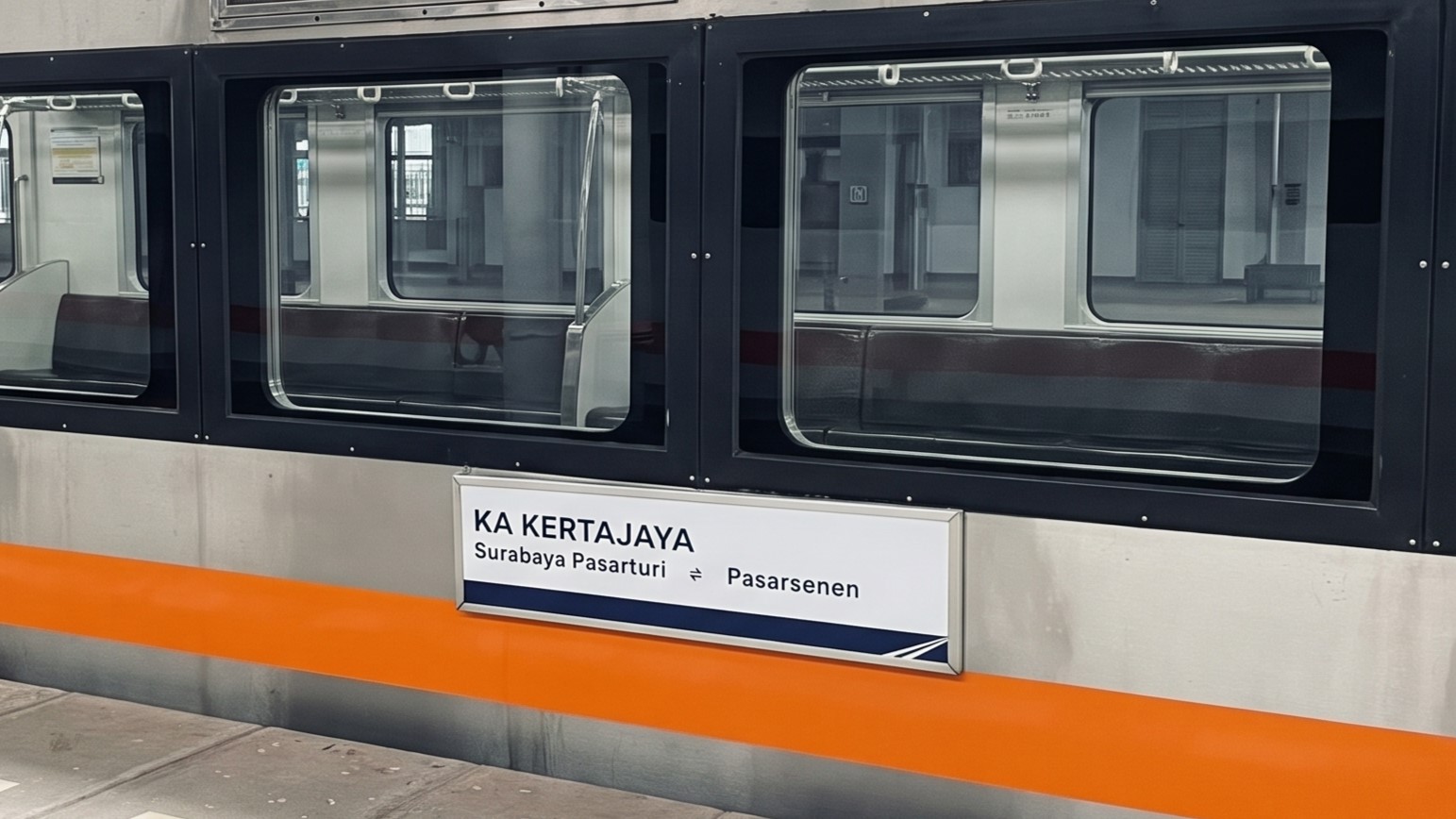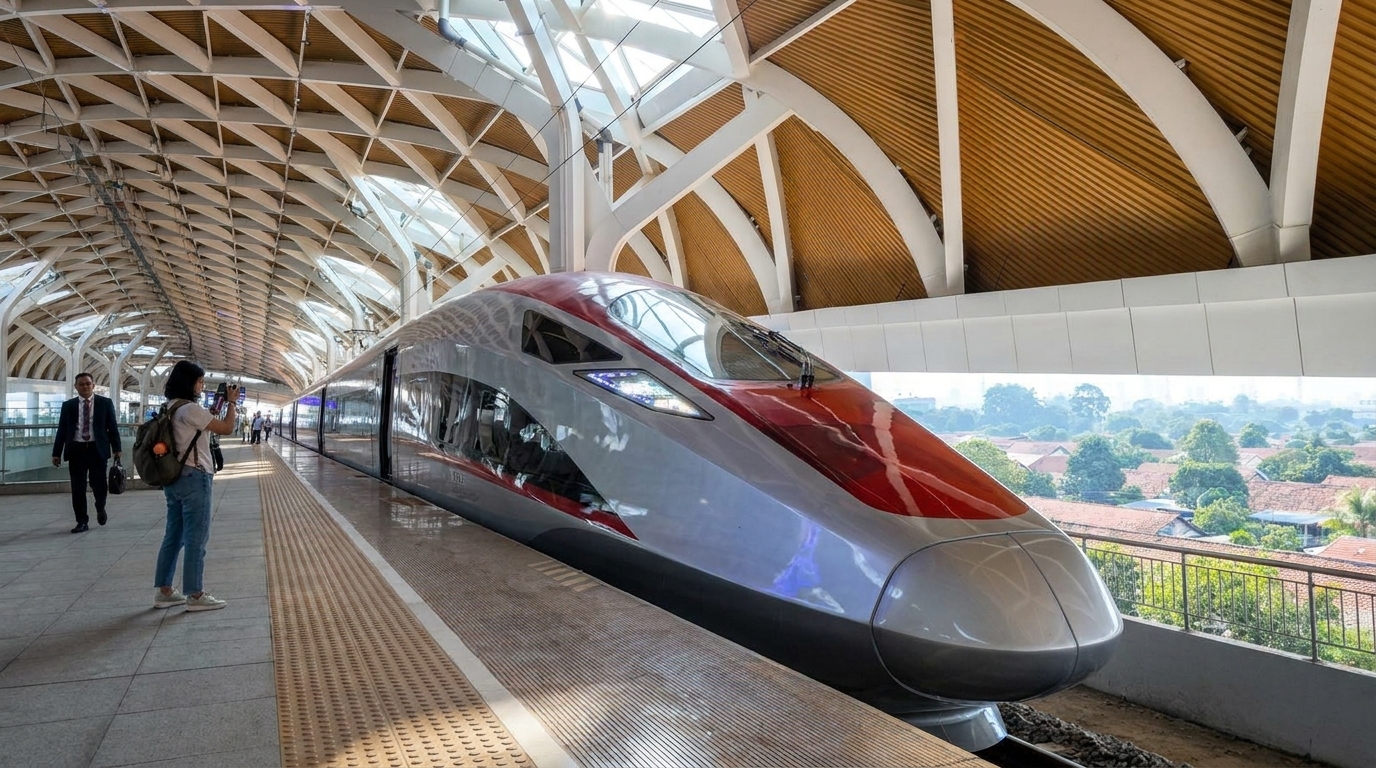
Sumatra Rail Freight Revenue Analysis: PT KAI’s Financial Workhorse 2025–2026
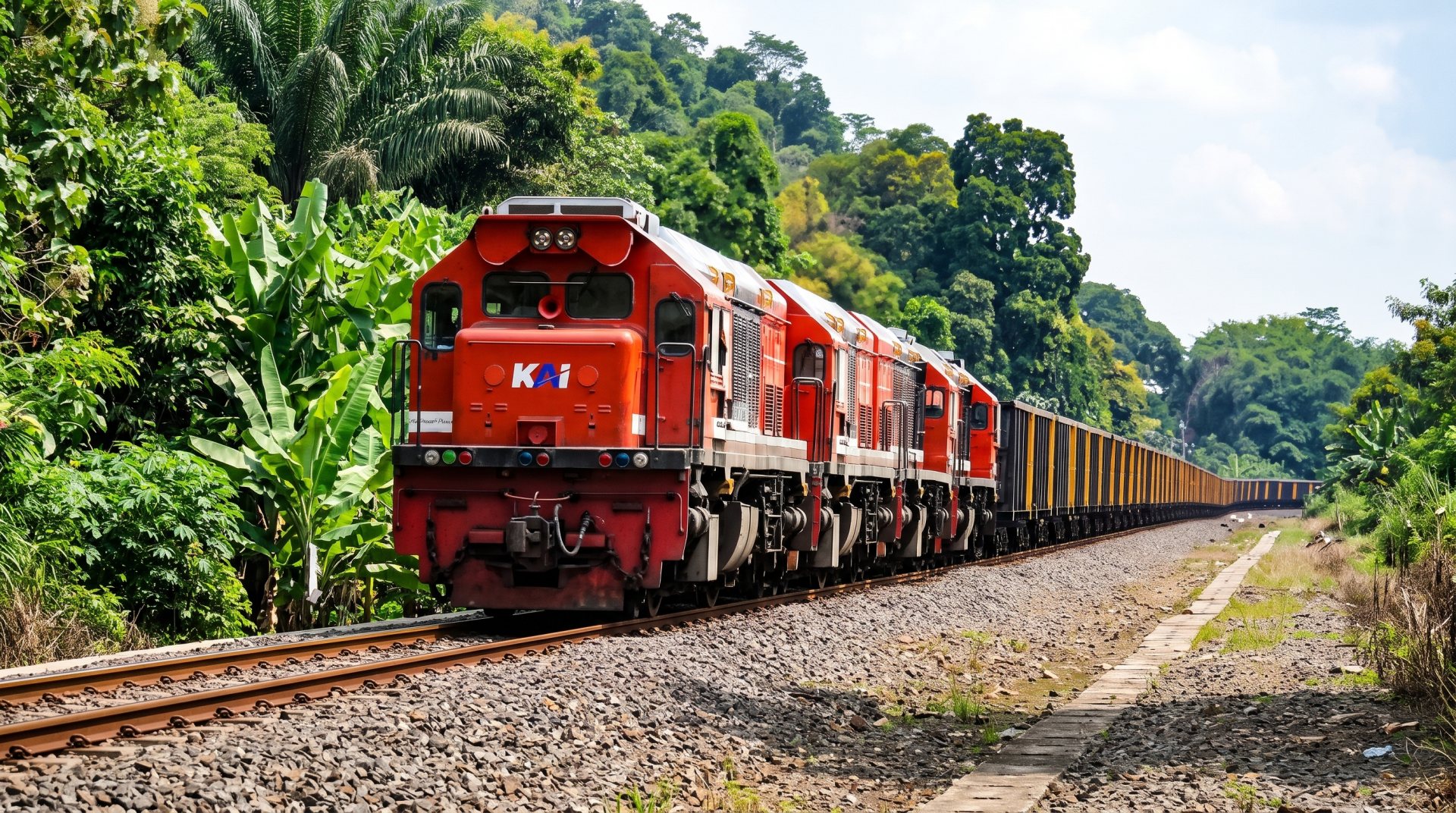
Cross-examining PT Kereta Api Indonesia (Persero)’s 2025 Sustainability Report (published October 2026) against its 2025 Audited Consolidated Financial Statements, 2026 Corporate Work Plan and Budget (RKAP), and operational disclosures through October 2026 confirms that rail freight—specifically the Southern Sumatra (Sumbagsel) coal corridor—serves as the primary commercial workhorse sustaining KAI’s financial resilience. In 2025, freight generated Rp12.74 trillion (Rp12,735.48 billion) in consolidated revenue, representing 35.61% of KAI’s Rp35.76 trillion total revenue and 43.81% of non-subsidized commercial revenue.
- Sumbagsel Coal Dominance: Out of 69.57 million tons of national freight in 2025, coal operations across Divre III Palembang and Divre IV Tanjung Karang accounted for 57.52 million tons (82.68%), generating 88.56% of freight revenue (Rp11.33 trillion under 2024 BPK audit figures).
- PTBA Biosolar Addendum Anomaly: Consolidated freight revenue appeared to dip -0.51% YoY despite +3.37% coal volume growth and a 4% tariff hike in South Sumatra. Forensic tracing reveals a November 2024 KAI–PTBA contract addendum shifting Biosolar fuel procurement to PTBA—a boundary shift that cut KAI’s recorded Sumbagsel Biosolar consumption by 73.39 million liters (-65.09%) while boosting consolidated Operating Profit by +10.35% to Rp8.39 trillion.
- SR 2025 Page 353 Reconciliation: Two editorial inconsistencies were identified on page 353: citing Rp11.28 trillion in freight revenue (versus Rp12.74 trillion in audited tables on pp. 144 & 148) and attributing all 57.52 million coal tons to PTBA (whereas PTBA’s actual 2025 volume was 40.4 million tons, with ~17.12 million tons hauled for private miners).
- Rp4.3 Trillion RKAP 2026 Expansion: KAI is deploying Rp3.3 trillion for rolling stock (54 CC205 locomotives, 966 GB 50-ton wagons, 1,125 GD 54-ton flatcars) and Rp1.0 trillion for infrastructure/terminals (Rp500 billion equity injection into KALOG for Kramasan Terminal and Rp394.3 billion for Divre III track normalization).
Public discourse surrounding Indonesian railways is routinely dominated by Java’s passenger ridership milestones and high-profile high-speed rail projects. Yet a rigorous dissection of PT Kereta Api Indonesia (Persero)’s cash-flow architecture and earnings quality reveals that the state-owned operator’s financial self-reliance rests squarely on the steel tracks of Sumatra. This analysis synthesizes audited consolidated figures from the 2025 Financial Statements, the 2025 Sustainability Report (SR, published October 2026), the 2026 Corporate Work Plan and Budget (RKAP), and operational disclosures through October 2026. As a methodological boundary, neither the 2025 Sustainability Report nor the condensed consolidated income statement disaggregates operating margins by business segment (passenger versus freight) or rupiah revenue by individual Regional Division (Divre I–IV). Consequently, evaluating regional profitability across Sumatra requires triangulating consolidated audited financials with official volume metrics, energy consumption disclosures, Supreme Audit Board (BPK) findings, and RKAP 2026 capital allocations.
1. Freight’s Role in PT KAI’s Revenue and Profit Engine
Amid headlines celebrating a record 492.66 million rail passengers in 2025, PT KAI’s top line is actually powered by two commercial engines that are nearly identical in nominal scale yet starkly different in subsidy dependence and cost structure. Passenger transport edged slightly ahead in 2025, generating Rp12.87 trillion (Rp12,872.75 billion, or 36.00% of consolidated revenue), compared to freight’s Rp12.74 trillion (Rp12,735.48 billion, or 35.61%).
However, the commercial quality of these two revenue streams diverges sharply. KAI’s public passenger operations—spanning KRL Commuter Line, local trains, and economy-class intercity services—rely heavily on government compensation through Public Service Obligation (PSO) subsidies, Infrastructure Maintenance and Operation (IMO) payments, and Pioneer Train (KA Perintis) support. In 2025, total government compensation stood at Rp6.68 trillion (Rp6,683.35 billion), down -19.39% from Rp8.29 trillion (Rp8,291.36 billion) in 2024. Conversely, rail freight operates entirely under pure business-to-business (B2B) commercial contracts with zero PSO subsidies, making it the true anchor of KAI’s free cash flow and accounting for 43.81% of non-subsidized commercial revenue (Rp29.08 trillion excluding government compensation).
The audited 2025 income statement underscores why freight reliability is indispensable to KAI’s balance sheet. Although total consolidated revenue dipped marginally by -0.97% YoY from Rp36.11 trillion (Rp36,108.22 billion) in 2024 to Rp35.76 trillion (Rp35,759.67 billion) in 2025—driven by a -95.43% contraction in construction revenue (Rp181.81 billion to Rp8.31 billion) and the -19.39% drop in government compensation—KAI slashed total cost of revenue and operating expenses by Rp1.14 trillion (from Rp28.51 trillion to Rp27.37 trillion). This cost discipline propelled Operating Profit up +10.35% YoY from Rp7.60 trillion (Rp7,601.39 billion) to Rp8.39 trillion (Rp8,388.15 billion), expanding the operating margin from 21.05% to 23.46%.
Yet this strong operating performance collided with severe pressures below the operating line. KAI’s share of net losses from associates and joint ventures widened by +30.66% to -Rp2.91 trillion (-Rp2,913.77 billion) in 2025. The primary drag was the Jakarta–Bandung High-Speed Rail (Whoosh) consortium, PT Pilar Sinergi BUMN Indonesia (PSBI), which recorded a consortium-wide loss of Rp4.98 trillion in 2025 and passed Rp951.48 billion in losses to KAI in H1 2025 alone. Combined with -Rp2.63 trillion (-Rp2,626.03 billion) in finance costs—reflecting total liabilities of Rp66.14 trillion and a liabilities-to-equity ratio of 1.68x—these two below-the-line items absorbed 66.04% of KAI’s Operating Profit. Consequently, Net Income edged up only +2.77% to Rp2.28 trillion (a 6.39% net margin). Without Sumatra’s reliable freight cash engine, KAI’s capacity to service debt and absorb strategic investment losses would be severely constrained.
Why does Sumatra coal command superior unit economics over other freight commodities? Based on media disclosures citing BPK audit data for 2024, coal generated Rp11.33 trillion or 88.56% of KAI’s total freight revenue (Rp12.80 trillion) across 55.65 million tons, implying an average yield of approximately Rp203,611 per ton. In contrast, non-coal freight (containers, cement, fuel, CPO, retail) across 13.56 million tons in 2024 yielded an estimated Rp1.47 trillion, or roughly Rp108,493 per ton. Sumbagsel’s coal corridor achieves this efficiency through high-capacity dedicated unit trains—hauling up to 60 open wagons or ~3,000 tons per consist—which amortize fixed track, crew, and locomotive depreciation costs far more effectively than mixed-manifest trains in Java.
2. Forensic Dissection of the 2025 Anomaly: PTBA Fuel Addendum & Data Reconciliation
At first glance, the 2025 figures present a financial paradox. National freight volume rose +0.53% to 69.57 million tons (95.9% of the RKAP target of 72.52 million tons), while coal volume grew faster at +3.37% to 57.52 million tons (57,523,125 tons), representing 82.68% of total freight tonnage. Moreover, KAI implemented tariff increases in 2025: a 4% rate hike on South Sumatra coal haulage alongside 2%–5% adjustments across non-coal segments (retail, containers, cement, and CPO).
Under normal accounting conditions, +3.37% volume growth paired with a +4% tariff increase should have lifted freight revenue by roughly 6%–7%. Instead, consolidated freight revenue slipped -0.51% YoY (from Rp12.80 trillion to Rp12.74 trillion), while blended revenue per ton softened from Rp184,978/ton (2024) to Rp183,056/ton (2025).
Forensic examination of energy disclosures in the 2025 Sustainability Report resolves this paradox: the November 2024 Cooperation Agreement Addendum between PT KAI and PT Bukit Asam Tbk (PTBA) transferred Biosolar diesel procurement responsibility for coal trains from KAI to PTBA. Previously, fuel costs sat on KAI’s books and were billed back to PTBA within freight tariffs as a pass-through component. Once PTBA assumed fuel procurement, this contractual boundary shift stripped the pass-through fuel component from both KAI’s gross revenue and operating expenses simultaneously.
The operational footprint of this contract shift is unmistakable in KAI’s 2025 Biosolar ledger. In Divre III Palembang, recorded Biosolar consumption plunged -48.70% from 65.33 million liters to 33.51 million liters (-31.82 million liters). In Divre IV Tanjung Karang, recorded consumption collapsed -87.67% from 47.42 million liters to just 5.85 million liters (-41.57 million liters). Combined, Sumbagsel’s recorded Biosolar fell by 73.39 million liters (-65.09%). Conversely, non-Sumbagsel regions (Java, Divre I, Divre II, and workshops) saw Biosolar usage climb +11.85% (+22.85 million liters, from 192.84 million to 215.69 million liters), resulting in a net national drop of -16.5% from 305.59 million liters to 255.05 million liters.
A secondary drag on freight revenue was an implied -11.12% YoY contraction in non-coal tonnage, dropping from 13.56 million tons in 2024 to 12.05 million tons in 2025. Severe flooding in Daop 4 Semarang disrupted corridors into Daop 1, Daop 3, and Daop 8, causing 266,320 tons of lost cargo and an estimated Rp24.32 billion revenue hit. Meanwhile, removing 73.39 million liters of Biosolar from KAI’s books—alongside 2025 B40 biodiesel adoption (emission factor 1.669 kg CO2e/liter versus 1.764 kg CO2e/liter for B35)—cut KAI’s Scope 1 GHG emissions by -22.18% from 514,745 tons CO2e to 400,576 tons CO2e. Scope 3 reporting covering PTBA-procured fuel is targeted to roll out in phases starting 2026.
Furthermore, a forensic audit of the 2025 Sustainability Report flagged two editorial inconsistencies on page 353 that require formal reconciliation:
3. Sumatra Freight Map: Four Regional Divisions & 2025–2026 Trends
Sumatra’s rail network operates across disconnected regional grids managed by four Regional Divisions (Divre I–IV) and one Sub-Division (Subdivre I.1 Aceh), supported by two heavy maintenance workshops: Balai Yasa Lahat and Balai Yasa Pulubrayan. In 2025, Sumatra employed 7,760 staff—26.23% of KAI’s 29,585 national workforce—while absorbing 312 of 765 new hires (40.78% nationwide), led by Divre III Palembang with 203 new hires (26.54% of national recruitment) to staff Sumbagsel’s capacity expansion.
Beyond Sumbagsel’s coal dominance, non-coal freight across Sumatra demonstrated resilient diversification through 2026. During January–September 2026 (9M 2026), Sumatra’s four Divres contributed 2.46 million tons (~27%) of KAI’s 9.15 million tons of national non-coal freight (+2.6% YoY, with Java contributing 6.68 million tons or ~73%). Divre II West Sumatra anchored non-coal volume via cement and clinker flows to Teluk Bayur Port, while Divre I North Sumatra posted the fastest expansion (+22% YoY through October 2026), fueled by a +41% surge in Belawan container traffic.
4. The Sumbagsel Engine (Divre III & IV): Operational Efficiency & Private Miner Surge
To protect margins and accelerate asset turnaround across Sumbagsel, KAI executed targeted operational upgrades in 2025–2026. On the KA Barapati (Tanjung Enim–Kertapati) service, management curbed Track Loading System (TLS) and Affron bottlenecks, expanded unloading crews, deployed modified KKBW open wagons, lifted temporary speed restrictions (taspat) in Divre III, and lengthened train consists from 30 to 32 wagons.
These interventions yielded measurable velocity gains: Train Turnaround Time (WPKA) improved from 0.78 days to 0.71 days (roughly 10% faster), while national freight On-Time Performance (OTP) climbed from 95.0% to 96.80% in 2025, backed by integrated RCS (Rail Cargo System) and CISEA (Coal Integrated System & Analytics) platforms.
Simultaneously, while combined Sumbagsel coal volume in 9M 2026 edged down -1.48% YoY to 41.61 million tons (versus 42.23 million tons in 9M 2025), private coal miners posted explosive growth that reduced single-client concentration: PT Turba Bara Bany Enim surged +157.5% (911,612 to 2,347,582 tons), PT Mustika Indah Permai rose +32.7% (2.72M to 3.61M tons), and PT Bukit Bara Alam grew +26% (514,316 to 647,986 tons), supported by interim Muaralawai operations, CY Merapi II, and partner-supplied rolling stock.
5. Rp4.3 Trillion Capacity Expansion (2025–2026): CC205 Fleet & Kramasan Terminal
To support PTBA’s 2026 production guidance of 49.55–50 million tons alongside private miner growth toward Sumbagsel’s long-term capacity target of ~85 million tons/year, KAI allocated Rp4.3 trillion under RKAP 2026 for Sumbagsel freight expansion—comprising Rp3.3 trillion for rolling stock and Rp1.0 trillion for infrastructure/terminals, financed via bank loans and corporate bonds/sukuk.
The Kramasan Coal Unloading Terminal, operated via subsidiary PT KAI Logistik (KALOG), is the linchpin of this expansion. KALOG handled 27 million tons in 2024 (Rp1.1 trillion revenue, Rp89.6 billion net profit) before moderating to 22.9 million tons in 2025. With Kramasan coming online in Q4 2026—projected to add +20 million tons/year and Rp516 billion in initial revenue en route to a full 40 million tons/year design capacity (590,000-ton storage yard, Rp80–150 billion annual terminal profit)—KALOG targets corporate revenue reaching Rp1.8 trillion by 2029.
6. Structural Risks, Energy Transition Paradox & Strategic Outlook
Beneath Sumatra freight’s strong cash generation, KAI faces three structural risk clusters that shape its long-term valuation and PEFINDO idAAA credit rating under its 2025–2029 Long-Term Plan (RJPP).
First, NZE 2060 Climate Transition & Single-Client Concentration. In the 2025 Sustainability Report (pp. 107 & 151), KAI explicitly classifies Net Zero Emission (NZE) 2060 transition risk as one of its top two financial risks—a critical vulnerability given Rp66.14 trillion in total liabilities (1.68x liabilities-to-equity). Simultaneously, PTBA accounts for 70.2% of KAI’s coal volume (58.1% of total freight), while PTBA’s subsidiary PT Bukit Asam Trans Railway (BATR) is planning a dedicated 25 million tons/year captive railway that could eventually bypass KAI’s network.
Second, Asset Reliability, Extreme Weather & Governance. In 2025, KAI recorded 205 locomotive recalls linked to Traction Motor and Fuel Transfer Pump faults, alongside 117 track infrastructure failures requiring the replacement of 97,450 meters of rail. Extreme weather disruptions surged more than fourfold from 88 incidents (2024) to 396 incidents (2025). On governance, a prior BPK audit flagging a Rp1.29 trillion discrepancy in coal transport management underscores the urgency of RCS–CISEA digitalization and ISO 37001:2016 Anti-Bribery Management System audits (completed in Divre III in 2025). KAI also faces parliamentary (DPR RI) scrutiny over coal transport’s socio-environmental impacts in Lampung (Divre IV) and public safety challenges following 291 level-crossing accidents that claimed 110 lives in 2025.
Third, the Decarbonization Paradox under Danantara. Since 2025, 99% of KAI’s shares have been transferred to PT Danantara Asset Management (Persero), with the Republic of Indonesia retaining the 1% Series A Dwiwarna golden share via BP BUMN. Under Danantara, KAI embodies a classic logistics paradox: 82.68% of its freight tonnage is coal—a sunset fossil commodity—yet rail itself remains Indonesia’s most potent logistics decarbonization lever, with one 3,050-ton freight train emitting ~91% less CO2 than 144 highway trailer trucks. By pairing B40 adoption (2025) and B50 trials (2026) with its 2030 target to cut 166,873 tons CO2e (25.76% below baseline), multimodal GenCo D2D logistics, and ISO 14067 green freight certification, KAI is positioning its Sumatra workhorse to fund its transition and defend its idAAA credit standing through RJPP 2025–2029.