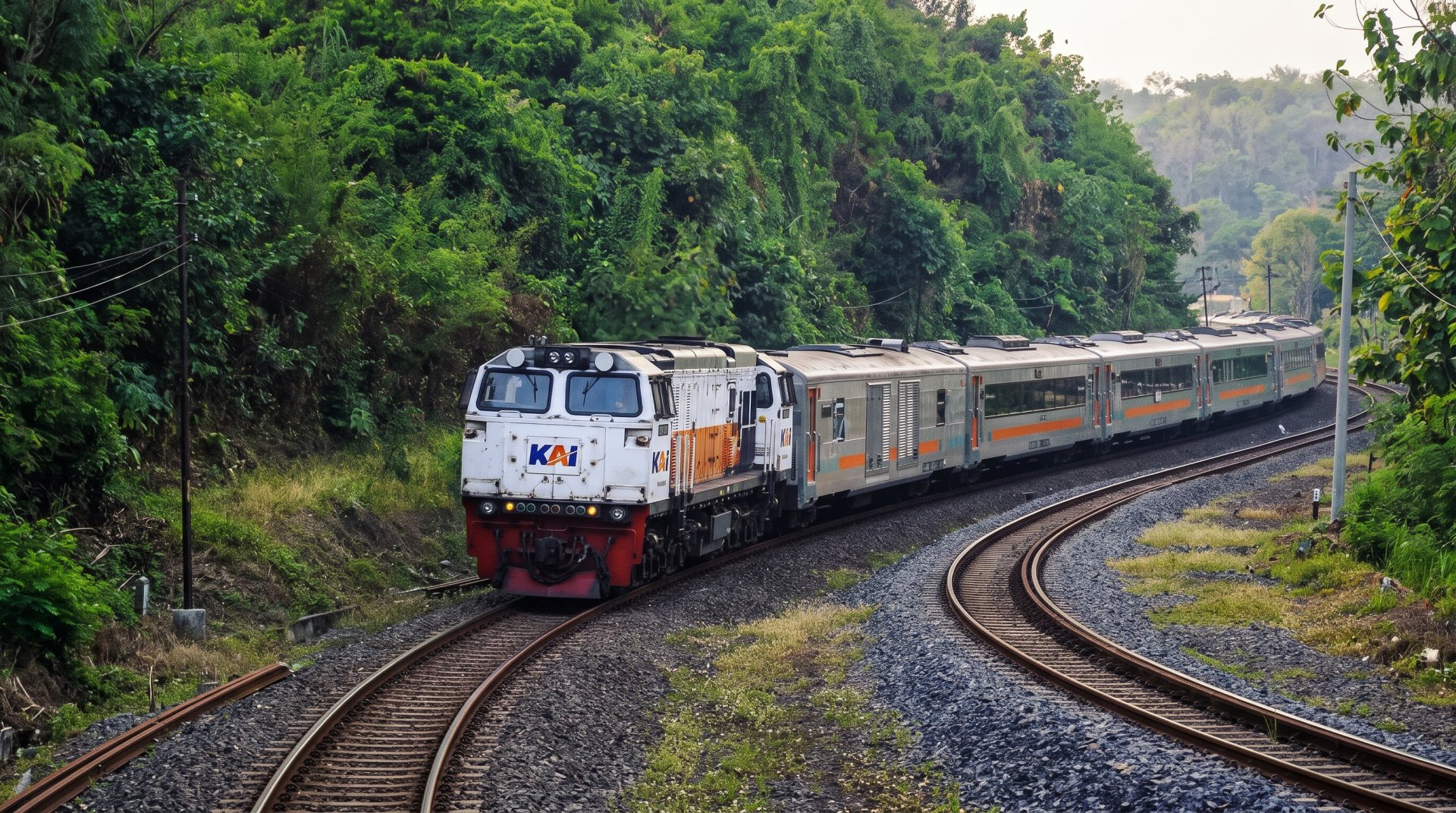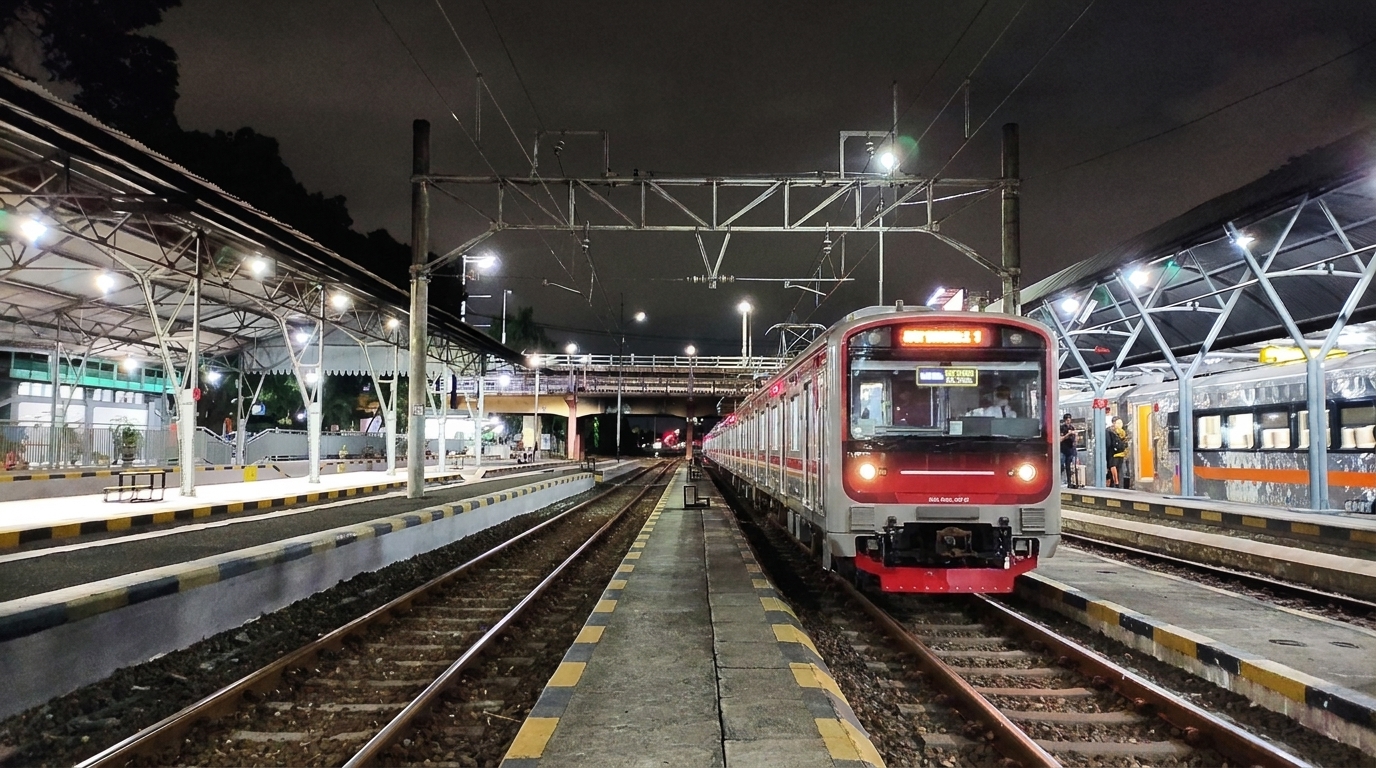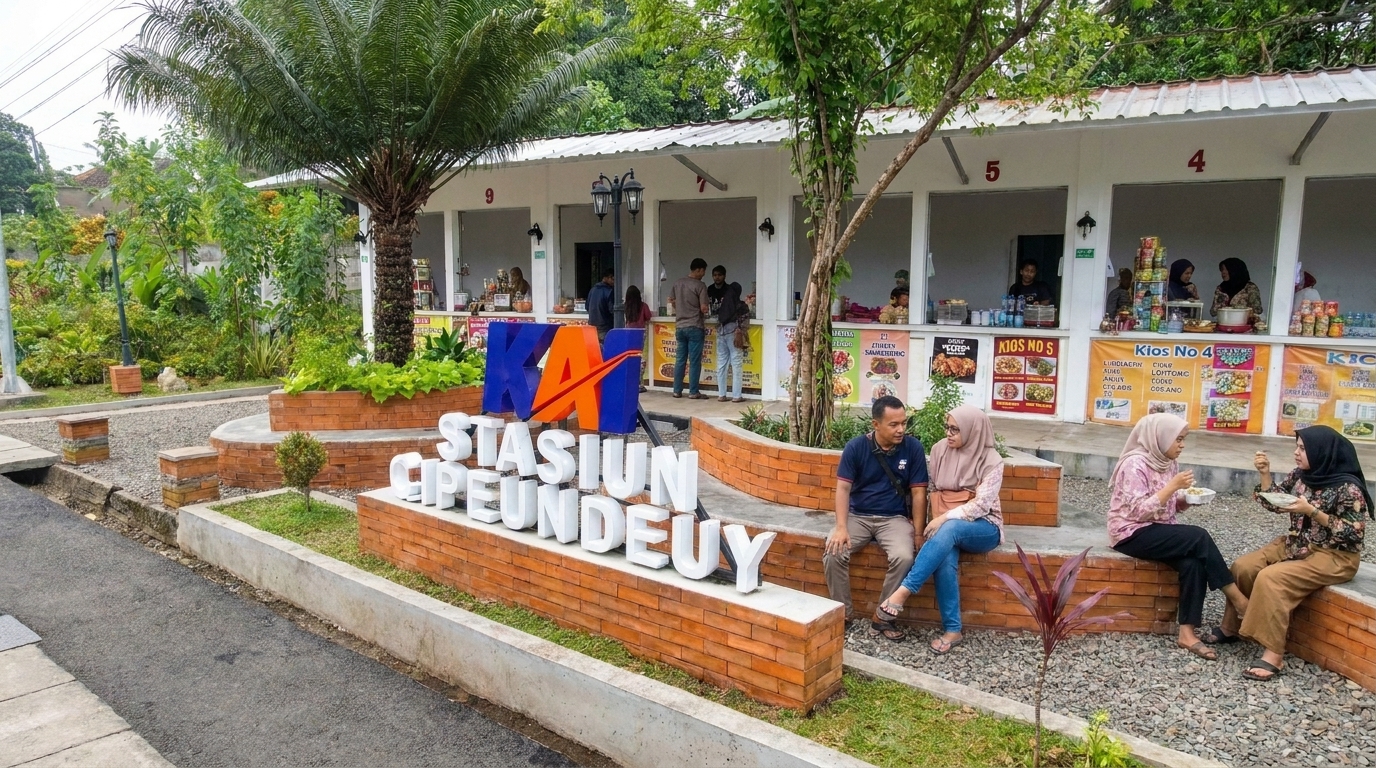
GAPEKA 2026 PSO Trains Comprehensive Profile: Schedules, Fares, and Rp5.68 Trillion Subsidy Analysis
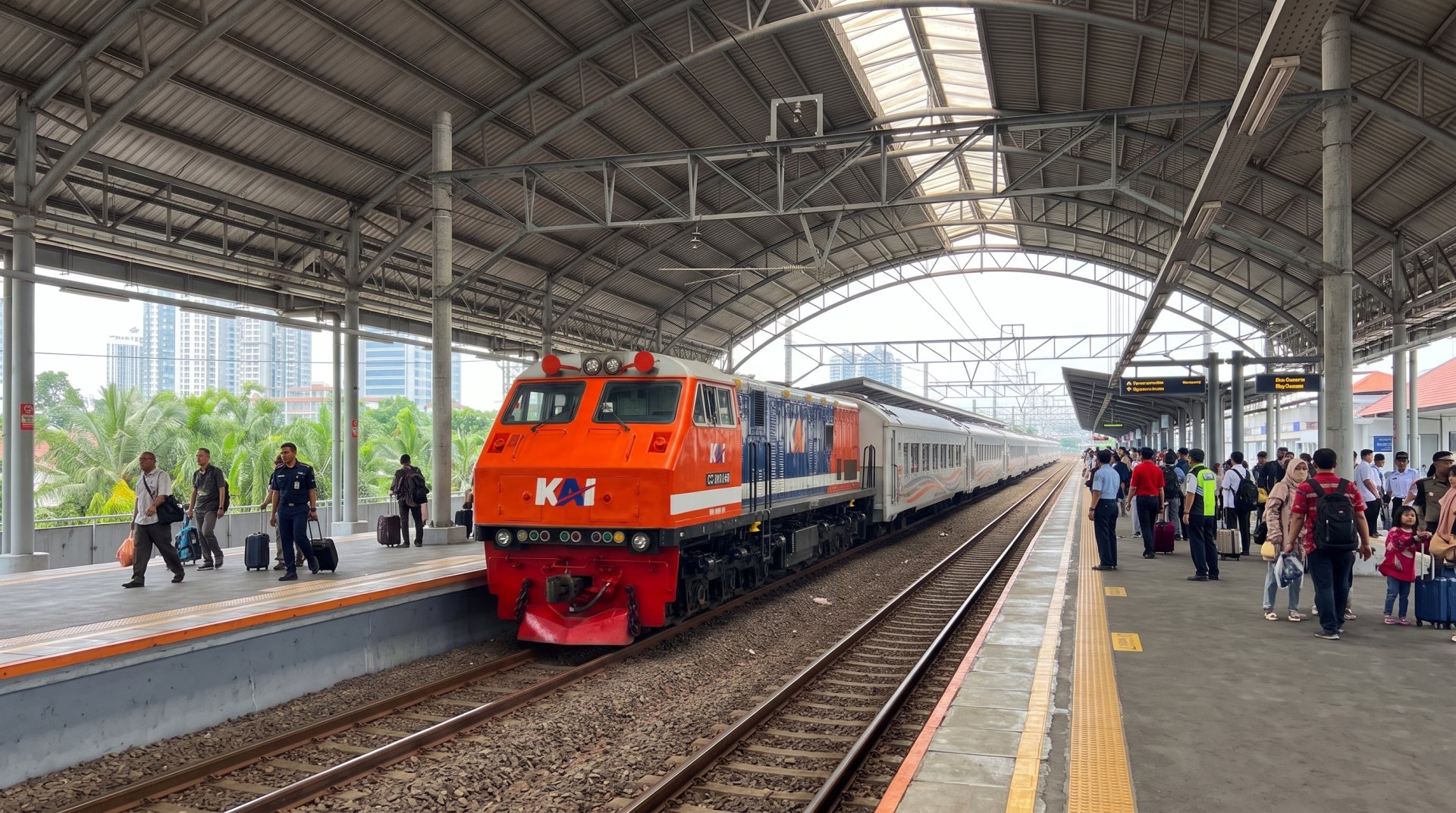
The implementation of Indonesia's 2026 Train Travel Chart (GAPEKA 2026) effective December 1, 2026 at 00:00 WIB under Ministerial Decrees KP-DJKA 116–119 of 2026 preserves all 13 subsidized Public Service Obligation (PSO) intercity trains—9 across Java and 4 across Sumatra—with zero fare increases under Ministerial Decree KM 165 of 2024.
Backed by a 2026 State Budget (APBN) PSO allocation of Rp5,684,206,808,000 (Presidential Regulation No. 118/2025) plus Rp1.8 trillion in State Capital Participation (PMN), GAPEKA 2026 cuts travel time on KA 307 Kahuripan by 92 minutes and KA Airlangga by over 50 minutes in both directions, opens full boarding/alighting for KA Serayu at Bandung Station (Hall), extends KA Kedung Sepur to Weleri and CL Prameks to Kebumen, and doubles KA Batara Kresna frequency to 8 daily trips.
Beneath the official headline of 92-minute time savings, a segment-level inspection of the KP-DJKA 116–119 of 2026 timetable appendices reveals a far more nuanced operational reality. Lowering Java's main-line maximum operational speed from 120 km/h to 115 km/h, inserting safety recovery and buffer times, and adding new station stops across Daop 3 Cirebon, Daop 5 Purwokerto, and Daop 9 Jember produce an asymmetric impact. While specific corridors enjoy dramatic acceleration, several return PSO services actually slow down by 11 to 24 minutes—including KA 329 Tawang Alun (+24m), KA 313 Sri Tanjung (+22m), KA 316 Bengawan (+19m), and KA 322 Serayu (+16m)—while KA 315 Bengawan's morning arrival at Pasar Senen shifts to 08:20 WIB, raising concern among Monday morning commuters.
1. Policy Framework, Subsidy Budget, and Scale of the 2026 PSO Ecosystem
The legal foundation for Indonesia's rail network starting December 1, 2026 rests on four Directorate General of Railways (DJKA) decrees: KP-DJKA 116/2026 for Java (9 Operations Regions / Daop 1–9), KP-DJKA 117/2026 for North Sumatra (Sumbagut), KP-DJKA 118/2026 for West Sumatra (Sumbagbar), and KP-DJKA 119/2026 for South Sumatra (Sumbagsel). On the fiscal side, Presidential Regulation No. 118/2025 allocates Rp5,684,206,808,000 (approx. Rp5.68 trillion) for 2026 economy-class rail PSO subsidies, complemented by Rp1.8 trillion in State Capital Participation (PMN) approved by House Commission XI in December 2025 for Jabodetabek EMU procurement/retrofits, passenger service upgrades, and infrastructure modernization (a combined Rp7.484 trillion across both itemized allocations, often rounded to Rp7.6 trillion in financial press).
Passenger fares remain locked under Ministerial Decree KM 165 of 2024. Although regional communications occasionally cite PM 21 of 2020 alongside KM 165/2024, the Supreme Audit Agency (BPK) JDIH database confirms that PM 21/2020 was formally revoked by PM 90/2020 on December 29, 2020, leaving KM 165/2024 as the sole active tariff instrument. To safeguard the Rp5.68 trillion subsidy, DJKA, regional Railway Engineering Centers (BTP), and PT KAI enforce two primary controls: a strict one-ID-one-ticket rule (blocking duplicate bookings under the same national ID) and quarterly field audits (verified across Q1–Q3 2026 in Divre III Palembang) covering ridership accuracy, train-kilometers, maintenance realization, fumigation/pest control, sanitation, and station/onboard service standards.
The scale of state intervention is illustrated by the Pandanwangi local PSO train (Jember–Ketapang, 112 km): passengers pay Rp8,000 (Rp71.4/km) against a 2024 operator service-cost baseline of Rp33,421—meaning the government absorbs a Rp25,421 per-passenger gap (76.1%). Across all subsidized categories in full-year 2025, KAI Group carried 452,655,503 passengers: 400,737,915 (88.53%) on KAI Commuter, 28,816,787 (6.37%) on LRT Jabodebek, 11,418,824 (2.52%) on Intercity PSO trains (+2.56% YoY), 6,225,944 (1.38%) on Local PSO trains (+15.83% YoY), and 5,456,033 (1.21%) on PSO Airport Rail (Srilelawangsa & YIA, +16.88% YoY). Dividing the Rp5.684 trillion 2026 PSO ceiling by 2025 volume yields a proxy subsidy of Rp12,557 per trip. Despite representing only 2.52% of ridership, intercity PSO trains dominated early 2026/2027 Year-End Holiday (Nataru) bookings as of November 11, 2026, sweeping the top four spots—led by KA Bengawan, KA Airlangga (17,841 tickets), KA Kahuripan (13,365), and KA Serayu (13,286)—more than doubling top commercial trains like KA Progo (6,310).
2. Operational Architecture: Time Efficiency vs. Safety Margin Paradox
Nationally, GAPEKA 2026 raises scheduled daily seat capacity by 5.03% (from 168,316 to 176,782 seats/day, +8,466 seats) and daily passenger trips from 1,813 to 1,852 (+39 trips). Java intercity capacity grows +3.89% to 137,846 seats/day (78.0% of national total), while Sumatra rises +9.26% to 38,936 seats/day (17,648 intercity and 20,176 urban). Across the main Java trunk lines, PT KAI reduced maximum operational speed from 120 km/h to 115 km/h and inserted recovery/buffer times—slowing flagship executive trains like Argo Lawu, Argo Dwipangga, and Taksaka by 17 minutes, while allowing 90–100 km/h PSO trains to gain efficiency. Meanwhile, Daop 9 Jember (Tapal Kuda) received infrastructure speed upgrades: Kalisat–Jember (90 km/h), Jember–Tanggul (120 km/h), Tanggul–Jatiroto (110 km/h), and Pasuruan–Bangil (110 km/h).
GAPEKA 2026 also adds stops across 84 intercity trips—including mandatory Bekasi stops on many long-distance trains, Jeruklegi for Kahuripan, Ciledug and Sumpiuh for Bengawan, Rancaekek for Cikuray, full Bandung (Hall) boarding/alighting for Serayu, and three new stops for Pandanwangi—while renaming Klakah Station to Lumajang (LMJ). Following a brief 48-hour controversy on November 1–2, 2026 when a commercial train name consolidation briefly appeared in ticketing systems before being rolled back, all 13 intercity PSO trains remain intact, with Java PSO train numbers reindexed from 271–300 to 305–334. Three scheduling dynamics explain the divergent outcomes: (1) double-track symmetry on the North Coast (Airlangga −52m/−51m), (2) slot shifting (moving Kahuripan's Blitar departure 2.5 hours later to 19:40 eliminated 78 minutes of dwell across Kertosono–Caruban–Walikukun–Klaten), and (3) single-track trade-offs in Priangan and Tapal Kuda where added regular services (Pandalungan 2 and Sangkuriang) force opposing-meet waits (+16m to +24m).
3. Master Summary of All 13 Intercity PSO Trains in GAPEKA 2026
The master table below consolidates all 13 subsidized intercity trains across Java and Sumatra, including commercial average speeds (distance divided by average end-to-end duration including locomotive run-around) and effective fare per kilometer.
Two structural patterns stand out from this quantitative mapping. First, effective fares per kilometer diverge sharply between Southern Sumatra and Java: KA Ekspres Rajabasa passengers pay only Rp82.3/km while riding 80-seat reclining Economy Premium Modified coaches, less than half the per-kilometer rate of KA Tawang Alun (Rp197.5/km) or KA Kutojaya Selatan (Rp194.4/km) which still use 106-seat upright facing benches. Second, double-track infrastructure and locomotive run-around requirements dictate commercial speeds: the three fastest PSO trains—Airlangga (62.4 km/h), Bengawan (62.2 km/h), and Kahuripan (53.2 km/h)—all exploit long double-track corridors, whereas trains requiring locomotive reversals (Sri Tanjung 45m at Surabaya Kota, Tawang Alun 34–40m at Bangil, Serayu 20–33m at Kroya) or traversing Priangan mountain grades and Sumbagsel single-track meets average 38.8–48.6 km/h.
4. Detailed Profiles & Station Schedules: All 9 Java Intercity PSO Trains
KA Airlangga (KA 305 & KA 306)
Launched on October 1, 2021 at Pasar Senen as the successor to KA Maharani and KA Tegal Ekspres, KA Airlangga (named after King Airlangga of the 11th-century Kahuripan Kingdom) operates under Daop 8 Surabaya with 8 K3 AC coaches (106 seats 3–2) hauled by CC 201/CC 203 locomotives. Covering 719 km at Rp49,000–Rp104,000, it is Indonesia's busiest intercity PSO train with 1,102,509 passengers in January–October 2026. Under GAPEKA 2026, KA 305 (SBI–PSE) cuts 52 minutes (11h 16m) and KA 306 (PSE–SBI) cuts 51 minutes (11h 47m), aided by 100 km/h limits along the double-track North Coast.
KA Kahuripan (KA 307 & KA 308)
Operating since July 26, 1995, KA Kahuripan (Blitar–Kiaracondong PP, 700 km, Rp80,000–Rp84,000, 681,208 passengers in Jan–Oct 2026) is managed by Daop 2 Bandung using K3 AC coaches hauled predominantly by CC 203 locomotives (97%). Its historical record includes the October 25, 1995 Trowek derailment (coupled with KA Galuh), a December 5, 2001 shunting collision at Palur, and a September 13, 2022 truck collision near Kawunganten. In GAPEKA 2026, shifting KA 307's Blitar departure 2.5 hours later (17:10 to 19:40 WIB, arriving Kiaracondong 08:13) shrinks combined dwell at Kertosono, Caruban, Walikukun, and Klaten from 87 minutes to 9 minutes and bypasses Sikampuh—delivering a net 92-minute reduction (14h 05m to 12h 33m). Eastbound KA 308 (KAC 22:15 → BL 12:00, 13h 45m) adds a new stop at Jeruklegi (JRL) (03:15–03:25).
KA Sri Tanjung (KA 311, 312, 313, & 314)
In service since 1986 (originally KA Argopuro, renamed in the mid-1990s after the Banyuwangi legend), KA Sri Tanjung connects Lempuyangan and Ketapang (620 km, Rp88,000–Rp94,000) under Daop 9 Jember with 7 K3 AC coaches + 1 KMP3 + 1 baggage car, reversing locomotives at Surabaya Kota (SB). Under GAPEKA 2026, KA 312 (LPN 06:50 → SB 12:08, 5h 18m, −12m) and a trimmed 45-minute SB turnaround offset a 22-minute slowdown on KA 313 (SB 12:53 → KTG 19:55, 7h 02m) for a 13h 05m total (+5m). Return KA 314 (KTG 07:00 → SB 13:28, +13m) + KA 311 (SB 14:13 → LPN 19:26) takes 12h 26m. Klakah Station is now officially Lumajang (LMJ).
KA Bengawan (KA 315 & KA 316)
Launched around 1994 under Daop 6 Yogyakarta (567 km, Purwosari–Pasar Senen PP, Rp74,000, 666,106 passengers in Jan–Oct 2026, #1 in early Nataru 2026/2027 bookings), KA Bengawan shares K3 AC sets with KA Matarmaja. In GAPEKA 2026, KA 315 (PWS 23:35 → PSE 08:20, 8h 45m, −4m, fastest one-way PSO train at 64.8 km/h) shifts arrival 46 minutes later from 07:34 to 08:20 WIB, troubling office commuters. KA 316 (PSE 09:15 → PWS 18:44, 9h 29m) slows by 19 minutes due to new stops at Ciledug (also served by KA 315) and Sumpiuh (15-minute dwell).
KA Serayu (KA 317–324, 2x PP)
Tracing its roots to KA Serayu Jaya (1992), KA Cipuja, and KA Citrajaya before its 1998 revival during the Asian Financial Crisis, KA Serayu (Purwokerto–Kroya–Bandung–Pasar Senen PP, 442 km, Rp63,000–Rp67,000, 1,047,130 passengers in Jan–Oct 2026, #2 nationally) achieves a major milestone on December 1, 2026: all morning and night trips now allow both boarding and alighting at Bandung Station (BD). Morning KA 318/319 (PSE 10:00 → PWT 20:34) accelerates by 31 minutes, KA 321 (KYA 17:30 → PSE 04:14) saves 3 minutes, while KA 322 (PSE 19:05 → KYA 05:11) adds 16 minutes due to a 23-minute technical stop at Cipeundeuy.
KA Kutojaya Selatan, KA Tawang Alun, KA Probowangi, & KA Cikuray
- KA Kutojaya Selatan (KA 325/326 | Kutoarjo–Kiaracondong PP, 319 km, Rp58k–62k): KA 325 (09:35–17:07, 7h 32m, −3m); KA 326 (20:50–04:07, 7h 17m, +2m).
- KA Tawang Alun (KA 327–330 | Ketapang–Bangil–Malang Kotalama PP, 314 km, Rp62k): Reverses at Bangil; KA 330/327 (05:00–12:08, 7h 08m); KA 328/329 (16:30–23:59, 7h 29m, +24m on BG–KTG due to crossing dwells).
- KA Probowangi (KA 331/332 | Surabaya Gubeng–Ketapang PP, 306 km, Rp27k–56k, 597,015 passengers): KA 331 (05:20–11:58, 6h 38m, −12m); KA 332 (17:10–23:56, 6h 46m, +11m).
- KA Cikuray (KA 333/334 | Pasar Senen–Garut PP, 245 km, Rp45k / Rp15k special, 477,310 passengers): Since June 10, 2026, pioneers 6 Ekonomi Kerakyatan coaches (93 rotating seats) + 1 Farmer-Trader coach (73 longitudinal seats). Adds stops at Rancaekek (RCK); KA 334 (17:30–22:55, −7m) and KA 333 (06:35–12:17).
5. Evolution of PSO Policy & The 2026 Cabin Revolution
Three policy milestones shaped the 2026 PSO landscape: (1) the July 1, 2018 partial-fare reform replacing flat end-to-end pricing with distance zones; (2) the January 1, 2019 subsidy rationalization removing PSO from five long-distance trains (Matarmaja, Brantas, Pasundan, Logawa, etc.) to redirect funding toward commuters; and (3) the mid-2026 PSO cabin revolution introducing 93-seat Ekonomi Kerakyatan and 73-seat Farmer-Trader coaches on KA Cikuray (June 10, 2026) and 80-seat reclining Ekonomi Premium Modified coaches on KA Ekspres Rajabasa (July 4, 2026) at zero fare increase—structurally raising per-seat subsidy requirements under the Rp5.68 trillion APBN ceiling as coach capacity drops 12.3%–24.5%.
6. Sumatra Intercity PSO & Local / Pioneer / Commuter Line Networks
Sumatra's four intercity PSO services gain +444 daily seats (to 17,648 seats/day): KA Ekspres Rajabasa (S7/S8, Kertapati–Tanjungkarang, 389 km, Rp32,000, now 80-seat Ekonomi Premium Modified); KA Bukit Serelo (S9/S10, Kertapati–Lubuklinggau, 304.9 km, Rp32,000, 6h 40m both ways); KA Kuala Stabas (S3–S6, Baturaja–Tanjungkarang, 2x PP, 215 km, Rp29,000); and KA Putri Deli (U95–U100, Medan–Tanjungbalai, 3x PP, 175 km, Rp27,000, 5 of 6 trips faster by 2–8 minutes).
Across local, pioneer, and commuter services (97.48% of all 2025 PSO riders): KA Pandanwangi (KA 507–510, Rp8,000) adds Glenmore, Sumberwadung, and Argopuro (11 stops, +6–29m); KA Siliwangi (KA 351–356, Rp2,000–5,000) runs 3x PP in 2h 15m; KA Kedung Sepur (KA 511–514) extends to Weleri; KA Batara Kresna (KA 527–534, Rp4,000) doubles to 8 daily trips; Sumatra local/airport trains add trips on Sri Lelawangsa (+4) and Datuk Belambangan (+1) alongside Siantar Ekspres and Pariaman Ekspres; KRL Jabodetabek rises to 1,079 daily trips (86 trainsets including 7 INKA iE305 sets); and Commuter Line Prameks extends 2 of its 10 daily trips to Kebumen (KA 522 at 04:55→06:28 and KA 521 at 19:23→21:00).
7. Detailed GAPEKA 2026 Commuter Line, Local & Sumatra Schedules
To support regional commuters and intercity transfers, GAPEKA 2026 introduces major timetable updates across KAI Commuter's regional areas and PT KAI's Sumatra divisions:
In Central Java, KA Kedung Sepur extends to Weleri (13 stops, Vmax 90 km/h, bypassing Tegowanu) with four daily runs: KA 512 (Weleri 06:00–Ngrombo 08:50), KA 511 (Ngrombo 10:40–Weleri 13:38), KA 514 (Weleri 14:55–Ngrombo 18:16), and KA 513 (Ngrombo 19:20–Weleri 22:06). Meanwhile, the pioneer KA Batara Kresna (Purwosari–Wonogiri, 37 km, Rp4,000, supported by DJKA Pioneer Subsidy) doubles from 4 to 8 daily 1-hour trips (departing Purwosari at 06:00, 09:00, 13:30, 16:30 and Wonogiri at 07:30, 10:30, 15:00, 18:00). In West Java, KA Siliwangi (Sukabumi–Cianjur–Cipatat, 67 km, Rp2,000–5,000) renumbers to KA 351–356 (3x PP, 2h 15m each). In Sumatra, KA Siantar Ekspres (U101–U104, Medan–Siantar, 129 km, 4 trips), KA Sri Lelawangsa (+4 trips, Kuala Bingai–Medan Rp5,000), KA Datuk Belambangan (+1 trip, Tebing Tinggi–Lalang Rp5,000), and KA Pariaman Ekspres (B1–B10, Pauhlima–Padang–Naras, 10 trips, Rp5,000, equipped with bicycle-friendly K3 AC + KMP3) expand urban mobility.
8. Strategic Implications & Practical Passenger Guide Post-December 1, 2026
- Re-verify pre-booked departure times: Major shifts include KA 307 Kahuripan (+2h 30m later to 19:40), KA 315 Bengawan (+50m later to 23:35), KA 306 Airlangga (40m earlier to 08:35), and KA 331 Probowangi (35m earlier to 05:20).
- Use newly opened stations: Board/alight KA Serayu at Bandung (Hall), KA Cikuray at Rancaekek, KA Kahuripan at Jeruklegi, KA Bengawan at Ciledug/Sumpiuh, and CL Prameks at Kebumen.
- Search for Lumajang (LMJ) instead of Klakah: Klakah Station is officially renamed Lumajang in GAPEKA 2026.
- Book at H-45 with accurate single ID: Duplicate ID bookings on the same PSO departure are automatically rejected.
- Combine go-show & local PSO fares: Use KA Cikuray's Rp15,000 H-2 hour special fare or pair CL Bandung Raya (Rp5,000) with KA Siliwangi (Rp2,000–5,000).