History and Consolidation of KA Muria in GAPEKA 2026: From Trio Argo Semarangan to the 115 km/h Era
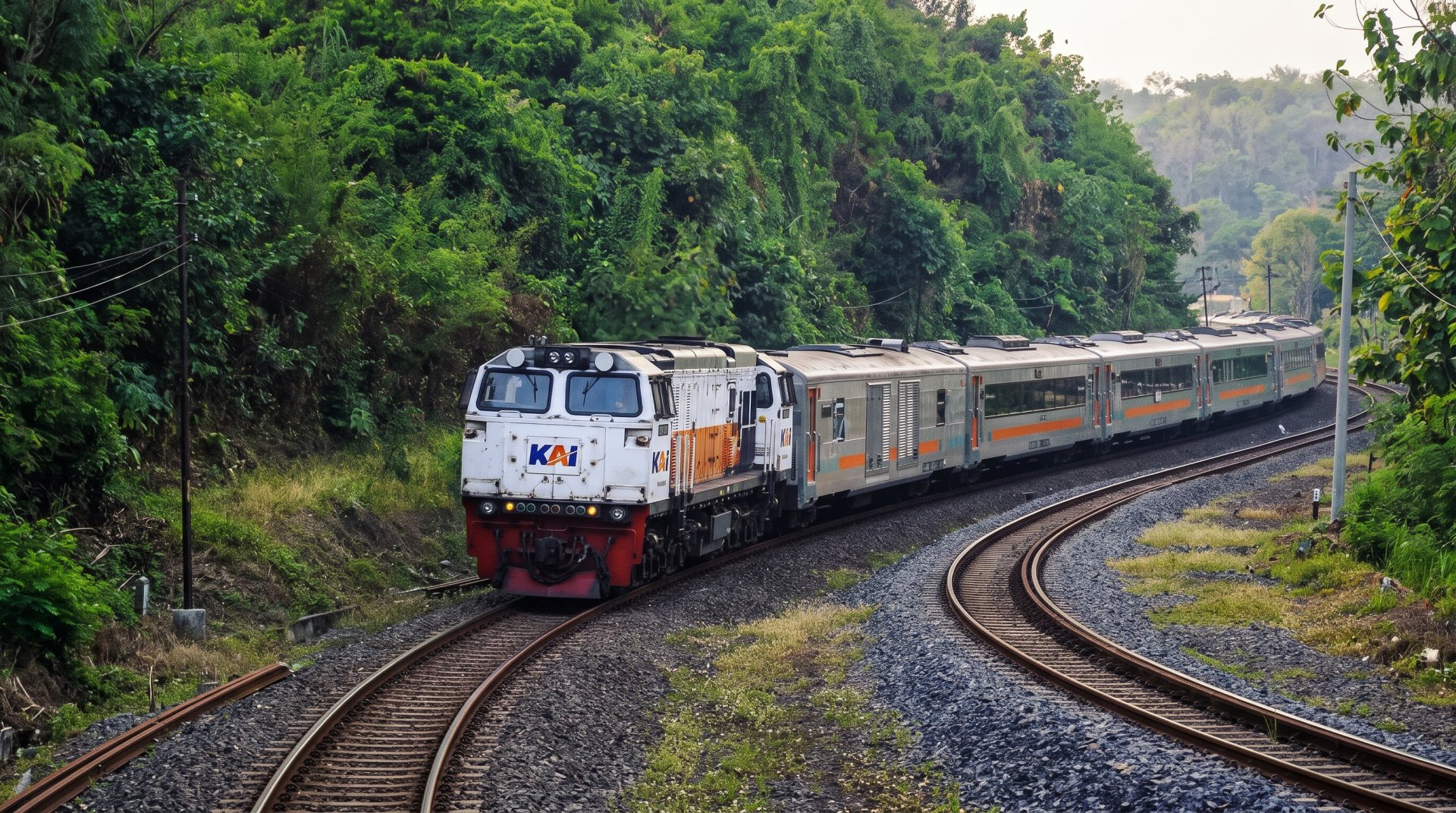
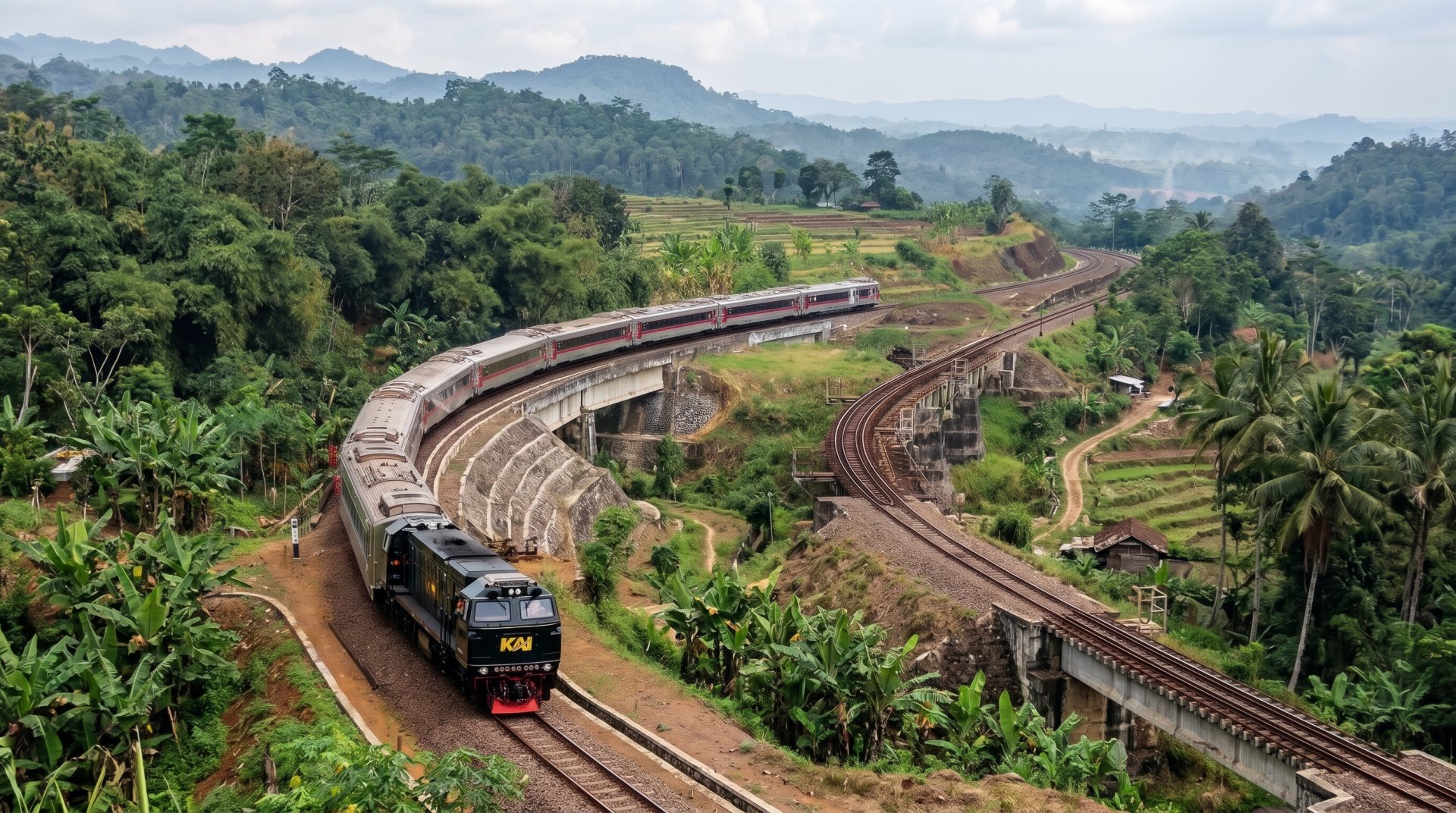
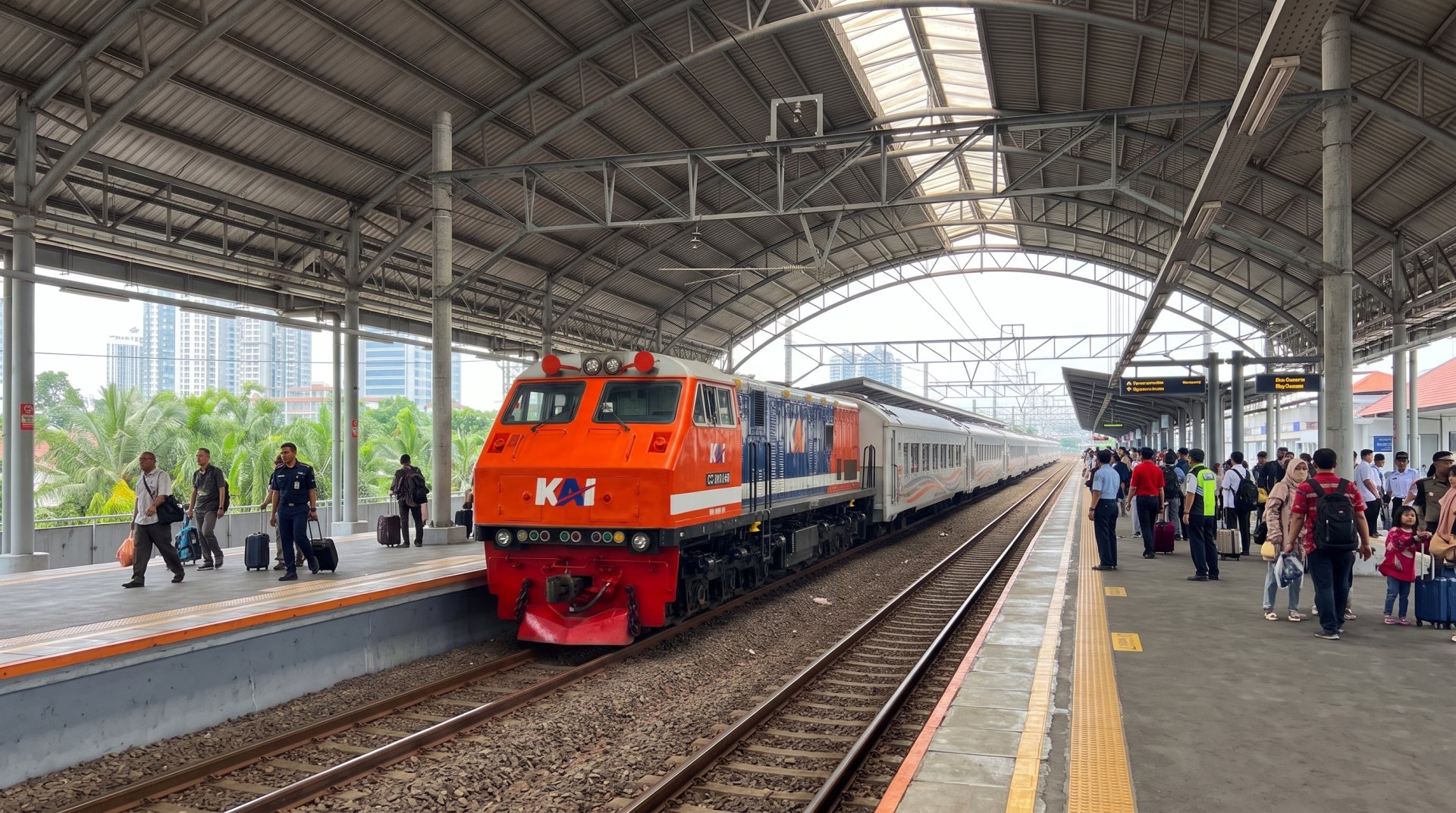
The merger of the "Trio Argo Semarangan"—KA Argo Muria (1997), KA Argo Sindoro (2007), and KA Argo Merbabu (2023)—into a single KA Muria brand took effect on October 1, 2026 (not November 1), consolidating 12 daily executive trips (6 per direction, 5,400 seats/day) on the 440.142 km Jakarta Gambir–Semarang Tawang corridor.
Following PT KAI's cancellation of a second-wave 20-train renaming plan on November 2–3, 2026, KA Muria stands as the sole multi-train executive merger retained in GAPEKA 2026 (KP DJKA 116/2026). Starting December 1, 2026, lowering Java's main-line maximum speed from 120 to 115 km/h adds 2–12 minutes to KA Muria's runtimes (averaging 5h 22.5m vs. 5h 15.6m), while advancing KA 17 Muria by 80 minutes (07:00 to 05:40 WIB) and dropping Jatinegara stops on eastbound KA 18, 20, and 28.
Not every train between Jakarta Gambir and Semarang Tawang was absorbed into KA Muria. The consolidation applies exclusively to the three all-executive trains terminating at both Gambir and Semarang Tawang. Operating separately on the same corridor are KA Gunungjati (mixed Executive–Economy, 1 daily round trip) and five East Java trunk services calling at Semarang Tawang: KA Anggrek, KA Sembrani, KA Argo Anjasmoro, KA Pandalungan, and KA Brawijaya. Combined with Pasar Senen departures, direct Jakarta–Semarang connectivity reaches 29 daily trains per direction in GAPEKA 2026.
1. KAI Brand Simplification (2025–2026) and the 48-Hour November Drama
The creation of KA Muria reflects PT KAI's multi-stage brand architecture overhaul. On February 1, 2025 (GAPEKA 2025), PT KAI dropped "Argo" from mixed-class KA Argo Parahyangan (reverting to KA Parahyangan) and split KA Argo Cheribon into KA Gunungjati and KA Cakrabuana. On May 9, 2026, flagship KA Argo Bromo Anggrek was shortened to KA Anggrek shortly after an April 27, 2026 collision with a commuter EMU in Bekasi. On August 24, 2026, PT KAI announced that Argo Muria, Argo Sindoro, and Argo Merbabu would merge into KA Muria effective October 1, 2026.
Public confusion with November 1, 2026 stemmed from GAPEKA 2026 ticket sales opening that Sunday alongside a second-wave renaming scheme affecting 20 other intercity trains (such as merging Kertajaya and Gumarang into Dharmawangsa, Sembrani and Argo Anjasmoro into Anggrek, Argo Wilis into Turangga, and Argo Semeru into Bima). Within 48 hours, fierce public backlash over erasing historic names, boarding confusion (such as two Dharmawangsa departures 30 minutes apart), and uneven coach standards forced PT KAI to cancel the second-wave renamings on November 2–3, 2026—leaving KA Muria as the only multi-train merger carried into GAPEKA 2026 and leaving just five "Argo" trains nationwide. Commercial data from January–October 2026 underscores KA Muria's importance: 448,626 passengers traveled Gambir–Semarang Tawang and 422,042 in reverse—totaling 870,668 riders (2,864/day), second nationally only to Gambir–Yogyakarta (1.16 million).
2. History of the North Coast Line & Genealogy of Trio Argo Semarangan
Semarang marks the birthplace of Indonesian railways: private operator Nederlandsch-Indische Spoorweg Maatschappij (NIS) opened the archipelago's first commercial line on Semarang–Tanggung on August 10, 1867 (reaching Kedungjati July 19, 1868) and inaugurated Semarang Tawang Station (designed by Ir. L.C.L.W. Sloth-Blaauboer) on June 1, 1914. Meanwhile, Semarang–Cheribon Stoomtram Maatschappij (SCS) built the 245.5 km Cirebon–Semarang steam tramway (completed February 1, 1899) to serve 54 sugar mills before upgrading it to heavy rail via Kalibodri–Kaliwungu (Jan 1, 1914) and Mundu–Losari (May 1, 1915) shortcuts—creating Semarang Poncol (Aug 6, 1914), Cirebon Prujakan (Nov 1, 1914), and Tegal (May 1, 1918), with Poncol–Tawang linked on January 4, 1941. Linking SS (Batavia–Cirebon) and SCS enabled the Java Nacht Expres (1936–1942).
Post-independence milestones included 49 French-built ABL-9000 coaches (Oct 1, 1954, used for the 1955 Bandung Conference), KA Mutiara Utara (Sept 27, 1971–Oct 1995), Fajar & Senja Utama Semarang (1980–2014), KA Tawang Jaya (May 14, 1984), and KA Argo Bromo (July 31, 1995). Dedicated Jakarta–Semarang executive services then evolved through three generations:
Full completion of the 727 km North Coast Double Track on September 3, 2014 and the speed upgrade to 120 km/h on September 28, 2022 cut runtimes to 5h 10–15m, while the 2024–2025 Direct Train nonstop trials proved 440 km can be covered in 4h 52–53m. Earlier, the trio's history reflected national rail turbulence: during the May 1998 Asian Financial Crisis, Argo Muria I briefly suspended operations (May 20–26, 1998) and temporarily relied on refurbished 1965 coaches before expanding with Argo Muria II (documented by May 20, 2001). Meanwhile, Argo Sindoro's March 17, 2007 launch stemmed from a technical bogie transfer—K9-bogie coaches formerly assigned to Argo Lawu on the steep, winding central/southern line were prone to derailments and were returned to Semarang Poncol Depot. On September 28, 2026 (KAI's 81st anniversary), Daop 4 Semarang and IRPS launched a special Vintage Livery ABL-9000 trainset hauled by retro green-cream CC 206 13 25 just three days before all 12 trips unified under KA Muria.
3. KA Muria Timetables: October 1 vs. GAPEKA 2026 (December 1, 2026)
Jadwal Induk Semarang Tawang (SMT) → Jakarta Gambir (GMR)
Jakarta Gambir (GMR) → Semarang Tawang (SMT)
Tactical Timetable Engineering Behind GAPEKA 2026
A segment-by-segment cross-check of the GAPEKA 2026 timetable reveals four tactical shifts shaping passenger operations. First, eliminating Jatinegara stops on daytime and evening eastbound departures: whereas all 12 ex-Trio Argo trips stopped at Jatinegara in GAPEKA 2025, starting December 1, 2026, KA 20 (07:20), KA 18 (16:35), and KA 28 (20:10) run nonstop past East Jakarta's busiest junction, trimming 4–5 minutes on Gambir–Bekasi (28→23–24 minutes on KA 18/20; 27→22 minutes on KA 28) and reducing conflicts with KRL Commuter Line trains between Manggarai and Jatinegara. Conversely, all westbound arrivals into Jakarta retain Jatinegara stops for Cikarang Line and Transjakarta transfers.
Second, despite faster Gambir–Bekasi runs, total trip durations rise by 2 to 12 minutes because the 120→115 km/h speed limit reduction hits hardest on the long straightaway between Bekasi and Cirebon (+5m on KA 28, +7m on KA 20, +8m on KA 21, +10m on KA 22, and +11m on KA 27 which also adds a Karawang stop), shifting the 11-trip confirmed average from 5h 15.6m (83.68 km/h) to 5h 22.5m (81.90 km/h). Third, KAI created a double dawn departure wave from Semarang by advancing KA 17 by 80 minutes (07:00→05:40 WIB) while pushing KA 23 back 30 minutes (05:50→06:20 WIB), giving business travelers two departures 40 minutes apart arriving Jakarta before noon. Fourth, new stops reinforce North Coast industrial zones: Batang gains night service via KA 25, Karawang gains afternoon service via KA 27, and Pemalang gains afternoon service from Gambir via KA 18.
4. Rolling Stock Anatomy, Pooling Efficiency & Fleet Heterogeneity
Every KA Muria runs an 11-car formation—9 Executive (K1) coaches (50 seats each, 2–2 reclining/revolving, 450 seats total), 1 dining car (M1), and 1 power car (P)—hauled exclusively by dual-cab CC 206 locomotives after CC 201/CC 203 units retired from this service following the transfer of 19 CC 206 locomotives from Palembang to Java (Dec 2025–Mar 2026). Yet two distinct cabin generations coexist under the single KA Muria name: KA 17–22 (ex-Sindoro/Muria) operate Stainless Steel New Generation (SSNG) sets with automatic electric doors, PIDS, and individual USB ports since June 15, 2025, whereas KA 23–28 (ex-Merbabu) still use mild-steel New Image 2016/2017 sets (including the Vintage Livery ABL-9000 set). Pooling all 12 trips reduces minimum fleet requirements from 7 to 6 active trainsets (at 90-minute turnaround) while creating an expectation gap for passengers expecting SSNG amenities.
Beyond regular executive service, the corridor also hosted KAI Wisata luxury cars on KA Argo Muria: daily Priority tourist coaches (28 seats) starting August 27, 2018 and Panoramic glass-roof coaches (38 seats) on select dates starting March 21, 2023.
5. Corridor Geography, 5-Tier Speed Limits & Semarang Tawang Tidal Floods
Spanning 440.142 km across Daop 1, Daop 3 (Cirebon Prujakan sits at the dual-kilometrepost junction of km 220+768 from Jakarta Kota and km 222+367 from Semarang Poncol), and Daop 4, KA Muria transitions across five speed tiers in GAPEKA 2026 after the 120→115 km/h safety reduction.
The corridor's most persistent vulnerability is tidal flooding (rob) and land subsidence at Semarang Tawang Station (+2 m asl, Indonesia's 7th busiest station at 8,247 pax/day or 2,515,450 passengers across Jan–Oct 2024; briefly carrying the commercial naming rights "Stasiun Semarang Tawang Bank Jateng" in 2023–2025 before reverting). Although the 1-hectare Polder Tawang retention basin (equipped with 500 L/s and 150 L/s centrifugal pumps) was built in 1998–2000, coastal land subsidence has left the basin elevated above surrounding drains. Severe floods in Feb 2008 (50 cm), Dec 2022–Jan 2023 (70–80 cm, halting passenger boarding), Mar 13–15, 2024 (forcing diversions to Semarang Poncol), and Oct 2025 (10–60 cm across 16 points) forced PT KAI to deploy diesel-hydraulic BB 304 84 11 and CC 300 flood-recovery locomotives (as CC 206 traction motors are vulnerable to water immersion) and raise tracks at Kaligawe Km 2+7/8 by up to 1 meter. For a permanent fix, MTI's Djoko Setijowarno (Jan 2026) advocated a 7.4 km elevated railway between Semarang Tawang and Semarang Poncol while keeping at-grade tracks for Tanjung Emas Port freight. Safety records since the 2014 double-track completion show nearly all fatal incidents involve level crossings or right-of-way trespassing (Cirebon, Tambun Selatan June 21, 2022, PJL 65 Weleri April 29, 2023, Gemuh Kendal, Batang–Pekalongan February 21, 2026, and Semarang October 2026), prompting KAI's program to upgrade 190 level crossings (77% complete by H2 2026) alongside domino-effect disruptions such as the August 1, 2025 Pegaden Baru derailment and April 27, 2026 Bekasi Timur collision.
6. Fare Structure, Go-Show Rates & the 29-Train Jakarta–Semarang Market
Regular KA Muria fares span eight executive subclasses from Rp350,000 to Rp540,000 (Dec 2026 lowest observed Rp410,000; peak season Rp550,000–600,000, with periodic 10% off-peak Daop 4 discounts). Two-hour Go-Show Special Fares (adjusted Oct 12, 2026) are Rp240,000 (Gambir–Cirebon), Rp165,000 (Cirebon–Semarang Tawang), Rp150,000 (Semarang Tawang–Tegal), and Rp50,000 (Bekasi–Gambir one-way). Alongside KA Muria, KA Gunungjati (launched Feb 1, 2025 from ex-Argo Cheribon Trainset I; KA 118 GMR 09:25–SMT 15:17 and KA 119 SMT 16:00–GMR 21:49) provides mixed Executive (Rp410k–450k) and New Image Economy (Rp230k–260k) service calling at 11–12 stations including Pegaden Baru, Haurgeulis, Jatibarang, Babakan, and Brebes.
7. Practical Guide for Jakarta–Semarang Travelers
- Target KA 17–22 for SSNG coaches: While pooling allows swaps, ex-Sindoro/Muria numbers (KA 17–22) carry the highest probability of Stainless Steel New Generation coaches, whereas KA 23–28 largely run New Image 2016/2017 sets (including the ABL-9000 Vintage Livery).
- Double-check December 1 departure times & Jatinegara stops: KA 17 moves 80 minutes earlier to 05:40 WIB; eastbound KA 18, 20, and 28 skip Jatinegara.
- Match service to budget: Choose KA Anggrek/Sembrani for sub-5-hour speed or luxury suites, or KA Gunungjati (from Rp230,000) for Gambir economy access and intermediate stops like Brebes and Jatibarang.
- Monitor coastal flood alerts: During Dec–Mar rainy peaks, check Access by KAI for potential Semarang Poncol diversions.